
图书介绍
药物化学 英中双语注解版pdf电子书版本下载
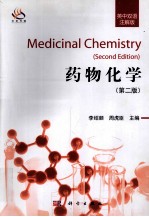
- 李绍顺,周虎臣主编 著
- 出版社: 北京:科学出版社
- ISBN:9787030354969
- 出版时间:2012
- 标注页数:495页
- 文件大小:112MB
- 文件页数:512页
- 主题词:药物化学-英、汉
PDF下载
下载说明
药物化学 英中双语注解版PDF格式电子书版下载
下载的文件为RAR压缩包。需要使用解压软件进行解压得到PDF格式图书。建议使用BT下载工具Free Download Manager进行下载,简称FDM(免费,没有广告,支持多平台)。本站资源全部打包为BT种子。所以需要使用专业的BT下载软件进行下载。如 BitComet qBittorrent uTorrent等BT下载工具。迅雷目前由于本站不是热门资源。不推荐使用!后期资源热门了。安装了迅雷也可以迅雷进行下载!
(文件页数 要大于 标注页数,上中下等多册电子书除外)
注意:本站所有压缩包均有解压码: 点击下载压缩包解压工具
图书目录
1 Drug Discovery,Design and Development 1
1.1 Drug Discovery 1
1.1.1 A Drug Discovery without a Lead 2
1.1.2 Lead Discovery 4
1.2 Lead Modification 8
1.2.1 Identification of the Active Part:The Pharmacophore 8
1.2.2 Structure Modifications to Increase Potency and the Therapeutic Index 11
1.3 New Drug Development 19
1.3.1 General Process of New Drug Development 19
1.3.2 Preclinical Development and Investigational New Drug Application 21
1.4 Problems 22
本章重点内容 23
2 Receptors 24
2.1 Drug-Receptor Interactions 24
2.1.1 Interactions(Forces)Involved in the Drug-Receptor Complex 24
2.2 Theories for Drug-Receptor Interactions 32
2.2.1 Induced-Fit Theory 32
2.2.2 The Two-State(Multistate)Model of Receptor Activation 33
2.3 Topographical and Stereochemical Considerations 35
2.3.1 Spatial Arrangement of Atoms 35
2.3.2 Drug and Receptor Chirality 36
2.3.3 Geometric Isomers(Diastereomers) 41
2.3.4 Conformational Isomers 41
2.3.5 Ring Topology 45
2.4 Problems 46
本章重点内容 48
3 Enzymes and Enzyme Inhibition 51
3.1 Enzymes 51
3.1.1 Enzymes as Catalysts 51
3.1.2 Mechanism of Enzyme Catalysis 55
3.1.3 Coenzyme Catalysis 58
3.2 Enzyme Inhibition 61
3.2.1 Enzyme Inhibitors in Medicine 61
3.2.2 Design of Enzyme Inhibitors 62
3.3 Reversible Enzyme Inhibitors 64
3.3.1 Mechanism of Reversible Inhibition 64
3.3.2 Selected Examples of Competitive Reversible Inhibitor Drugs 66
3.3.3 Transition State Analogs 67
3.3.4 Slow,Tight-Binding Inhibitors 68
3.4 Irreversible Enzyme Inhibitors 70
3.4.1 Affinity Labeling Agents 71
3.4.2 Mechanism-Based Enzyme Inactivators 73
3.5 Problems 76
References 77
本章重点内容 78
4 Drug Metabolism 80
4.1 Introduction 80
4.2 Phase Ⅰ Transformations 81
4.2.1 Oxidative Reactions 81
4.2.2 Reductive Reactions 93
4.2.3 Carboxylation Reaction 97
4.2.4 Hydrolytic Reactions 98
4.3 Phase Ⅱ Transformations:Conjugation Reactions 99
4.3.1 Introduction 99
4.3.2 Glucuronic Acid Conjugation 100
4.3.3 Sulfate Conjugation 103
4.3.4 Amino Acid Conjugation 104
4.3.5 Glutathione Conjugation 105
4.3.6 Acetyl Conjugation 107
4.4 Problems 109
本章重点内容 111
5 Prodrugs and Drug Delivery System 113
5.1 Introduction 113
5.1.1 Utility of Prodrugs 113
5.1.2 Types of Prodrugs 115
5.2 Mechanism of Drug Activation 116
5.2.1 Carrier-Linked Prodrugs 116
5.2.2 Bioprecursor Prodrugs 129
5.3 Problems 137
本章重点内容 138
6 Computer Aided Drug Design 139
6.1 Introduction 139
6.1.1 Molecular Mechanics and Empirical Force Field Methods 140
6.1.2 Energy Minimization 142
6.1.3 Conformational Analysis and Search 142
6.2 Structure-Based Drug Design 142
6.2.1 Molecular Graphics-Based Drug Design 143
6.2.2 Molecular Docking 145
6.2.3 De Novo Drugs Design 146
6.3 Ligand Based Drug Design 149
6.3.1 Quantitative Structure-Activity Relationships 149
6.3.2 Pharmacophore Modeling 154
6.4 Problems 159
本章重点内容 160
7 Central Nervous System Drugs 161
7.1 Schizophrenia 161
7.1.1 Introduction 161
7.1.2 Stucture-activity Relationship of Tricyclic Anti-psychotics 165
7.1.3 Typical Drugs 166
7.1.4 Discovery and Development of New Antipsychotic Drugs 168
7.2 Sedative-hypnotics 171
7.2.1 Introduction 171
7.2.2 Stucture-activity Relationship of Benzodiazepines 175
7.2.3 Typical Drugs 177
7.2.4 New Research Areas 181
7.3 Alzheimer's Disease 183
7.3.1 Introduction 183
7.3.2 Typical Drugs 186
7.3.3 New Research Areas 191
7.4 Problems 195
References 195
本章重点内容 197
8 Analgesics and Anesthetics 199
8.1 Analgesics 199
8.1.1 Introduction 199
8.1.2 Opioid Receptor 200
8.1.3 Endogenous Opioid Peptides 200
8.1.4 Morphine and Related Opioids 201
8.1.5 Synthetic Analgesics 204
8.1.6 Unmet Medical Needs 211
8.1.7 New Research Areas 212
8.2 Anesthetics 213
8.2.1 General Anesthetics 213
8.2.2 Local Anesthetics 217
8.2.3 Unmet Medical Needs 222
8.3 Problems 224
本章重点内容 225
9 Drugs for Metabolic Syndrome Treatment 227
9.1 Obesity 227
9.1.1 Current Treatment 227
9.1.2 New Research Areas 228
9.2 Diabetes 228
9.2.1 Current Treatment 230
9.2.2 New Research Areas 242
9.3 Problems 246
References 247
本章重点内容 248
10 Agents for Gastrointestinal Diseases 250
10.1 Introduction 250
10.1.1 The Function of Gastrointestinal Tract 250
10.1.2 Historical Overview 250
10.2 Gastric and Mucosal Ulceration 252
10.2.1 Overview 252
10.2.2 H2 Receptor Antagonists 254
10.2.3 Proton Pump Inhibitors(PPIs) 257
10.2.4 New Research Areas 260
10.3 Inflammatory Bowel Disease 260
10.3.1 Overview 260
10.3.2 New Research Areas 262
10.4 Emesis/Prokinetic Agents 264
10.4.1 Overview 264
10.4.2 New Research Areas 270
10.5 Problems 271
References 271
本章重点内容 272
11 Cardiovascular Agents 274
11.1 Introduction 274
11.2 Hypertension 274
11.2.1 Introduction 274
11.2.2 Antihypertensive Agents 275
11.2.3 New Research Areas 296
11.3 Cardiac Arrhythmias 297
11.3.1 Introduction 297
11.3.2 Antiarrhythmic Agents 298
11.3.3 New Research Areas 303
11.4 Congestive Heart Failure 303
11.4.1 Introduction 303
11.4.2 Cardiac Agents 304
11.5 Angina 306
11.5.1 Introduction 306
11.5.2 Antianginal Agents 306
11.6 Hyperlipidemias 307
11.6.1 Introduction 307
11.6.2 Antihyperlipidemic Agents 308
References 314
选读资料 315
本章重点内容 316
12 Anticancer Agents 318
12.1 Introduction 318
12.2 Current Anticancer Agents 318
12.2.1 Alkylating and Platinum Anticancer Agents 318
12.2.2 Deoxyribonucleic Acid Topoisomerase Inhibitors 329
12.2.3 Antimetabolic Agents 333
12.2.4 Microtubule Targeting Agents 341
12.3 New Research Areas 345
12.3.1 Tyrosine Kinase and Inhibitors 346
12.3.2 Histone Deacetylase Inhibitors 349
12.3.3 Proteasome Inhibitors 351
12.3.4 Other New Research Areas of Anticancer Drugs 351
12.4 Problems 352
References 352
本章重点内容 353
13 Antiviral Agents 356
13.1 Overview of Virus Infections and Antiviral Agents 356
13.2 Antivirals for Herpesviruses 357
13.2.1 Introduction 357
13.2.2 Current Antiherpes Drugs 357
13.2.3 Structure-activity Relationship 359
13.2.4 New Research Areas 362
13.3 Antivirals for Human Immunodeficiency Virus 362
13.3.1 Introduction 362
13.3.2 HIV Reverse Transcriptase Inhibitors 364
13.3.3 HIV Protease Inhibitors 366
13.3.4 New Research Areas 371
13.4 Antivirals for Influenza Virus 373
13.4.1 Introduction 373
13.4.2 M2 Ion Channel Inhibitors 373
13.4.3 Neuraminidase Inhibitors 375
13.4.4 New Research Areas 379
13.5 Problems 379
References 380
本章重点内容 381
14 Antifungal Agents 383
14.1 Introduction 383
14.1.1 Fungi 383
14.1.2 Fungal infections 384
14.2 Current Antifungal Agents 385
14.2.1 General 385
14.2.2 The Mechanism of Action of Major Antifungal Agents 386
14.3 Typical Antifungal Drugs in Clinical Use 390
14.3.1 Azoles Antifungal Drugs 390
14.3.2 Allyamines 398
14.4 Antifungal Drug Discovery and Development:New Modes of Action 400
14.4.1 Overview 400
14.4.2 Emerging Targets for The Development of Novel Antifungal Therapeutics 401
14.5 Problems 403
本章重点内容 404
15 Antibacterials 406
15.1 Introduction 406
15.2 β-lactam 408
15.2.1 History and Overview 408
15.2.2 Mode of Action 410
15.2.3 Mechanisms of Resistance 413
15.2.4 Major Drug Classes 414
15.3 Macrolide 419
15.3.1 Introduction 419
15.3.2 Major Classes of Macrolides 420
15.4 Tetracyclines 425
15.4.1 Introduction 425
15.4.2 SAR of Tetracyclines 425
15.4.3 Mechanism of Action 426
15.5 Aminoglycosides 427
15.6 Quinolones 430
15.6.1 Overview of Quinolones 430
15.6.2 Mechanism of Antibacterial Action 432
15.6.3 SAR and STR of Quinolones 432
15.6.4 Antibacterial Resistance Mechanisms 433
15.7 Antimycobacterial Agents 435
15.7.1 Introduction 435
15.7.2 Rifamycin 436
15.7.3 Isoniazid 436
15.8 Resistance and Challenge 438
15.9 Problems 439
本章重点内容 440
16 Antiparasitic 443
16.1 Introduction 443
16.2 Representative Diseases 445
16.2.1 Chagas Disease 445
16.2.2 Leishmaniasis 445
16.2.3 Malaria 446
16.3 Antimalarias 447
16.3.1 Quinolines 449
16.3.2 Artemisinin and its Analogs 453
16.4 Questions 457
References 457
本章重点内容 458
17 Inflammatory Diseases and Nonsteroidal Anti-inflammatory Drugs(NSAIDs) 460
17.1 Introduction[1-3] 460
17.1.1 Arthritis 461
17.1.2 Arachidonic Acid Cascade 461
17.1.3 Phospholipase A2(PLA2) 464
17.1.4 Cyclooxygenase(COX) 465
17.1.5 Lipoxygenase(LOX) 466
17.2 Current Treatment for Arthritis 466
17.2.1 Steroids(brief introduction) 466
17.2.2 Nonsteroidal Anti-inflammatory Drugs(NSAIDs) 466
17.3 Typical Nonsteroidal Anti-inflammatory Drugs in Clinical Use 477
17.4 New Research Areas 487
17.4.1 Dual COX-LOX Inhibitors 487
17.4.2 Disease-modifying Anti-rheumatic Drugs 487
17.4.3 Structure-modifying Anti-inflammatory Drugs 488
17.5 Conclusions and Future Directions 490
17.6 Problems 490
References 491
本章重点内容 492