
图书介绍
非现实范畴研究 英文pdf电子书版本下载
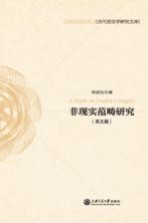
- 宋丽珏著 著
- 出版社: 上海:上海交通大学出版社
- ISBN:9787313129147
- 出版时间:2015
- 标注页数:245页
- 文件大小:35MB
- 文件页数:258页
- 主题词:语言学-研究-英文
PDF下载
下载说明
非现实范畴研究 英文PDF格式电子书版下载
下载的文件为RAR压缩包。需要使用解压软件进行解压得到PDF格式图书。建议使用BT下载工具Free Download Manager进行下载,简称FDM(免费,没有广告,支持多平台)。本站资源全部打包为BT种子。所以需要使用专业的BT下载软件进行下载。如 BitComet qBittorrent uTorrent等BT下载工具。迅雷目前由于本站不是热门资源。不推荐使用!后期资源热门了。安装了迅雷也可以迅雷进行下载!
(文件页数 要大于 标注页数,上中下等多册电子书除外)
注意:本站所有压缩包均有解压码: 点击下载压缩包解压工具
图书目录
Chapter 1 Prolegomena 1
1.1 Background and Motivation of the Present Study 1
1.2 Significance of the Research 4
1.3 Typology as the Research Rationale 8
1.3.1 Core Concepts of Typology 8
1.3.2 Prototype Category 11
1.3.3 Methodologies of Typological Research 16
1.3.4 Irrealis as a"Superordinate Category" 19
1.4 Methodologies and Materials 24
1.5 Research Objectives 25
1.6 Outline of the Dissertation 26
Chapter 2 Irrealis as a Typological Category across Languages 29
2.1 Western Studies on Irrealis 29
2.1.1 The Definition of Irrealis in Western Studies 29
2.1.2 Problems in the Irrealis Research 37
2.2 Irrealis Studies in Chinese 41
2.2.1 Irrealis in the Research of Standard Chinese 41
2.2.2 Irrealis Expressions in Chinese Dialects 52
Chapter 3 Establishment of Irrealis 58
3.1 Underpinning the Philosophical Origin of Irrealis 58
3.1.1 Connotation and Denotation 59
3.1.2 Reality and Fact 60
3.1.2.1 Reality as an Omnibus Set of Facts 60
3.1.2.2 (Non)fact and(Ir)realis 63
3.1.2.3 Possible World Theory 70
3.2 Reconstruction of Irrealis by Three Parameters 72
3.2.1 Defining Irrealis from the Perspective of Temporal Parameter 74
3.2.1.1 Absolute Time and Time Consciousness 74
3.2.1.2 Relative Time 78
3.2.1.3 Determination of the Horizontal Line 81
3.2.2 Event 83
3.2.2.1 Real World Event and Linguistic Event 83
3.2.2.2 Event and State 89
3.2.2.3 Event as the Width Line 92
3.2.3 Modality 93
3.2.3.1 Definition and Classification of Modality 94
3.2.3.2 Irrealis and Modality 96
3.2.3.3 Mental Verbs as Modal Markers 98
3.3 The Three-Parameter-Judgment Model of(Ir)realis 102
Chapter 4 Irrealis Moods 107
4.1 The Composition of Irrealis Moods 108
4.1.1 Counterfactual Thinking as the Generational Meehanism 108
4.1.2 Types of Irrealis Moods 110
4.1.2.1 Grammatical Mood 110
4.1.2.2 Typological Classifications of Irrealis Moods 112
4.1.2.3 Typical Features of"Irrealis Mood"in Standard Chinese 117
4.2 Chinese Irrealis Complex Sentences 118
4.2.1 Two Issues on Irrealis Property of the Conditional Sentences 119
4.2.2 The Irrealis Characteristics of Overt Chinese Conditional Complex Sentences 122
4.2.2.1 Features of Chinese Conditional CSs 122
4.2.2.2 The Semantic Entanglement of Three-fold Conditional CSs 123
4.2.2.3 Irrealis Hierarchy of Conditional Conjunctions 130
4.2.3 The Irrealis Characteristic of Chinese Convert Conditional CSs 138
4.2.3.1 Chinese as a Topic-Prominent Language 138
4.2.3.2 Clause Topic in Conditional CSs 140
4.3 The Irrealis Property of Negation 142
4.3.1 Implications and Espress Methods of Negation 142
4.3.1.1 Asymmetric between Affirmation and Negation 143
4.3.1.2 The Scope and the Focus of Negation 145
4.3.1.3 Negation and the Property of Propositions 147
4.3.2 Negatives Markers“不”and“没” 149
4.3.2.1 Distinctions between“不”and“没” 149
4.3.2.2 The Irrealis Characteristic of Negative“不” 151
4.3.2.3 The Realis Characteristic of Negative“没” 156
4.3.2.4 Negatives as Conditional Markers 157
4.4 Characteristics of the Imperative Mood in Chinese 160
4.4.1 Imperative as Irrealis 162
4.4.2 Prohibitive 169
4.4.2.1 Typological Findings of the Irrealis Status in Prohibitive Expressions 169
4.4.2.2 Scalar Quantity Implicatures of Positive Imperatives and Prohibitive Expressions 170
Chapter 5 TA and Irrealis 177
5.1 Time Description in Standard Chinese 177
5.1.1 Typological Classification of Temporal Information in Languages 178
5.1.2 The Temporal System of Standard Chinese 180
5.1.2.1 Temporal Nouns and(Ir)realis 183
5.1.2.2 Irrealis Temporal Adverbs 187
5.1.3 Future as Irrealis 192
5.1.3.1 Typical Future Marker“要(will)”in Standard Chinese 193
5.1.3.2 Typical Future Marker“会” 196
5.1.3.3 Untypical Future Marker“快”and“就” 198
5.2 Chinese as an Aspect-prominent Language 200
5.2.1 Typological Description of Aspect 200
5.2.2 The Structure of Standard Chinese Aspect 203
5.2.2.1 Perfectives“过”and“了” 205
5.2.2.2 Imperfectives“在,着and呢” 208
5.3 The Irrealis Property of Perfective“了” 209
5.3.1 Future Property of“了”and Sentential Events 210
5.3.1.1 Continuous Events and“了” 210
5.3.1.2 Single Event and the Future Property of“了1” 212
5.3.2 “了1”in Conditional Complex Sentences 213
5.4 Idioms as Habituality 215
5.4.1 The Hybrid Status of Habituality 215
5.4.2 Debate over the Characteristic of Habituality 216
5.4.3 (Ir)realis Characteristics of Irrealis Habituality 218
5.4.4 Idiomatic Expressions 223
Chapter 6 Conclusion 225
6.1 Concluding Remarks 225
6.1.1 Summary 225
6.1.2 Semantic Mapping of Irrealis in Standard Chinese 227
6.2 Outlook 230
Bibliography 232
Index 244