
图书介绍
辩论推理系统的语义计算 英文版pdf电子书版本下载
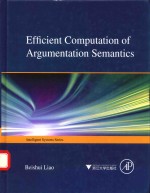
- 廖备水著 著
- 出版社: 杭州:浙江大学出版社
- ISBN:9787308143257
- 出版时间:2015
- 标注页数:144页
- 文件大小:15MB
- 文件页数:154页
- 主题词:辩论-推理-言语统计-研究-英文
PDF下载
下载说明
辩论推理系统的语义计算 英文版PDF格式电子书版下载
下载的文件为RAR压缩包。需要使用解压软件进行解压得到PDF格式图书。建议使用BT下载工具Free Download Manager进行下载,简称FDM(免费,没有广告,支持多平台)。本站资源全部打包为BT种子。所以需要使用专业的BT下载软件进行下载。如 BitComet qBittorrent uTorrent等BT下载工具。迅雷目前由于本站不是热门资源。不推荐使用!后期资源热门了。安装了迅雷也可以迅雷进行下载!
(文件页数 要大于 标注页数,上中下等多册电子书除外)
注意:本站所有压缩包均有解压码: 点击下载压缩包解压工具
图书目录
1 Introduction 1
1.1 Background 1
1.2 The Notion of Argumentation 2
1.3 Motivations of This Book 4
1.4 The Structure of This Book 6
References 7
2 Semantics of Argumentation 9
2.1 Introduction 9
2.2 Abstract Argumentation Frameworks 10
2.3 Argumentation Emantics 10
2.3.1 Extension-Based Approach 11
2.3.2 Labelling-Based Approach 17
2.3.3 Relations Between the Two Approaches 21
2.3.4 Relations Between Difierent Semantics 22
2.3.5 Status of Arguments 22
2.4 Conclusions 24
References 25
3 Existing Approaches for Computing Argumentation Semantics 27
3.1 Introduction 27
3.2 Approaches Based on Answer-Set Programming 28
3.2.1 Answer-Set Programming 28
3.2.2 ASP for Argumentation 29
3.3 Labelling-Based Algorithms 32
3.3.1 The Computation of Grounded Labelling 32
3.3.2 The Computation of Preferred Labellings 33
3.4 Conclusions 36
References 37
4 Sub-Frameworks and Local Semantics 39
4.1 Introduction 39
4.2 Notion of Sub-Frameworks 40
4.2.1 Informal Idea 40
4.2.2 Formal Definition 41
4.2.3 Dependence Relation Between Different Sub-Frameworks 43
4.3 Semantics of Sub-Frameworks 44
4.3.1 Labellings of a Conditioned Sub-Framework 44
4.3.2 Extensions of a Conditioned Sub-Framework 47
4.4 Computation of the Semantics of a Sub-Framework 50
4.5 Conclusions 53
References 53
5 Relations Between Global Semantics and Local Semantics 55
5.1 Introduction 55
5.2 Mapping Global Semantics to Local Semantics 57
5.3 Mapping Local Semantics to Global Semantics 60
5.3.1 Combining Extensions of Two Unconditioned Sub-Frameworks 61
5.3.2 Combining Extensions of a Conditioned Sub-Framework and Those of an Unconditioned Sub-Framework 63
5.3.3 Combining Labellings of Two Conditioned Sub-Frameworks 69
5.4 Conclusions 72
References 72
6 An Approach for Static Argumentation Frameworks 73
6.1 Introduction 73
6.2 Decomposing an Argumentation Framework:a Layered Approach 75
6.2.1 Strongly Connected Components(SCCs)of an Argumentation Framework 76
6.2.2 A Decomposition Approach Based on SCCs 76
6.3 An Incremental Approach to Compute Argumentation Semantics 81
6.3.1 The Computation ofLayer i(0≤i≤lmax) 81
6.3.2 Soundness and Completeness of Semantic Combination 84
6.3.3 An Illustrating Example 85
6.4 Empirical Evaluation 89
6.5 Conclusions 96
References 98
7 An Approach for Dynamic Argumentation Frameworks 101
7.1 Introduction 101
7.2 The Changing of an Argumentation Framework 105
7.3 The Division of an Updated Argumentation Framework 106
7.4 Computing the Semantics of an Updated Argumentation Framework Based on the Division 111
7.5 An Illustrating Example 112
7.6 Conclusions 114
References 116
8 An Approach for Partial Semantics of Argumentation 119
8.1 Introduction 119
8.2 The Definition of Partial Semantics of Argumentation 121
8.3 Basic Properties of Partial Semantics of Argumentation 124
8.3.1 Monotonicity of Partial Semantics 125
8.3.2 Extensibility of PartiaI Semantics 125
8.3.3 Combinability of Partial Semantics 128
8.4 Empirical Investigation 129
8.5 Conclusions 134
References 135
9 Conclusions and Future Work 137
9.1 Conclusions 137
9.2 Future Work 138
References 139
Index 141