
图书介绍
社会与语言的使用pdf电子书版本下载
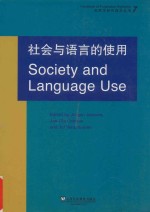
- 雅斯贝尔著 著
- 出版社: 上海:上海外语教育出版社
- ISBN:9787544637305
- 出版时间:2014
- 标注页数:325页
- 文件大小:135MB
- 文件页数:350页
- 主题词:社会语言学-英文
PDF下载
下载说明
社会与语言的使用PDF格式电子书版下载
下载的文件为RAR压缩包。需要使用解压软件进行解压得到PDF格式图书。建议使用BT下载工具Free Download Manager进行下载,简称FDM(免费,没有广告,支持多平台)。本站资源全部打包为BT种子。所以需要使用专业的BT下载软件进行下载。如 BitComet qBittorrent uTorrent等BT下载工具。迅雷目前由于本站不是热门资源。不推荐使用!后期资源热门了。安装了迅雷也可以迅雷进行下载!
(文件页数 要大于 标注页数,上中下等多册电子书除外)
注意:本站所有压缩包均有解压码: 点击下载压缩包解压工具
图书目录
Introduction-Society and language use&Jürgen Jaspers 1
1.Linguistic antecedents 2
2.Antecedents in social theory 8
3.Late modern trends and issues 12
Accommodation theory&Nikolas Coupland 21
1.Overview 21
2.Speech accommodation theory 21
3.Conceptual developments 23
4.The accommodation model:Predictive or interpretive? 23
5.Discourse attuning 24
Agency and language&Laura M.Ahearn 28
1.Practice theory 31
2.Anthropological contributions to practice theory 33
3.Intentionality 34
4.The grammatical encoding of agency 37
5.Talk about agency-Meta-agentive discourse 41
6.Language in action,agency in language 44
Authority&John Wilson&Karyn Stapleton 49
1.Introduction 49
2.Authority and the self 51
3.Authority in each other 55
4.Authority in the world 57
5.Authority in(and through)God 58
6.Authority and gender 59
7.Authority in language 62
8.Authority 64
Bilingualism and multilingualism&Monica Heller&Aneta Pavlenko 71
1.Introduction 71
2.Four approaches to the study of bilingualism and multilingualism 72
2.1 Neurolinguistic and psycholinguistic approaches to multilingualism 73
2.2 Social psychological approaches 75
2.3 Linguistic and sociolinguistic approaches 76
2.4 Sociological and anthropological approaches 77
3.Conclusion 79
Code-switching&Peter Auer&Carol M.Eastman 84
1.Introduction 84
2.Terminological and methodological issues 85
3.Early studies 87
4.The meaning of code-switching 90
4.1 The politics of code-switching 90
4.2 Code-switching in interaction 95
5.Grammatical constraints on code-switching 101
6.Future directions in code-switching research 107
Cognitive sociology&Barry Saferstein 113
1.Historical overview 113
2.The interrelation of interactional sense-making processes and social organization 116
2.1 Interaction 116
2.2 Discourse 116
2.3 Cognition 117
2.4 Organizational activities and materials 117
3.Key concepts 117
3.1 Interpretive procedures 117
3.2 Expertise 118
3.3 Social organization 118
3.4 Inequality and stratification 119
3.5 Organizational constraints 119
4.Methodology 119
5.A sample analysis 120
Contact&Li Wei 127
1.Language contact:Causes,processes and outcomes 127
2.Theoretical and methodological approaches to language contact 130
3.The pragmatics of language contact 135
4.Conclusion 138
Correlational sociolinguistics&Norbert Dittmar 140
1.Introduction 140
2.Concepts of linguistic variation 141
2.1 Tradition and innovation 142
2.2 Methodology 142
2.3 Description 143
2.4 Explanation 143
2.5 Theory 143
2.6 Application 144
3.Basic lines of argumentation:The corpus 144
4.Rules:How instances of usage are described 145
5.Language change:The perspective of explanations 148
6.Outlook 150
Gender&Robin Tolmach Lakoff 152
1.Language and gender 152
2.Pragmatic aspects of gender 153
3.The prehistory of language and gender research 153
4.The history of language and gender research 155
4.1 The 1970s 155
4.2 The 1980s 161
4.3 The 1990s 164
4.4 The 2000s:Some concluding remarks 166
Interactional sociolinguistics&Jef Verschueren 169
1.Background 169
2.Contributions 170
3.Program 173
Language dominance and minorization&Donna Patrick 176
1.Introduction 176
2.Linguistic hierarchy and nation-building 178
2.1 Language and nationalism 179
2.2 Official languages 180
2.3 Other dominant language ideologies 181
3.Minorization 183
3.1 International declarations of minority language rights 186
4.Conclusion 188
Language ideologies-Evolving perspectives&Paul V.Kroskrity 192
1.Introduction 192
2.The historical emergence of language ideologies 192
3.Some key concepts 195
4.Recent developments 201
5.Perspectives for future research 205
Language rights&Tove Skutnabb-Kangas 212
1.Introduction:Language rights,linguistic human rights,and(linguistic)assimilation or integration 212
2.Basic concepts,continua and dichotomies 215
2.1 Who or what can have rights? 215
2.2 Individual versus collective rights 215
2.2.1 Individual rights 215
2.2.2 Collective rights 216
2.2.3 What is a minority? 217
2.3 Negative versus positive rights 219
2.4 Personal versus territorial rights 220
2.5 Rights in'hard law'versus'soft law' 221
2.6 Expressive versus instrumental rights 222
2.7 LHR hierarchies 222
3.LHRs in education 223
3.1 Are there any binding LHRs in education? 223
3.2 Linguistic genocide 225
4.To conclude 228
Marxist linguistics&Niels Helsloot 233
1.Introduction 233
2.Marr vs.Stalin 234
3.Recent trends 235
4.Gramsci 236
5.Volo?inov 236
6.P?cheux 237
7.Marxist linguistics today 238
'Other'representation&Nikolas Coupland 241
1.On representation 242
2.On'the other' 244
3.Discourse strategies in representations of'the other' 248
3.1 Homogenisation 248
3.2 Pejoration 250
3.3 Suppression and silencing 252
3.4 Displaying'liberalism' 252
3.5 Subverting tolerance 253
4.Beyond minoritisation 254
Social institutions&Richard J.Watts 261
1.Introduction 261
2.The social constructivist approach to'social institutions' 262
3.Social reproduction and the notion of symbolic resource 263
4.The discourse of social control:The reproduction of social institutions 264
5.Family discourse as a form of institutional discourse 266
6.Conclusion 272
Speech community&Ben Rampton 274
1.Community speech and speech community:Pragmatic vs.distributional perspectives 275
2.'Speech community'at the interface of'tradition and modernity' 278
3.Late modern discourse,language and community 282
4.Communities of practice 284
5.'Community'as a semiotic sign 286
6.Language ideologies and the production of community 287
7.From the'linguistics of community'to a'linguistics of contact' 289
8.Community and discourse in the Information Age 292
9.Conclusion 296
Symbolic interactionism&Rod Watson 304
Index 315