
图书介绍
运营管理分析 使用EXCELpdf电子书版本下载
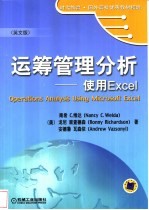
- (美)维达(Weida,N.C.)等著 著
- 出版社: 北京:机械工业出版社
- ISBN:7111143205
- 出版时间:2004
- 标注页数:370页
- 文件大小:54MB
- 文件页数:388页
- 主题词:电子表格系统,Excel-应用-企业管理:生产管理-高等学校-教材-英文
PDF下载
下载说明
运营管理分析 使用EXCELPDF格式电子书版下载
下载的文件为RAR压缩包。需要使用解压软件进行解压得到PDF格式图书。建议使用BT下载工具Free Download Manager进行下载,简称FDM(免费,没有广告,支持多平台)。本站资源全部打包为BT种子。所以需要使用专业的BT下载软件进行下载。如 BitComet qBittorrent uTorrent等BT下载工具。迅雷目前由于本站不是热门资源。不推荐使用!后期资源热门了。安装了迅雷也可以迅雷进行下载!
(文件页数 要大于 标注页数,上中下等多册电子书除外)
注意:本站所有压缩包均有解压码: 点击下载压缩包解压工具
图书目录
1 Creative Operations Management Problem Solving:A Decision-Making Approach 1
1.1 Managerial Decision Making 1
1.2 The Intelligence Phase of the Decision-Making Process 4
1.3 The Design Phase of the Decision-Making Process 10
1.4 The Choice Phase of the Decision-Making Process 14
1.5 An Example:Jackets versus Scrap at the UNEEDA Corporation 16
1.6 Concluding Comments 25
EXERCISES 25
2 Forecasting 27
2.1 Forecasting at the LastEver Corporation 28
2.2 Patterns of Data 33
2.3 Forecasting Approaches 42
2.4 Time Series Analysis 44
2.5 Concluding Comments 56
EXERCISES 56
3 Advanced Forecasting 59
3.1 Extrapolation from the Past 59
3.2 Regression Analysis 63
3.3 Cyclical and Seasonal Issues 71
3.4 Concluding Comments 81
EXERCISES 81
4 Planning Models 85
4.1 The Basic Planning Problem 85
4.2 The Basic Pricing Problem 87
4.3 Nonlinear Cost and Demand Functions 91
4.4 Preparing aFive-YearPlan 96
4.5 The Impact of Pricing 97
4.6 Concluding Comments 99
EXERCISES 100
5 Aggregate Planning and Leaming Curves 103
5.1 The Nature of Aggregate Planning 103
5.2 Tradeoffs between Production and Inventory 103
5.3 Learning Curves 110
5.4 Concluding Comments 112
EXERCISES 113
6 Inventory 117
6.1 Why Hold Inventory? 117
6.2 The Cost ofInventory 118
6.3 Cyclic Inventory Control 119
6.4 The Economic Order Quantity Model 123
6.5 What-IfScenarios 126
6.6 EOQ Model with Price Breaks 130
6.7 Economic Production Lot Size Model 132
6.8 Single-Period Models with Probabilistic Demand 136
6.9 Multi-Period Models with Probabilistic Demand 144
6.10 Concluding Comments 149
EXERCISES 150
7 Material Requirements Planning 153
7.1 Where MRP Fits In 153
7.2 Master Production Schedule 155
7.3 Bill ofMaterials 158
7.4 A Simple MRP Example 162
7.5 Rolling the MRP Schedule 163
7.6 Adding Allocated Inventory and Safety Stock 165
7.7 A More Complex MRP Example 166
7.8 Dealing with Multiple Products 168
7.9 Problems at Central Products Incorporated 171
7.10 Concluding Comments 176
EXERCISES 177
8 Quality:Monitoring Processes Using Charts 181
8.1 Monitoring Processes by Charts:Looking at the Data 181
8.2 Mean Charts 183
8.3 The Run Chart 186
8.4 The R(Range)Chart 186
8.5 Standard Deviation Charts 189
8.6 Using These Charts 189
8.7 Control Charts for Attribute Data 191
8.8 Other Quality Control Charts 194
8.9 Concluding Comments 197
EXERCISES 197
9 Machine Replacement and Maintenance 199
9.1 Machine Replacement Decisions 199
9.2 Machine Maintenance Decisions 206
9.3 Group Maintenance Decisions 211
9.4 Concluding Comments 214
EXERCISES 214
10 Project Management 217
10.1 The Project 217
10.2 The Professor 219
10.3 Network Diagrams 219
10.4 Probabilities 224
10.5 Crunching 229
10.6 Coneluding Comments 234
EXERCISES 235
11 Facility Location Decisions 237
11.1 Factor Weighting 237
11.2 Center-of-Gravity Method 240
11.3 Cosr-Volume Analysis 242
11.4 Concluding Comments 244
EXERCISES 245
12 Risk Analysis and Simulation 247
12.1 Problems Where Uncertainty Is Important 247
12.2 Working the Cough Drop Problem 252
12.3 Generating Random Numbers 259
12.4 Break-Even Analysis under Uncertainty:A Case Study 269
12.5 The Farmer's Problem:Dependent Random Variables 274
12.6 Concluding Comments 277
EXERCISES 277
13 Simulating Operations Management Processes 279
13.1 The Network-Flow Production Process 280
13.2 The Matchstick Shuffling System 280
13.3 The Copy Machine Problem 288
13.4 Why Projects Are Late 297
13.5 The Single Station System 300
13.6 Concluding Comments 304
EXERCISES 304
14 Resource Allocation:Applied Constraint Management 307
14.1 Making Mathematical Programming Relevant for Operations Management 307
14.2 A Production Planning Support System 308
14.3 A Transportation Problem 317
14.4 Concluding Comments 321
EXERCISES 321
Appendix A Using Excel 323
Appendix B The Models 355
For Further Reading 367
Index 368