
图书介绍
北京奥运话语中中华民族身份的多模式话语构建pdf电子书版本下载
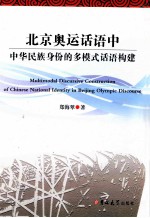
- 郑海翠著 著
- 出版社: 长春:吉林大学出版社
- ISBN:9787560172620
- 出版时间:2011
- 标注页数:271页
- 文件大小:14MB
- 文件页数:285页
- 主题词:中华民族-民族性-研究
PDF下载
下载说明
北京奥运话语中中华民族身份的多模式话语构建PDF格式电子书版下载
下载的文件为RAR压缩包。需要使用解压软件进行解压得到PDF格式图书。建议使用BT下载工具Free Download Manager进行下载,简称FDM(免费,没有广告,支持多平台)。本站资源全部打包为BT种子。所以需要使用专业的BT下载软件进行下载。如 BitComet qBittorrent uTorrent等BT下载工具。迅雷目前由于本站不是热门资源。不推荐使用!后期资源热门了。安装了迅雷也可以迅雷进行下载!
(文件页数 要大于 标注页数,上中下等多册电子书除外)
注意:本站所有压缩包均有解压码: 点击下载压缩包解压工具
图书目录
Chapter 1 Introduction 1
1.1 Contemporary communication 1
1.2 Sports and national identity 3
1.3 Beijing Olympic Games and Chinese national identity 4
1.4 The structure of the thesis 5
Chapter 2 Nation,Nationalism and National Identity 7
2.1 Identity studies:from essentialism to constructionism 8
2.2 Related concepts to national identity 10
2.2.1 Different approaches to nation 10
2.2.1.1 Nation as a historical development 10
2.2.1.2 Nation as an imagined community 12
2.2.1.3 Nation as a cognitive category 14
2.2.2 State and nation-state 18
2.2.3 Nationalism 19
2.2.4 Definition of national identity 21
2.3 Assumptions about national identity 24
2.3.1 National identity as social identity 24
2.3.2 National identity as collective identity 25
2.3.3 National identity:An interactive construct 26
2.3.4 Multi-dimensional representation of national identity 27
2.3.5 Multiple empirical referents to national identity 29
2.4 The discursive construction of national identity 32
2.5 Current researches on Chinese national identity 36
2.6 Towards multimodai discursive construction of national identity 37
Chapter 3 Multimodality Research:A New Frontier for Multi-semiotic Meaning Making 38
3.1 Studies of semiotic meaning-making mechanism 38
3.1.1 Founding fathers of semiotics revisited 39
3.1.1.1 Saussure's linguicentric semiology 39
3.1.1.2 Peirce's semiotics:logic-oriented theory about signs 41
3.1.2 Social semiotics 44
3.1.2.1 Social interpretation of meaning 45
3.1.2.2 Multiplicity of meaning-making resources 46
3.1.2.3 Social theory of signs 47
3.1.2.4 Semiosis and the social 50
3.1.3 Summary 52
3.2 Critical discourse analysis:discourse as social practice 54
3.2.1 Fairclough:The distinction between Discourse(s)and discourse(s) 54
3.2.2 Wodak:discourse as a macro-topic concept and a particular occurrence 57
3.2.3 Van Dijk:a multidisciplinary notion of discourse 57
3.2.4 Kress and Van Leeuwen:discourse as the semiosic plane in semiosis 59
3.2.5 Summary 63
3.3 Critical social semiotics 64
3.3.1 Multimodal theory of communication 65
3.3.2 Modes and media 66
3.3.3 Multimodal text 67
3.3.4 Multiple articulation of meaning 69
3.3.5 Reflections on Kress and Van Leeuwen's multimodal theory 70
Chapter 4 Proposed Frameworks for Multimodal Discourse Analysis 73
4.1 Multimodal realization of discourse 73
4.1.1 Mode identification 75
4.1.2 Mode involvement 78
4.1.3 Mode interaction 79
4.1.4 Strategy and multimodal discourse as social practice 81
4.2 A three-stage meaning-making model 83
4.2.1 Cultivation 83
4.2.2 Realization 87
4.2.3 Distribution 87
4.2.4 Relationship between the three stages 88
Chapter 5 Multimodal Discursive Construction of Chinese National Identity 91
5.1 A plethora of multi-semiotic resources as data 91
5.2 Multimodal realization of Chinese national identity 94
5.2.1 Modes,sub-modes and media deployed 97
5.2.1.1 Language 97
5.2.1.2 Sub-modes of language 140
5.2.1.3 Image 144
5.2.1.4 Music 170
5.2.1.5 Dress 171
5.2.1.6 Color 172
5.2.1.7 Number 178
5.2.1.8 Media 180
5.2.2 Mode involvement 183
5.2.3 Intersemiosis 184
5.2.3.1 The bidding logo and its caption 185
5.2.3.2 Intersemiosis in people's signatures 186
5.2.3.3 A middle school student's paper cranes and verbal hope 186
5.2.3.4 Overseas Chinese's Wish Cup and open letter 188
5.2.3.5 Overseas Chinese displaying"Olympic Dragon" Scroll 190
5.2.3.6 Interaction between semiotic modes in presentation 192
5.2.3.7 Fuwa:A kaleidoscope of the Chinese culture 194
5.2.4 Strategy 195
5.2.5 Summary 197
5.3 The Beijing Olympic emblem:An illustration of three-stage multimodal meaning making 197
5.3.1 Cultivation:digging Chinese culture 198
5.3.1.1 Design expectation:China aiming to be unique 198
5.3.1.2 Combining Chinese civilization with Olympic philosophy in the design 202
5.3.1.3 The design-modifying:A Chinese culture learning process 207
5.3.2 Realization:A witness of the Chinese nation's commitment 211
5.3.2.1 The visual image of the emblem:a multimodal construct 211
5.3.2.2 Multimodal realization of the emblem seal 213
5.3.2.3 Unveiling:an aggregate of signs 215
5.3.3 Distribution:meaning enhanced and enriched 217
5.3.3.1 Rogge giving approval in a Chinese way 217
5.3.3.2 International Comments 218
5.3.3.3 Chinese official interpretation 222
5.3.3.4 Chinese experts'evaluations 224
5.3.3.5 Other Chinese people's understanding 228
5.3.3.6 Summary 229
5.3.4 Chinese Seal-Dancing Beijing and Chinese national identity 230
5.4 Discussion 233
5.4.1 Chinese national identity as a multimodal discursive construct 234
5.4.2 Multi-dimensional representation of Chinese national identity 235
5.4.3 Multiple empirical referents to Chinese national identity 237
Chapter 6 Conclusion 240
Bibliography 245
Appendix:Data source 264