
图书介绍
核物理学 英文pdf电子书版本下载
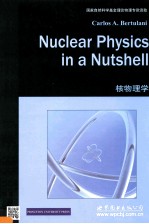
- (美)波特兰尼(BertulaniC.A.)著 著
- 出版社: 北京;西安:世界图书出版公司
- ISBN:7510058240
- 出版时间:2013
- 标注页数:473页
- 文件大小:71MB
- 文件页数:485页
- 主题词:核物理学-英文
PDF下载
下载说明
核物理学 英文PDF格式电子书版下载
下载的文件为RAR压缩包。需要使用解压软件进行解压得到PDF格式图书。建议使用BT下载工具Free Download Manager进行下载,简称FDM(免费,没有广告,支持多平台)。本站资源全部打包为BT种子。所以需要使用专业的BT下载软件进行下载。如 BitComet qBittorrent uTorrent等BT下载工具。迅雷目前由于本站不是热门资源。不推荐使用!后期资源热门了。安装了迅雷也可以迅雷进行下载!
(文件页数 要大于 标注页数,上中下等多册电子书除外)
注意:本站所有压缩包均有解压码: 点击下载压缩包解压工具
图书目录
Introduction 1
0.1 What is Nuclear Physics? 1
0.2 This Book 3
1 Hadrons 4
1.1 Nucleons 4
1.2 Nuclear Forces 5
1.3 Pions 7
1.4 Antiparticles 8
1.5 Inversion and Parity 8
1.6 Isospin and Baryonic Number 10
1.7 Isospin Invariance 13
1.8 Magnetic Moment of the Nucleons 14
1.9 Strangeness and Hypercharge 15
1.10 Quantum Chromodynamics 21
1.11 Exercises 29
2 The Two-Nucleon System 31
2.1 Introduction 31
2.2 Electrostatic Multipoles 32
2.3 Magnetic Moment with Spin-orbit Coupling 34
2.4 Experimental Data for the Deuteron 36
2.5 A Square-well Model for the Deuteron 38
2.6 The Deuteron Wave function 41
2.6.1 Angular momentum coupling 41
2.6.2 Two particles of spin 1/2 42
2.6.3 Total wavefunction 43
2.7 Particles in the Continuum:Scattering 46
2.8 Partial Wave Expansion 49
2.9 Low Energy Scattering 53
2.10 Effective Range Theory 59
2.11 Proton-Proton Scattering 61
2.12 Neutron-Neutron Scattering 64
2.13 High Energy Scattering 65
2.14 Laboratory and Center of Mass Systems 65
2.15 Exercises 68
3 The Nucleon-Nucleon Interaction 71
3.1 Introduction 71
3.2 Phenomenological Potentials 72
3.3 Local Potentials 72
3.3.1 Nonlocal potential 78
3.4 Meson Exchange Potentials 80
3.4.1 Yukawa and Van der Waals potentials 80
3.4.2 Field theory picture 84
3.4.3 Short rangepart of the NN interaction 86
3.4.4 Chiral symmetry 87
3.4.5 Generalized boson exchange 89
3.4.6 Beyond boson exchange 91
3.5 Effective Field Theories 94
3.6 Exercises 96
4 General Properties of Nuclei 98
4.1 Introduction 98
4.2 Nuclear Radii 98
4.3 Binding Energies 101
4.4 Total Angular Momentum of the Nucleus 104
4.5 Multipole Moments 104
4.6 Magnetic Dipole Moment 106
4.7 Electric Quadrupole Moment 109
4.8 Excited States of Nuclei 111
4.9 Nuclear Stability 114
4.10 Exercises 116
5 Nuclear Models 119
5.1 Introduction 119
5.2 The Liquid Drop Model 119
5.3 The Fermi Gas Model 124
5.4 The Shell Model 128
5.5 Residual Interaction 142
5.6 Nuclear Vibrations 144
5.7 Nuclear Deformation 149
5.8 The Nilsson Model 150
5.9 The Rotational Model 153
5.10 Microscopic Theories 160
5.10.1 Hartree-Fock theory 160
5.10.2 The Skyrme interaction 162
5.10.3 Relativistic mean field theory 164
5.11 Exercises 166
6 Radioactivity 170
6.1 Introduction 170
6.2 Multiple Decays—Decay Chain 171
6.3 Preparation of a Radioactive Sample 173
6.4 Secular Equilibrium 174
6.5 Natural Radioactive Series 174
6.6 Radiation Units 176
6.7 Radioactive Dating 177
6.8 Properties of Unstable States—Level Width 179
6.9 Transition Probability—Golden Rule 181
6.10 Exercises 183
7 Alpha-Decay 185
7.1 Introduction 185
7.2 Theory of α-Decay 185
7.3 Angular Momentum and Parity in α-Decay 191
7.4 Exercises 194
8 Beta-Decay 195
8.1 Introduction 195
8.2 Energy Released in β-Decay 196
8.3 Fermi Theory 197
8.4 The Decay Constant—The Log ft Value 202
8.5 Gamow-Teller Transitions 204
8.6 Selection Rules 206
8.7 Parity Nonconservation in β-Decay 206
8.7.1 Double β-Decay 211
8.8 Electron Capture 213
8.9 Exercises 215
9 Gamma-Decay 218
9.1 Introduction 218
9.2 Quantization of Electromagnetic Fields 218
9.2.1 Fields and gauge invariance 218
9.2.2 Normal modes 220
9.2.3 Photons 221
9.3 Interaction of Radiation with Matter 224
9.3.1 Radiation probability 227
9.3.2 Long wavelength approximation 228
9.4 Quantum and Classical Transition Rates 235
9.5 Selection Rules 240
9.6 Estimate of the Disintegration Constants 241
9.7 Isomeric States 243
9.8 Internal Conversion 244
9.9 Resonant Absorption—The M?ssbauer Effect 249
9.10 Exercises 255
10 Nuclear Reactions—Ⅰ 258
10.1 Introduction 258
10.2 Conservation Laws 260
10.3 Kinematics of Nuclear Reactions 261
10.4 Scattering and Reaction Cross Sections 265
10.5 Resonances 270
10.6 Compound Nucleus 273
10.7 Mean Free Path of a Nucleon in Nuclei 276
10.8 Empirical Optical Potential 277
10.9 Compound Nucleus Formation 282
10.10 Compound Nucleus Decay 290
10.11 Exercises 294
11 Nuclear Reactions—Ⅱ 298
11.1 Direct Reactions 298
11.1.1 Theory of direct reactions 301
11.2 Validation of the Shell Model 303
11.3 Photonuclear Reactions 306
11.3.1 Cross sections 307
11.3.2 Sum rules 308
11.3.3 Giant resonances 312
11.4 Coulomb Excitation 315
11.5 Fission 319
11.6 Mass Distribution of Fission Fragments 321
11.7 Neutrons Emitted in Fission 324
11.8 Cross Sections for Fission 325
11.9 Energy Distribution in Fission 327
11.10 Isomeric Fission 328
11.11 Exercises 331
12 Nuclear Astrophysics 334
12.1 Introduction 334
12.2 Astronomical Observations 335
12.2.1 The Milky Way 335
12.2.2 Dark matter 336
12.2.3 Luminosity and Hubble's law 337
12.3 The Big Bang 338
12.4 Stellar Evolution 341
12.4.1 Stars burn slowly 341
12.4.2 Gamow peak and astrophysical S-factor 342
12.5 The Sun 347
12.5.1 Deuterium formation 348
12.5.2 Deuterium burning 350
12.5.3 3He burning 351
12.5.4 Reactions involving 7Be 352
12.6 The CNO Cycle 354
12.6.1 Hot CNO and rp process 355
12.7 Helium Burning 357
12.8 Red Giants 360
12.9 Advanced Burning Stages 362
12.9.1 Carbon burning 362
12.9.2 Neon burning 364
12.9.3 Oxygen burning 365
12.9.4 Silicon burning 365
12.10 Synthesis of Heaviest Elements 367
12.11 White Dwarfs and Neutron Stars 368
12.12 Supernova Explosions 370
12.13 Nuclear Reaction Models 375
12.13.1 Microscopic models 375
12.13.2 Potential and DWBA models 376
12.13.3 Parameter fit 377
12.13.4 Statistical models 377
12.14 Exercises 379
13 Rare Nuclear Isotopes 385
13.1 Introduction 385
13.2 Light Exotic Nuclei 388
13.2.1 Halo nuclei 390
13.2.2 Borromean nuclei 393
13.3 Superheavy Elements 395
13.4 Exercises 400
Appendix A Angular Momentum 401
A.1 Orbital Momentum 401
A.2 Spherical Functions 402
A.3 Generation of Rotations 402
A.4 Orbital Rotations 403
A.5 Spin 404
A.6 Ladder Operators 406
A.7 Angular Momentum Multiplets 409
A.8 Multiplets as Irreducible Representations 412
A.9 SU(2)Group and Spin 1/2 413
A.10 Properties of Spherical Harmonics 414
A.10.1 Explicit derivation 414
A.10.2 Legendre polynomials 415
A.10.3 Completeness 416
A.10.4 Sphericalfunctions as matrix elements of finite rotations 417
A.10.5 Addition theorem 417
Appendix B Angular Momentum Coupling 419
B.1 Tensor Operators 419
B.1.1 Transformation of operators 419
B.1.2 Scalars and vectors 420
B.1.3 Tensors of rank 2 421
B.1.4 Introduction to selection rules 422
B.2 Angular Momentum Coupling 423
B.2.1 Two subsystems 423
B.2.2 Decomposition of reducible representations 424
B.2.3 Tensor operators and selection rules revisited 426
B.2.4 Vector coupling of angular momenta 427
B.2.5 Wigner-Eckart theorem 428
B.2.6 Vector Model 429
Appendix C Symmetries 432
C.1 Time Reversal 432
C.2 Spin Transformation and Kramer's Theorem 433
C.3 Time-conjugate Orbits 435
C.4 Two-component Neutrino and Fundamental Symmetries 436
C.5 Charge Conjugation 437
C.6 Electric Dipole Moment 438
C.7 CPT-Invariance 439
Appendix D Relativistic Quantum Mechanics 440
D.1 Lagrangians 440
D.1.1 Covariance 441
D.2 Electromagnetic Field 442
D.3 Relativistic Equations 444
D.3.1 Particleat rest 446
D.3.2 Covariant form:y matrices 446
D.4 Probability and Current 448
D.5 Wavefunction Transformation 448
D.5.1 Bilinear Covariants 450
D.5.2 Parity 451
D.6 Plane Waves 451
D.6.1 Summary of plane wave spinor properties 453
D.6.2 Projection operators 454
D.7 Plane Wave Expansion 454
D.8 Electromagnetic Interaction 455
D.9 Pauli Equation 455
D.9.1 Spin-orbit and Darwin terms 457
Appendix E Useful Constants and Conversion Factors 459
E.1 Constants 459
E.2 Masses 460
E.3 Conversion Factors 460
References 461
Index 469