
图书介绍
中国通史纲要:英文pdf电子书版本下载
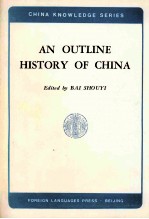
- 白寿彝主编;杨钊,方龄贵,龚书铎等分纂 著
- 出版社: 北京:外文出版社
- ISBN:0835110001
- 出版时间:1982
- 标注页数:565页
- 文件大小:72MB
- 文件页数:575页
- 主题词:
PDF下载
下载说明
中国通史纲要:英文PDF格式电子书版下载
下载的文件为RAR压缩包。需要使用解压软件进行解压得到PDF格式图书。建议使用BT下载工具Free Download Manager进行下载,简称FDM(免费,没有广告,支持多平台)。本站资源全部打包为BT种子。所以需要使用专业的BT下载软件进行下载。如 BitComet qBittorrent uTorrent等BT下载工具。迅雷目前由于本站不是热门资源。不推荐使用!后期资源热门了。安装了迅雷也可以迅雷进行下载!
(文件页数 要大于 标注页数,上中下等多册电子书除外)
注意:本站所有压缩包均有解压码: 点击下载压缩包解压工具
图书目录
Chapter Ⅰ Introduction 1
1.A Land of 9,600,000 Square Kilometres 1
2.Fifty-five Nationalities and a Population of Nearly 1,000,000,000 9
3.1,700,000 Years and 3,600 Years 17
Chapter Ⅱ Traces of Remote Antiquity 30
1.From Yuanmou Man to Peking Man;the Making of Tools and the Use of Fire 30
2.Dingcun(Tingtsun)Man and Upper Cave Man;the Improvement of Tools and the Emergence of Ornaments 34
3.The Yangshao Culture and Its Matriarchal Communes 38
4.The Patriarchal Clan Society of the Longshan Culture 43
Chapter Ⅲ Myth and Legend 52
1.The Legends of Ancient Tribes 52
2.Tribal Chiefs,Gods and Their Sons 54
3.The Hereditary Monarchy of the Xia Dynasty 57
Chapter Ⅳ The Slave State of the Shang and Zhou Dynasties 62
1.The Earliest Written History 62
2.The Slave-Owning Shang Dynasty 67
3.The Social Economy of the Shang Dynasty 71
4.The Rise of the Zhou and the Establishment of the Slave-Owning Zhou Dynasty 76
5.Economic Development Under Zhou Slavery 83
6.The Zhou Dynasty from Prosperity to Decline 86
Chapter Ⅴ The Early Eastern Zhou,Spring and Autumn,and Warring States Periods:Transition from Slavery to Feudalism 89
1.The Early Eastern Zhou and the Spring and Autumn Period:Contention for Supremacy Among the Major States 89
2.The Seven Powers of the Warring States Period 95
3.The Transition from Slavery to Feudalism 101
4.Confucius,Mo Zi,Other Thinkers and the Elegies of Chu 109
Chapter Ⅵ The Qin and Han Dynasties:the Growth of Feudal Society 123
1.The Qin,China's First Feudal Dynasty 123
2.Peasant Uprisings in the Late Qin Dynasty 127
3.Establishment and Consolidation of the Western Han Dynasty 132
4.Golden Age of the Western Han Dynasty 138
5.Decline of the Western Han Dynasty;Uprisings of the Green Woodsmen and Red Eyebrows 145
6.The Establishment of the Eastern Han Dynasty,the Prolcnged Turbulence,and the Yellow Turban Uprising 153
7.The Development of Social Productive Forces 162
8.The Growth of Feudal Relations 168
Chapter Ⅶ The Three Kingdoms,the Jin,the Southern and Northern Dynasties,the Sui and the Tang:the Earlier Period of Ascendancy of Chinese Feudalism 174
1.The Three Kingdoms 174
2.The Western Jin,the Eastern Jin and the Sixteen States 180
3.The Southern and Northern Dynasties 190
4.The Establishment of the Sui Dynasty and the Peasant Uprisings in Its Closing Years 202
5.The Golden Age of the Tang 209
6.Turmoil in the Mid-Tang Period 221
7.The Decline of the Tang Empire and the Late-Tang Peasant Uprisings 230
8.The Development of Social Productive Forces 238
9.The Development of Feudal Relations and the Feudal-ization of Regions Inhabited by Several Nationalities 247
Chapter Ⅷ The Five Dynasties,the Song and the Yuan:the Later Period of Ascendancy of Chinese Feudalism 256
1.The Five Dynasties and Ten States 256
2.Rise and Fall of the Northern Song;Uprisings by Wang Xiaobo and Fang La 264
3.The Liao,the Xia and the Jin:Their Relations with the Northern Song 273
4.Rival Regimes of the Song and the Jin;Uprisings by Zhong Xiang,Yang Yao and the Red Jackets 279
5.The Rise of the Mongols and the Fall of the Xia,the Jin and the Southern Song 288
6.Founding of the Yuan Dynasty and Peasant Uprisings During the Late Yuan 296
7.Further Growth of Social Productivity;Southward Shift of Economic Development 306
8.Further Development of Feudal Relations;Feudalization of the Border Regions 313
9.China's Communications with the Outside World 320
Chapter Ⅸ The Ming-Qing Period:the Twilight of Feudalism 327
1.Establishment of the Ming Dynasty 327
2.Decline of the Ming Dynasty;Refugee and Miner Uprisings 338
3.Decay of the Ming Dynasty;Peasant Uprisings Continued 344
4.Rise of the Manchus;Peasant Uprisings Towards the End of the Ming;Fall of the Ming Dynasty 356
5.Peasant Regime of the Great Shun;Princes of the Southern Ming;Unification Activities During the Early Qing Dynasty 374
6.Qing Rule Strengthened 385
7.Decline of the Qing;Uprisings of Different Nationalities 397
8.The Decline of Feudalism and the Emergence of Sprouts of Capitalism 406
9.Arrival of Western Colonialism 420
Chapter Ⅹ Semi-Colonial and Semi-Feudal Society;The Old Democratic Revolution 431
1.The Opium War 431
2.The Taiping Peasant War 436
3.The Second Opium War;Russia's Occupation of Chinese Territory 443
4.The Later Period of the Taiping Peasant War 448
5.Culture and Learning After the Opium War 453
6.Foreign Economic Aggression and the Official"Westernization"Drive 457
7.The Proletariat and the National Bourgeoisie in the Early Days;The Spread of Modern Western Science 460
8.Foreign Aggression and China's Border Crises 465
9.The Sino-Japanese War and Imperialist Partition of China 470
10.The Modernization Movement of the Bourgeois Reformists 475
11.The Anti-Imperialist Patriotic Movement of the Yi He Tuan 483
12.The Rise of the Bourgeois Revolutionary Movement 489
13.The Founding of the Tong Meng Hui 495
14.The Wuchang Uprising;The Founding of the Republic of China and the Fall of the Qing Dynasty 500
15.The Period of Beiyang Warlord Rule 507
16.Ideology and Culture During the Period of Bourgeois Revolution 513
17.The Dawn of the Chinese Revolution 521
ABOUT THE EDITOR 529
INDEX 531