图书介绍
禅宗对邵雍重新定义太极思想的影响pdf电子书版本下载
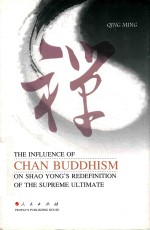
- 明清著 著
- 出版社: 北京:人民出版社
- ISBN:9787010109374
- 出版时间:2013
- 标注页数:327页
- 文件大小:39MB
- 文件页数:344页
- 主题词:禅宗-影响-理学-中国-北宋-英文
PDF下载
下载说明
禅宗对邵雍重新定义太极思想的影响PDF格式电子书版下载
下载的文件为RAR压缩包。需要使用解压软件进行解压得到PDF格式图书。建议使用BT下载工具Free Download Manager进行下载,简称FDM(免费,没有广告,支持多平台)。本站资源全部打包为BT种子。所以需要使用专业的BT下载软件进行下载。如 BitComet qBittorrent uTorrent等BT下载工具。迅雷目前由于本站不是热门资源。不推荐使用!后期资源热门了。安装了迅雷也可以迅雷进行下载!
(文件页数 要大于 标注页数,上中下等多册电子书除外)
注意:本站所有压缩包均有解压码: 点击下载压缩包解压工具
图书目录
Chapter One:Introduction:The Existing Scholarship and Disser-tation Prospectus 1
1.1.The Existing Scholarship 4
1.2.A Summary of Existing Scholarship 12
1.3.My Research Subject 16
1.4.My Reasons for Selecting This Topic 17
1.5.The Significance and Value of this Research 17
1.6.Research Method:Hermeneutics 18
1.7.Dissertation Outline 19
1.8.The Sources 22
Conclusion 22
Chapter Two:Historical and Philosophical Background 23
2.1.The Political,Economic and Social Background 24
2.2.Cultural Background 26
2.2.1.The Reinvented Song Chan Buddhist School 26
2.2.2.Chan Buddhism in Literati Culture 28
2.2.2.1.The Tea Ceremony(chadao) 29
2.2.2.2.Chan Poetry 30
2.2.2.3.Chan Painting 31
2.2.2.4.The Art of Calligraphy(shufa yishu) 33
2.2.2.5.Literati's Relationship with Chan Buddhism 37
2.2.3.The Rise of Neo-Confucianism and the Song Book of Changes(Songyi) 41
Conclusion 43
Chapter Three:Buddhism's Influence on the Life of Shao Yong 49
3.1.The Life of Shao Yong 49
3.2.Buddhist Influence on Shao Yong's Family 51
3.3.Shao Yong's Study of Buddhism and his Practice of Chan 56
3.4.The Existing Scholarship on the non Buddhist Influence on Shao Yong's Life 63
Conclusion 68
Chapter Four:Shao Yong's Redefinition of the Supreme Ultimate:The Mind as the Supreme Ultimate 69
4.1.Beginnings and Historical Developments:An Overview of the Supreme Ultimate 71
4.2.Shao Yong's Redefinition of the Supreme Ultimate:The Mind as the Supreme Ultimate 77
4.2.1.The Innate Theory (Xiantian yixue) 77
4.2.1.1.Diagrams of the Sequence of the Eight Trigrams and Sixty-four Hexagrams 78
4.2.1.2.The Manifestation of the All Things 82
4.2.2.The Eight Trigrams and Sixty-four Hexagrams Directional Position Diagrams(bagua he liushisi gua fangweitu) 86
4.2.3.The Mind as the Supreme Ultimate 91
4.2.3.1.The Concept of One,Spirit and Images 92
4.2.3.2.The Concept of Numerals and Principle 95
4.2.3.3.The Concept of Principle and Mind 97
4.2.3.4.“One Mind”and the Supreme Ultimate 98
4.2.3.5.The Concept of“the Innate Theory is the Theory of Mind” 102
4.3.The Acquired Theory 105
Conclusion 107
Chapter Five:A Survey of Existing Research on the Subject 109
5.1.Was Shao Yong influenced by Mencius'Concept of“All Things are Complete within Me”? 110
5.2.Was Shao Yong influenced by Confucius'Concept of“Intrinsic Nature of Mind” 114
5.3.Was Shao Yong influenced by the Confucian Concept of“Investigation of Things(gewu)and Extension of Knowledge(zhizhi)” 116
5.4.Was Shao Yong Influenced by Philosophical and Religious Daoism? 119
Conclusion 130
Chapter Six:The Concept of“Realizing the Mind and Seeing Self-Nature”and Its Influence on Shao Yong's Redefinition of the Supreme Ultimate 132
6.1.Huineng's Concept of“Realizing the Mind and Seeing Self-Nature” 132
6.1.1.An Analysis of Sources 133
6.1.2.“Buddha-Nature”and“praj?ā” 144
6.1.3.Self-nature 148
6.1.4.Realizing the Mind and Seeing Self-Nature(shixin jianxing) 150
6.1.5.“Sudden-Enlightenment”Path of“No-Thought” 154
6.2.The Influence of Huineng upon Shao Yong's Redefinition of the Supreme Ultimate 158
6.2.1.Buddha-Nature as Self-nature in Mind and Mind as the Supreme Ultimate 158
6.2.2.Self-Cultivation Pointing Directly at the Mind 161
6.2.3.Orientation towards Humanism 164
6.2.4.Merging of Worldly Dharma and Transmundane Dharma 164
Conclusion 166
Chapter Seven:Diagrams and Pictorial Schemes for the Concept of“Realizing the Mind and Seeing Self-Nature”and its Influence on Shao Yong 175
7.1.Zongmi's Chan Diagrams and Pictorial Schemes 175
7.1.1.Zongmi and His Works 176
7.1.2.Chan Hermeneutical Diagram Indicating the Mind of Sentient Beings 178
7.1.3.The Relationship among Mind,the Supreme Ultimate and Alayavij?āna 182
7.2.Linji Chan's Concept of“Four Discernments of Person and Object”(siliaojian) 185
7.3.The Caodong Chan Concept of Jeweled Mirror Samādhi(baojing san mei宝镜三昧) 188
7.3.1.Caoshan Benji,Dongshan Liangjia and Huihong Kuanfan 189
7.3.2.Jeweled Mirror Samādhi(baojing sanmei) 190
7.3.3.The Influence of Jeweled Mirror Samādhi on Shao Yong's Redefinition of the Supreme Ultimate 194
7.3.4.Venerable Taixu's(1890-1947)Scholarship 200
Conclusion 206
Chapter Eight:Chan Buddhism's Influence upon the Lineage of the Supreme Ultimate 207
8.1.The Issue of Whether the Lineage of the Supreme Ultimate Began with Chen Tuan(906-1032) 208
8.2.The Issue of Whether the Supreme Ultimate Lineage can be Traced Back to Mayi Daozhe 215
8.2.1.The Existing Scholarship on the Subject 215
8.2.2.The Credibility of Zhu Xi's Point of View 217
8.2.3.The Reliability of Chao Gongwu's Account of the Supreme Ultimate Lineage in A Record of Junzhai Studies(Junzhai dushu zhi) 219
8.2.4.Mayi Daozhe and His Relationship with Chen Tuan as Evidence for Chan Buddhist Influence 220
8.3.The Issue as to whether the Supreme Ultimate Lineage can be Traced Back to Chan Masters Guoyi(714-792)and Shouya(Early Northern Song Dynasty,Date Unknown) 225
8.3.1.The Supreme Ultimate Lineage as Recorded in A Collection of Direct Approaches for Returning to the Source(Guiyuan zhizhiji) 225
8.3.2.The Overlooked Source:the Lineage of the Supreme Ultimate as Described in the Records of Helin Temple(Helinsi zhi鹤林寺志) 229
Conclusion 236
Chapter Nine:Conclusion 241
Appendix A The Lineage of Chinese Chan Buddhism 247
Appendix B Collected Diagrams 253
Appendix C List of Chinese Characters 257
Bibliography 278
Index 320