
图书介绍
二语写作文本产出机制研究pdf电子书版本下载
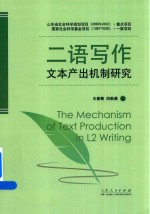
- 王俊菊,闫秋燕著 著
- 出版社: 济南:山东人民出版社
- ISBN:9787209103367
- 出版时间:2017
- 标注页数:275页
- 文件大小:26MB
- 文件页数:295页
- 主题词:第二语言-写作-研究
PDF下载
下载说明
二语写作文本产出机制研究PDF格式电子书版下载
下载的文件为RAR压缩包。需要使用解压软件进行解压得到PDF格式图书。建议使用BT下载工具Free Download Manager进行下载,简称FDM(免费,没有广告,支持多平台)。本站资源全部打包为BT种子。所以需要使用专业的BT下载软件进行下载。如 BitComet qBittorrent uTorrent等BT下载工具。迅雷目前由于本站不是热门资源。不推荐使用!后期资源热门了。安装了迅雷也可以迅雷进行下载!
(文件页数 要大于 标注页数,上中下等多册电子书除外)
注意:本站所有压缩包均有解压码: 点击下载压缩包解压工具
图书目录
Chapter One Overview of the Study 1
1.1 Introduction 1
1.2 Developments in Studies on L1 Writing 3
1.3 Developments in Studies on L2 Writing 4
1.4 Statement of Problems 5
1.5 Method and Purpose of the Study 6
1.6 Structure of the Book 7
Chapter Two Theoretical Orientations to Writing Processes 9
2.1 Introduction 9
2.2 Cognitive Models of the Writing Process 9
2.3 Socio-cognitive Models of the Writing Process 15
2.4 Sociocultural Theory and the Writing Process 20
2.5 Activity Theory and the Writing Process 22
2.6 Chapter Summary 24
Chapter Three Previous Studies on EFL Writing Processes 26
3.1 Introduction 26
3.2 Studies on Planning Processes 26
3.2.1 Nature of Planning Processes 27
3.2.2 Types of Planning Processes 29
3.2.3 Factors Influencing Planning Processes 29
3.2.4 Effects of Planning Processes on Writing Performance 31
3.3 Studies on Generating Processes 34
3.3.1 Language Choices in Generating Processes 34
3.3.2 Focus of Ideas in Generating Processes 36
3.3.3 Role of Proficiency Level in Generating Processes 38
3.3.4 Writing Tools and Generating Processes 39
3.4 Studies on Revising Processes 42
3.4.1 Nature of Revision in Writing Processes 42
3.4.2 Variations in Revising Behaviors 43
3.4.3 Strategies Used in Revising Processes 45
3.5 Chinese Studies on EFL Writing Processes 46
3.6 Research Gaps and Research Objectives 48
3.7 Chapter Summary 49
Chapter Four Methodology of the Study 50
4.1 Introduction 50
4.2 Think-aloud Protocols 50
4.3 Stimulated Recalls 54
4.4 Computer-aided Methods 55
4.4.1 Keystroke Logging 55
4.4.2 Inputlog 56
4.4.3 Automated Essay Scoring 57
4.5 Chapter Summary 59
Chapter Five Planning in the Text-producing Processes 60
5.1 Introduction 60
5.2 Design of the Study 61
5.2.1 Participants 61
5.2.2 Sources of Data 63
5.2.3 Data Collection 63
5.2.4 Data Analysis 65
5.3 Results and Findings 66
5.3.1 Overall Temporal Features of Planning Processes 66
5.3.2 Temporal Features of Planning Processes by Writing Tool 72
5.3.3 Temporal Features of Planning Processes by Group 78
5.4 Discussion 82
5.4.1 Shared Features of Planning Time Allocation 82
5.4.2 Balanced Planning Time of More Proficient Students 84
5.4.3 Decreases in Pre-writing Planning Time 86
5.5 Chapter Summary 87
Chapter Six Generating in the Text-producing Processes 88
6.1 Introduction 88
6.2 Design of the Study 90
6.2.1 Participants 90
6.2.2 Sources of Data 90
6.2.3 Data Collection 91
6.2.4 Data Analysis 93
6.3 Results and Findings 95
6.3.1 Overall Features of Generating Processes 95
6.3.2 Features of Generating Processes by Group 99
6.3.3 Features of Generating Processes by Writing Tool 102
6.4 Discussion 103
6.4.1 Large Time Proportion of Generating Processes 103
6.4.2 Common Use of L1 in L2 Generating Processes 104
6.4.3 Reduction of Generating Time in Keyboard Writing 105
6.5 Chapter Summary 106
Chapter Seven Revising in the Text-producing Processes 107
7.1 Introduction 107
7.2 Design of the Study 109
7.2.1 Participants 109
7.2.2 Sources of Data 109
7.2.3 Data Collection 110
7.2.4 Data Analysis 111
7.3 Results and Discussion 112
7.3.1 Features of Online Revising Processes 112
7.3.2 Types of Online Revisions 116
7.3.3 Focuses of Online Revising Processes 118
7.4 Chapter Summary 119
Chapter Eight Apprehension in the Text-producing Processes 121
8.1 Introduction 121
8.2 Design of the Study 122
8.2.1 Participants 122
8.2.2 Sources of Data 123
8.2.3 Data Collection 125
8.2.4 Data Analysis 128
8.3 Results and Discussion 130
8.3.1 Overall Situation of Writing Apprehension 130
8.3.2 Sources of Writing Apprehension 141
8.3.3 Possible Ways to Reduce Writing Apprehension 145
8.4 Chapter Summary 146
Chapter Nine Reader Awareness in the Text-producing Processes 148
9.1 Introduction 148
9.2 Design of the Study 149
9.2.1 Participants 149
9.2.2 Sources of Data 150
9.2.3 Pilot Study 152
9.2.4 Data Collection 152
9.2.5 Data Analysis 154
9.3 Results and Discussion 156
9.3.1 Perceptions of Audience Awareness in Writing 156
9.3.2 Target Audience in Students'Mind 164
9.3.3 Ways to Realize Audience Awareness 167
9.4 Chapter Summary 178
Chapter Ten Thinking Medium in the Text-producing Processes 179
10.1 Introduction 179
10.2 Design of the Study 180
10.2.1 Participants 180
10.2.2 Sources of Data 181
10.2.3 Data Collection 183
10.2.4 Data Analysis 186
10.3 Results and Discussion 190
10.3.1 Alternate Use of L1 and L2 as Medium of Thought 190
10.3.2 Situations Triggering the Shift of Thinking Medium 196
10.3.3 Task Types and the Use of Thinking Medium 202
10.3.4 Effect Factors to the Choice of Thinking Medium 203
10.3.5 Relationship between L1 Use and Writing Performance 208
10.4 Chapter Summary 209
Chapter Eleven Toward a Mechanism of Text Production in L2 Writing 210
11.1 Introduction 210
11.2 The Role of Proficiency Level 210
11.3 The Role of Thinking Language 212
11.4 The Role of Writing Tools 213
11.5 The Role of Task Type 215
11.6 The Role of Reader Awareness 216
11.7 The Role of Writing Apprehension 217
11.8 A Tentative Model of L2 Text Production 219
11.9 Chapter Summary 222
Chapter Twelve Conclusion 223
12.1 Summary of the Study 223
12.2 Pedagogical Implications 225
12.2.1 Teaching Writing beyond Language Points 225
12.2.2 Teaching Writing with the Aid of Technology 226
12.2.3 Combining Reading and Writing in Writing Instruction 227
12.2.4 Providing Adequate Opportunities for Practice 227
12.3 Limitations of the Study 227
12.4 Suggestions for Future Studies 228
12.5 Concluding Remarks 229
References 230
Appendix 1 261
Appendix 2 262
Appendix 3 263
Appendix 4 264
Appendix 5 265
Appendix 6 266
Appendix 7 269
Appendix 8 270
Appendix 9 271
Appendix 10 272
Acknowledgements 274