
图书介绍
汉英翻译与跨语认知pdf电子书版本下载
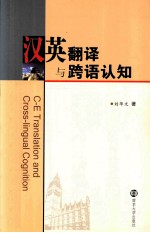
- 刘华文编著 著
- 出版社: 南京:南京大学出版社
- ISBN:9787305062346
- 出版时间:2009
- 标注页数:227页
- 文件大小:27MB
- 文件页数:252页
- 主题词:英语-翻译-研究
PDF下载
下载说明
汉英翻译与跨语认知PDF格式电子书版下载
下载的文件为RAR压缩包。需要使用解压软件进行解压得到PDF格式图书。建议使用BT下载工具Free Download Manager进行下载,简称FDM(免费,没有广告,支持多平台)。本站资源全部打包为BT种子。所以需要使用专业的BT下载软件进行下载。如 BitComet qBittorrent uTorrent等BT下载工具。迅雷目前由于本站不是热门资源。不推荐使用!后期资源热门了。安装了迅雷也可以迅雷进行下载!
(文件页数 要大于 标注页数,上中下等多册电子书除外)
注意:本站所有压缩包均有解压码: 点击下载压缩包解压工具
图书目录
1 Introduction:co-reference,inter-structure and re-conceptualization ir C-E translation 1
1.1 Introduction 1
1.2 The co-referential relation in C-E translation 2
1.3 Inter-structural relations between SL and TL 4
1.4 Conceptual relations between SL and TL 11
1.5 Conclusion 20
2 Cognitive abilities in C-E translation 21
2.1 Introduction 21
2.2 Images—raw materials for cognitive event in translation 25
2.3 Cognitive abilities in C-E translation 26
2.3.1 Recuperation of scene 26
2.3.2 Selective readjustment 30
2.3.3 Perspective shifts 36
2.3.4 Abstraction 41
2.4 Summry:iconicity as the principle of mechanism for cognitive abilities 44
3 Cognitive characteristics of re-categorization in C-E translation 46
3.1 Re-categorization:a cognitive mechanism in translation 46
3.2 The cognitive characteristics of re-categorization in C-E translation 48
3.2.1 The confinedness in re-categorization 49
3.2.2 The split-levelness in re-categorization 51
3.2.3 The parasiticness of re-categorization 53
3.2.4 The bi-directionalness in re-categorization 53
3.3 Conclusion:translational cognitive re-categorization in the light of linguistic philosophy 58
4 Semantic construction through space blending in C-E translation 60
4.1 Introduction 60
4.2 Space blending:a theoretical account 62
4.2.1 Space blending theory 64
4.2.2 Cold dish or cold plate? 65
4.3 Frame,domain,space,script:parameters in cross-lingual space blending 66
4.3.1 Frame:a parameter pertaining to the spatial proximity within a scene 69
4.3.2 Domain:a parameter pertaining to the total knowledge involved and the interrelatedness of its constituents 71
4.3.3 Script:a parameter pertaining to a temporally sequenced space 76
4.3.4 Base:a parameter against which a constituent in a frame,domain or script is profiled 77
4.4 Conclusion 78
5 Two levels of cross-lingual metonymic substitution in C-E translation 80
5.1 Metonymy in cognitive perspective 81
5.2 Types of metonymy 82
5.3 Metaphor-metonymy relationship 85
5.4 Metonymic approaches to C-E translation 88
5.4.1 Low-level metonymy 88
5.4.2 High-level metonymy 95
5.4.3 Metaphtonymy 103
5.5 Conclusion 105
6 Re-lexicalization of motion-event in C-E translation 107
6.1 Introduction:what is re-lexicalization? 107
6.2 Re-lexicalization patterns in C-E translation:eventualization, event composition and event decomposition 108
6.3 Principles in opting for re-lexicalization patterns 110
6.4 Eventualization from verb-weak Chinese 113
6.5 Re-lexicalization of motion event in C-Etranslation by composition and decomposition 115
6.5.1 Motion+Co-Event 117
6.5.2 Conflation of cause Co-Event onto verb 120
6.5.3 Conflation of path onto verb 122
6.5.4 Conflation of figure onto verb 124
6.5.5 Conflation of result/effect onto verb 126
6.5.6 Conflation of ground onto verb 127
6.6 Translator's two optional tendencies:verb framing and satellite framing 128
6.7 Conclusion:detection of semantic potentials for cross-linguistic lexicalization 129
7 Re-matching of verb with construction in C-E translation 130
7.1 Introduction:verb and construction 130
7.2 Verb-construction links in C-E translation 134
7.3 The re-matching of equivalent verb for SL with construction 136
7.3.1 Full compatibility in verb-construction links 136
7.3.2 Cognitive motivation for verb-construction integration 138
7.3.3 The main consequence of verb-construction re-matching in C-E translation:a semantic shift 142
7.4 Conclusion 143
8 Inter-constructional correlations in C-E translation 145
8.1 Introduction 145
8.1.1 Theoretieal prerequisites 145
8.1.2 Tentative observations 146
8.2 Constructional productivity in C-E translation 147
8.2.1 Difference in the degree of constructional productivity between Chinese and English 147
8.2.2 Productivity of English constructions in C-E translation 150
8.3 Inter-constructional correlations by metonymic inheritance in C-E translation 154
8.3.1 Sub-partial links in C-E translation 156
8.3.2 Componential inheritance of predicative verb and argument role 159
8.4 Inter-constructional correlations by metaphorical extension in C-E translation 161
8.4.1 Full extension 161
8.4.2 Argument role contribution 164
8.4.3 Argument role annulment 165
8.5 Inter-constructional transformation in C-E translation 166
8.6 Conclusion 168
9 Fictivity and factivity of event re-conceptualization in C-E translation 170
9.1 Theoretical framework:factivity and fictivity of cognitive conceptualization 170
9.2 Path specification and event re-conceptualization in C-E translation 172
9.2.1 Orientation paths 172
9.2.2 Radiation paths 175
9.2.3 Shadow paths 182
9.2.4 Sensory paths 184
9.2.5 Pattern paths 188
9.3 Conclusion 190
10 Semantic orientation,syntactic position and pragmatic function of modifier in C-E translation 191
10.1 Semantically oriented verb or noun modifiers and their syntactic dislocation in Chinese 191
10.1.1 Perpetuity and temporariness 194
10.1.2 Intentionality and unintentionality 195
10.1.3 Subjectivity and objectivity 196
10.2 The syntactic zero-redeployment of verb-modifiers in C-E translation 197
10.3 The cross-lingual relocation of verb modifiers in C-E translation 199
10.3.1 Position-retaking of modifiers in C-E translation 199
10.3.2 Mutual merging of a modifier and the modified:verb-inclined and modifier-inclined blending 202
10.3.3 The tension between the centrifugal force of semantic orientation and the syntactic gravity of the modified 206
10.4 The pragmatic effects of re-matches in semantic-syntactic relationship of modifiers in C-E translation 209
10.5 A dependence-theory account for the semantic-syntactic correlation in C-E translation 211
10.6 Conclusion 214
Re ferences 215
Subject index 222
Chinese postscript 224