
图书介绍
语言导论新编pdf电子书版本下载
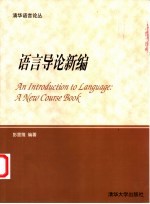
- 彭宣维编著 著
- 出版社: 北京:清华大学出版社
- ISBN:7302061904
- 出版时间:2003
- 标注页数:312页
- 文件大小:15MB
- 文件页数:325页
- 主题词:英语(学科: 语言学) 英语 语言学
PDF下载
下载说明
语言导论新编PDF格式电子书版下载
下载的文件为RAR压缩包。需要使用解压软件进行解压得到PDF格式图书。建议使用BT下载工具Free Download Manager进行下载,简称FDM(免费,没有广告,支持多平台)。本站资源全部打包为BT种子。所以需要使用专业的BT下载软件进行下载。如 BitComet qBittorrent uTorrent等BT下载工具。迅雷目前由于本站不是热门资源。不推荐使用!后期资源热门了。安装了迅雷也可以迅雷进行下载!
(文件页数 要大于 标注页数,上中下等多册电子书除外)
注意:本站所有压缩包均有解压码: 点击下载压缩包解压工具
图书目录
Part One A Setup for Language 3
Chapter 1 Language as a Set of Facts 3
1.1 Language as a Set of Facts 4
1.1.1 Language as a socio-historical fact 4
1.1.2 Language as a neurological as well as cognitive fact 9
1.2 Language as a Fact of Its Own:the Design Features 12
1.3 Language as Entity vs.Speaking/Writing as Substance 19
Chapter 2 Language as Text 26
2.1 Language as Process 26
2.1.1 The naming process 26
2.1.2 Meaning:one level of language 31
2.1.3 Wording/Grammar:another level of language 34
2.2 Language as Text 36
2.2.1 What is a text? 36
2.2.2 Word-text continuum 39
2.3 From Situation to Language 45
Part Two Word:Sense,Lexeme & M.Foot 55
Chapter 3 What is Word?—A Definition 55
3.1 What is Word?A Transverse Perspective 55
3.2 How Is A Word Made Up?A Vertical Perspective 63
3.3 Meaning Types:the Neglected Aspect of Word Classification 69
Chapter 4 Words(1):Senses and Sense Relations 79
4.1 Ideational Words 79
4.1.1 Experiential meanings 80
4.1.2 Logical meanings 85
4.2 Interpersonal Words 90
4.2.1 Modal words 90
4.2.2 Evaluative words 93
4.2.3 Words of formality 97
4.3 Informational Words 100
4.3.1 Words of"Given"value 100
4.3.2 Words of"New"value 107
Chapter 5 Words(2&3):Lexeme and Metrical Foot 110
5.1 Morpheme and Lexeme 110
5.1.1 Morpheme,affix,root and stem 111
5.1.2 The functions of affixes 114
5.1.3 Morpheme vs.meaning 119
5.2 Phoneme,Syllable and Metrical Foot 123
5.2.1 Phonemes 123
5.2.2 Syllable and metrical foot 131
Part Three From Word to Sentence 139
Chapter 6 Word Group and Phrase 139
6.1 Word Group 139
6.1.1 Nominal group 140
6.1.1.1 The formal aspect of nominal group 140
6.1.1.2 The meaning/experiential aspect of nominal group 142
6.1.2 Verbal group:the meaning and wording 146
6.1.3 Adverbial,conjunction and preposition groups 150
6.1.4 The phonological aspect of word group 153
6.2 Prepositional Phrase 156
Chapter 7 Sentence(1):Interpersonal Meaning and Form 161
7.1 Introduction:Clause Complex as Transitional Rank 161
7.2 Mood and Its Form in Clause and Clause Complex 164
7.2.1 In the clause 164
7.2.2 In the clause complex 167
7.3 Evaluative Meaning in Emphatic Constructions 169
7.4 Formality and Its Form in the Clause and Clause Complex 174
Chapter 8 Sentence(2):Ideational Meaning and Form 181
8.1 The Clause 181
8.1.1 Meaning structure:Transitivity 181
8.1.1.1 What does Transitivity mean? 181
8.1.1.2 Material process 183
8.1.1.3 Mental process 185
8.1.1.4 Relational process 187
8.1.1.5 Verbal,behavioural and existential processes 188
8.1.2 The formal/wording aspect of transitivity 189
8.2 The Clause Complex 192
8.2.1 The Logic-semantic relations within the clause complex 193
8.2.1.1 Expansion 193
8.2.1.2 Extension 194
8.2.1.3 Enhancement 195
8.2.2 Logic-grammatical relations:the form 197
Chapter 9 Sentence(3):Informational Meaning and Form 200
9.1 Topic Structure vs.Thematic Structure 201
9.1.1 Topic structure in the clause 201
9.1.2 Topic system in the clause complex 204
9.1.3 Thematic structure in the clause 206
9 1.4 Thematic structure in the clause complex 208
9.2 Information Structure vs.Word Order 211
9.2.1 In the clause 211
9.2.2 In the clause complex 213
9.3 The Sounding Aspects of the Meanings and Wordings 218
Part Four A Visualized Picture for Text and Language 225
Chapter 10 From Clause to Text 225
10.1 From Clause to Text 225
10.2 The Ideational Perspective of Text 227
10.2.1 The Ideational meaning texture 227
10.3 The Interpersonal Perspective of Text 234
10.3.1 Textual mood meaning 234
10.3.2 Textual evaluative meaning 238
10.3.3 Textual formality and stylistic range 241
10.4 The Informational Perspective of Text 246
10.4.1 Topic systems in text 246
10.4.2 Information flow in text 252
Chapter 11 Register,Perspective and Genre 264
11.1 Register 265
11.1.1 Field of discourse 265
11.1.2 Tenor of discourse 269
11.1.2.1 Verbal roles/behaviours 269
11.1.2.2 Affect/Emotion charge 273
11.1.2.3 Power and solidarity 276
11.1.3 Mode 281
11.1.4 A holistic description from the pragmatic angle 286
11.2 Perspective and Genre 287
Index 301
《语言导论新编》内容提要 310