
图书介绍
计算机辅助语言教学与研究pdf电子书版本下载
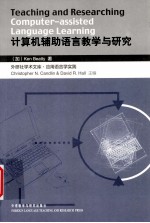
- (加)KEN BEATTY著 著
- 出版社: 北京:外语教学与研究出版社
- ISBN:7560085296
- 出版时间:2012
- 标注页数:259页
- 文件大小:71MB
- 文件页数:279页
- 主题词:
PDF下载
下载说明
计算机辅助语言教学与研究PDF格式电子书版下载
下载的文件为RAR压缩包。需要使用解压软件进行解压得到PDF格式图书。建议使用BT下载工具Free Download Manager进行下载,简称FDM(免费,没有广告,支持多平台)。本站资源全部打包为BT种子。所以需要使用专业的BT下载软件进行下载。如 BitComet qBittorrent uTorrent等BT下载工具。迅雷目前由于本站不是热门资源。不推荐使用!后期资源热门了。安装了迅雷也可以迅雷进行下载!
(文件页数 要大于 标注页数,上中下等多册电子书除外)
注意:本站所有压缩包均有解压码: 点击下载压缩包解压工具
图书目录
Introduction 1
Section Ⅰ Key concepts 5
1 The emergence of CALL 7
1.1 The emergence of CALL 7
1.2 Technology driving CALL 11
1.3 The changing focus of research in CALL 13
Summary 15
2 A brief history of CALL 16
2.1 CALL in the 1950s and 1960s 16
2.2 Simulations 19
2.3 CALL in the 1970s and 1980s 23
2.4 CALLin the 1990s 34
Summary 36
3 Hypertext,hypermedia and multimedia 37
3.1 Hypertext 37
3.2 Hypermedia 38
3.3 Multimedia 39
3.4 Antecedents of multimedia 41
3.5 Science fiction and CALL 42
3.6 The printed book and CALL 45
3.7 Applications to general learning 48
3.8 Applications of multimedia to language learning 49
Summary 50
4 Eight CALL applications 52
4.1 Word processing 52
4.2 Games 54
4.3 Literature 57
4.4 Corpus linguistics 59
4.5 Computer-mediated communication 62
4.6 WWW resources 68
4.7 Adapting other materials for CALL 70
4.8 Personal Digital Assistants(PDA) 72
Summary 74
Section Ⅱ The place of CALL in research and teaching 75
5 Second-language Acquisition and models of instruction 77
5.1 Concepts in SLA,behaviourism and constructivism 77
5.2 Comprehensible input and output 81
5.3 Criticism of comprehensible input and output theory 83
5.4 Behaviourist and constructivist models of instruction 84
5.5 Behaviourism 85
5.6 Constructivism 91
5.7 The role of collaboration and negotiation of meaning in the two models 97
Summary 98
6 Collaboration and negotiation of meaning 99
6.1 The place of collaboration in CALL 99
6.2 Structuring collaboration 106
6.3 Differences between collaboration and other terms 109
6.4 The range of collaboration and CALL 110
6.5 Collaboration at the computer 111
6.6 Benefits of collaborative learning at the computer 112
6.7 Collaboration,CALL and SLA 114
6.8 Collaboration at the computer as evidenced by discourse 116
6.9 Challenges to collaboration 121
6.10 Challenges to collaboration in a CALL context 122
6.11 Discourse that evidences challenges to collaboration 125
Summary 130
7 Defining a model of CALL 132
7.1 Defining model 132
7.2 The need for a CALL model 133
7.3 A model of current non-CALL language learning 134
7.4 Dunkin and Biddle's model in a CALL context 136
7.5 Various views of CALL 140
7.6 Teacher and pupil classroom behaviour:activities used in CALL 143
7.7 A virtual classroom 145
7.8 Aspects of a CALL model 146
Summary 147
8 Theoretical and pedagogical concerns 148
8.1 Concerns for software development 148
8.2 Pedagogical concerns for classroom practice 151
8.3 Evaluating software 155
8.4 Learning and working styles 155
8.5 Evolving technology 156
8.6 Commercial software 159
8.7 Making better use of existing materials 161
8.8 Copyright and plagiarism 164
8.9 Viruses 165
8.10 Safety online 168
8.11 Technological have-nots 170
Summary 171
Section Ⅲ Researching CALL 173
9 Current research interests 175
9.1 A new field:reporting CALL research 175
9.2 Approaches to research in CALL 177
9.3 The computer as a tool of research 178
9.4 The role of commercial publishers 178
9.5 Reviewing current studies:a survey 179
9.6 Conducting research 190
9.7 Action research 191
Summary 193
10 Research 195
10.1 Research context 1:The literature review 197
10.2 Research context 2:A pilot study 199
10.3 Research context 3:Corpus linguistics 202
10.4 Research context 4:Error analysis 203
10.5 Research context 5:The experiment 206
10.6 Research context 6:A case study 208
10.7 Research context 7:The survey 211
10.8 Research context 8:The ethnographic approach 214
Conclusion 216
Section Ⅳ Resources 219
Glossary of key terms 230
References 237
Index 252