
图书介绍
PRINCIPLES OF INTERNATIONAL LAWpdf电子书版本下载
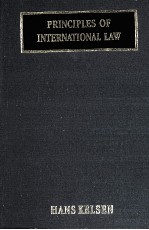
- HANS KELSEN 著
- 出版社: LTD.
- ISBN:1584773251
- 出版时间:2003
- 标注页数:461页
- 文件大小:21MB
- 文件页数:485页
- 主题词:
PDF下载
下载说明
PRINCIPLES OF INTERNATIONAL LAWPDF格式电子书版下载
下载的文件为RAR压缩包。需要使用解压软件进行解压得到PDF格式图书。建议使用BT下载工具Free Download Manager进行下载,简称FDM(免费,没有广告,支持多平台)。本站资源全部打包为BT种子。所以需要使用专业的BT下载软件进行下载。如 BitComet qBittorrent uTorrent等BT下载工具。迅雷目前由于本站不是热门资源。不推荐使用!后期资源热门了。安装了迅雷也可以迅雷进行下载!
(文件页数 要大于 标注页数,上中下等多册电子书除外)
注意:本站所有压缩包均有解压码: 点击下载压缩包解压工具
图书目录
Ⅰ. The Nature of International Law: International Delictsand International Sanctions 3
A. The Concept of Law 3
1. The Two Kinds of Social Order 3
2. Sanctions: Criminal and Civil 5
3. Legal Norm and Rule of Law: The “Ought” 6
4. The Delict 7
5. Obligation (Duty) and Right 7
6. Responsibility: Individual and Collective 9
7. Culpability and Absolute Responsibility 11
8. The Force Monopoly of the Community 13
9. Self-help and Collective Security 15
10. Retribution and Prevention 17
11. Law and Peace 17
B. Is International Law “Law” in the True Sense of theTerm? 18
1. Meaning of the Question 18
2. International Delicts 19
3. International Sanctions 20
4. Reprisals 23
5. War: Its Concept 25
6. War: Its Legal Interpretation 33
7. War (Use of Force) under the Charter of the United Nations 44
8. War: Regulation of Its Conduct 64
Ⅱ. The Spheres of Validity of International Law 93
A. The Spheres of Validity of a Legal Order 93
B. The Territorial and Temporal Spheres of Validity of International Law 94
C. The Personal Sphere of Validity of International Law:The Subjects of International Law 96
1. Juristic Persons as Subjects of Law 96
2. The State as Subject of International Law 100
3. The Subjects of Obligation and Responsibility in In-ternational Law 114
4. The Subjects of Rights in International Law 139
5. The So-Called Fundamental Rights of the State 148
6. Communities Not Having the Character of States as Subjects of International Law 158
7. General and Particular International Law 188
D. The Material Sphere of Validity of International Law 190
1. International and National (Domestic) Jurisdiction 191
2. Implementation of International Law by National Law 192
3. Transformation of International Law into National Law 194
4. Article 2, Paragraph 7, of the Charter of the United Nations 196
5. Definition of International Law 201
6. Exclusive International Jurisdiction 202
Ⅲ. The Essential Function of International Law: The De-termination of the Spheres of Validity of the Na-tional Legal Orders (Legal Existence of the State)by the International Legal Order 207
A. Determination of the Territorial Sphere of Validity of the National Legal Order (Territory of the State) by International Law 207
1. The Territory of the State as the Territorial Sphere of Validity of the National Legal Order 207
2. The Restriction of the Territorial Sphere of Validity of the National Legal Order 209
3. The Territory of the State in a Narrower and in a Wider Sense 212
B. Determination of the Personal Sphere of Validity of the National Legal Order (the People of the State) by International Law 227
1. The People of the State as the Personal Sphere of Validity of the National Legal Order 227
2. Exterritoriality 228
3. No State Has Jurisdiction over Another State 235
C. Determination of the Material Sphere of Validity of the National Legal Order (Competence of the State) by International Law 240
1. No Natural Limits to the Competence of the State 240
2. Protection of Organs and Citizens of Foreign States 242
3. Citizenship (Nationality) 248
4. Conflict of Laws (Private International Law) 254
D. Determination of the Temporal Sphere of Validity of the National Legal Order (Existence of the State in Time) by International Law 257
1. Time as Element of the State 257
2. Birth and Death of the State 258
3. The Identity of the State 259
4. Recognition of a Community as a State 264
5. Recognition of a Government 279
6. So-Called Governments in Exile 288
7. Recognition of Insurgents as a Belligerent Power 291
8. Recognition and Nonrecognition of Illegally Estab-lished Situations (Stimson Doctrine) 293
9. Succession of States 295
Ⅳ. Creation and Application of International Law 303
A. The Creation (Sources) of International Law 303
1. The Concept of “Source” of Law 303
2. The So-Called “Gaps” in the Law 304
3. Custom 307
4. Treaties 317
5. Decisions of International Agencies 365
B. The Application of International Law 367
1. Settlement of International Disputes by Agreement 367
2. Settlement of International Disputes by Organs of the League of Nations and of the United Nations 368
3. Settlement of International Disputes by International Tribunals 377
Ⅴ. International and National Law 401
A. The Differences between International and National Law 401
B. The Relationship between International and National Law (Monism and Pluralism) 403
1. The Monistic and the Pluralistic Theory 403
2. The Subject Matter of National and of International Law 404
3. The “Source” of National and of International Law 406
4. The Reason of Validity of National and of Interna-tional Law 408
5. Conflicts between National and International Law 419
6. The Unity of National and International Law as a Postulate of Legal Theory 424
7. Primacy of National Law or Primacy of InternationalLaw 428
8. Sovereignty 438
9. The Philosophical and Juristic Significance of the Two Monistic Interpretations 444
Index 451