
图书介绍
PETHINKING THE SOURCES OF INTERNATIONAL LAWpdf电子书版本下载
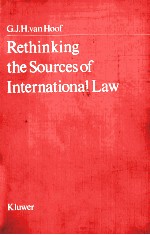
- 著
- 出版社: KLUWER LAW AND TAXATION PUBLISHERS
- ISBN:9065440852
- 出版时间:1983
- 标注页数:322页
- 文件大小:18MB
- 文件页数:336页
- 主题词:
PDF下载
下载说明
PETHINKING THE SOURCES OF INTERNATIONAL LAWPDF格式电子书版下载
下载的文件为RAR压缩包。需要使用解压软件进行解压得到PDF格式图书。建议使用BT下载工具Free Download Manager进行下载,简称FDM(免费,没有广告,支持多平台)。本站资源全部打包为BT种子。所以需要使用专业的BT下载软件进行下载。如 BitComet qBittorrent uTorrent等BT下载工具。迅雷目前由于本站不是热门资源。不推荐使用!后期资源热门了。安装了迅雷也可以迅雷进行下载!
(文件页数 要大于 标注页数,上中下等多册电子书除外)
注意:本站所有压缩包均有解压码: 点击下载压缩包解压工具
图书目录
CHAPTER Ⅰ:GENERAL INTRODUCTION:STATEMENT OF THE PROBLEM AND METHOD OF STUDY 1
PART Ⅰ:THE APPROACH TO THE PROBLEM OF THE SOURCES OF INTERNATIONAL LAW 11
CHAPTER Ⅱ:THE CONFUSION OVER THE SOURCES AND THE NORMATIVE CONCEPT OF LAW 13
CHAPTER Ⅲ:CONCEPT OF INTERNATIONAL LAW 17
3.1 Introduction:doctrine and the sources of international law 17
3.2 Some aspects of the normative concept of international law:its function and functioning 19
CHAPTER Ⅳ:THE NORMATIVE CONCEPT AND SOME BASIC APPROACHES TO INTERNATIONAL LAW 29
4.1 Introduction 29
4.2 Legal idealism 30
4.3 The analytical approach 34
4.4 The sociological approach 39
4.5 The middle path of Structural Positivism 44
4.5.1 Introduction 44
4.5.2 The union of primary and secondary rules 46
4.5.3 Structural Positivism and international law 53
CHAPTER Ⅴ:CONCEPT OF SOURCES 57
5.1 The preliminary question of terminology 57
5.2 Introduction 61
5.3 Basic features of the international society 61
5.4 The changes in the structure of international society 65
5.5 The basis of the binding force of international law 71
5.6 The constitutive element of rules of international law 76
5.7 Manifestations of consent or acceptance;the impact of the changed structure of the international society 81
PART Ⅱ:THE TRADITIONAL SOURCES OF INTERNATIONAL LAW 83
CHAPTER Ⅳ:CUSTOMARY INTERNATIONAL LAW 85
6.1 Doctrine and customary international law 85
6.2 The nature of customary international law 90
6.2.1 Introduction 90
6.2.2 Opinio juris and usus 91
6.2.2.1 The so-called stages-theory 91
6.2.2.2 Advantages of the stages-theory 93
6.2.2.3 Questions concerning the change of customary international law 97
6.2.3 Opinio juris;remaining issues 106
6.2.4 Usus;remaining issues 106
6.3 The declining role of custom as a source of international law 113
CHAPTER Ⅶ:TREATIES 117
7.1 The proliferation of treaties 117
7.2 Shortcomings of treaties 119
7.2.1 Introduction 119
7.2.2 Problems of acceptibility 120
7.2.3 Problems of adaptation 124
7.2.4 The shift of the content of international law;the relation between conduct, law and policy 126
7.2.5 Problems of change 128
CHAPTER Ⅷ:GENERAL PRINCIPLES 131
8.1 The continuing debate on the general principles 131
8.2 The denial of the existence of the general principles as a source of international law 132
8.3 The meaning of the phrase "general principles of law recognized by civilized nations" 133
8.3.1 Introduction 133
8.3.2 The genesis of article 38 (1)(c) 135
8.3.2.1 A preliminary question 135
8.3.2.2 The work of the 1920 Avisory Committee of Jurists 136
8.3.3 The general principles within the framework of the International Court of Justice 139
8.3.3.1 Introduction 139
8.3.3.2 General principles on the basis of reception from municipal legal systems 140
8.3.3.3 General principles through induction from existing rules of international law 143
8.3.3.4 The limited use by the international Court of Justice of the gereral principles as a source of international law 144
8.3.4 The general principles outside the framework of the International Court of Justice 146
8.3.5 The distinction between general principles in the procedural and in the material sense 148
8.3.6 Excursus:Jus Cogens 151
8.3.6.1 Introduction 151
8.3.6.2 The hierarchy of rules of international law 151
8.3.6.3 The basis of international jus cogens 153
8.3.6.4 The concept of jus cogens in international law 154
8.3.6.5 Indentification and validity of norms of international jus cogens 156
8.3.6.6 Change of norms of international jus cogens 166
CHAPTER Ⅸ:ARTICLE 38:SUBSIDIARY MEANS FOR THE DETERMINATION OF RULES OF LAW 169
9.1 Judicial decisions 169
9.2 Teachings of the most qualified publicists of the various nations 176
CHAPTER Ⅹ:SOME CONCLUSIONS:THE MOVEMENT TOWARDS "OTHER SOURCES" AND THE "SOFT LAW" APPROACH 179
PART Ⅲ:TENTATIVE REFORMULATION OF THE DOCTRINE OF SOURCES 193
CHAPTER Ⅺ:PRELIMINARY ISSUES 195
11.1 Can the sources of international law change? 195
11.2 The formless character of international law 199
CHAPTER Ⅻ:FIVE PROJECTED CLASSES OF MANIFESTATIONS OF CONSENT OR ACCEPTANCE:GENERAL OBSERVATIONS 205
12.1 Introduction:points of departure 205
12.2 International law-making as a continuous process 206
12.3 The relation between the classes of manifestations of consent or acceptance and the traditional sources of international law 208
12.4 The relation between the various classes of manifestations of consent or acceptance inter se 209
12.5 The role of international organizations 210
12.6 The producer-consumer distinction 212
CHAPTER ⅩⅢ:OUTLINE OF THE INDIVIDUAL CLASSES OF MANIFESTATIONS OF CONSENT OR ACCEPTANCE 215
13.1 Introduction 215
13.2 Abstract statements 216
13.3 Travaux préparatoires lato sensu 219
13.3.1 Introduction 219
13.3.2 Circumstances of preparation and adoption 221
13.3.3 The decision-making process 224
13.3.3.1 Introduction 224
13.3.3.2 The increased use of the consensus-technique 226
13.3.3.3 The nature of the consensus-technique 227
13.3.3.4 Non-voting 229
13.3.3.5 Non-objection 231
13.3.3.6 Thoroughness 233
13.4 The text 234
13.4.1 Introduction 234
13.4.2 Substantive provisions 235
13.4.2.1 Introduction 235
13.4.2.2 The type of language employed 235
13.4.2.3 The content of a rule 239
13.4.2.4 The relation with existing rules of international law 240
13.4.2.5 Excursus:a concrete exemple;the question of the existence of international legal obligations concerning Official Development Assistance 242
13.4.3 Qualifying provisions 247
13.4.3.1 Introduction 247
13.4.3.2 The name of an instrument 248
13.4.3.3 Preambular paragraphs 249
13.4.3.4 Final clauses 251
13.5 Follow-up 256
13.5.1 Introduction 256
13.5.2 Enforcement,supervision,follow-up 258
13.5.2.1 The review-function 258
13.5.2.2 The correction-function 258
13.5.2.3 The creative-function 261
13.5.2.4 Development of the law 263
13.5.3 Follow-up with respect to formally binding rules 265
13.5.4 Follow-up with respect to formally non-binding rules 270
13.6 Subsequent practice 275
13.7 Summary 279
CHAPTER ⅩⅣ:CONCLUDING REMARKS 281
BIBLIOGRAPHY 295
INDEX 309
精品推荐
- Northanger Abbey(1818)
- Emma(1815)
- Sense And Sensibility(1811)
- Mansfield Park(1814)
- HUMANITIES THE EVOLUTION OF VALUES
- Pride And Drejudice(1812)
- English
- 企鹅经济学词典 经济学
- 大人的友情 河合隼雄谈友谊
- Computing Concepts
- Advanced Compilpr Design and lmplementation
- 中国商事法律要览
- Introduction to polymers
- CONFICT OF LAWS IN THE WESTERN SOCIALIST AND DEVELOPING COUNTRIES
- Measurement and Research Methods in International Marketing