
图书介绍
Chemical Product Designpdf电子书版本下载
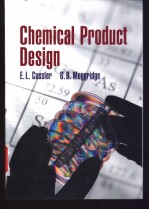
- E.L.Cusslep G.D.Moggridge 著
- 出版社:
- ISBN:0521796334
- 出版时间:未知
- 标注页数:229页
- 文件大小:14MB
- 文件页数:246页
- 主题词:
PDF下载
下载说明
Chemical Product DesignPDF格式电子书版下载
下载的文件为RAR压缩包。需要使用解压软件进行解压得到PDF格式图书。建议使用BT下载工具Free Download Manager进行下载,简称FDM(免费,没有广告,支持多平台)。本站资源全部打包为BT种子。所以需要使用专业的BT下载软件进行下载。如 BitComet qBittorrent uTorrent等BT下载工具。迅雷目前由于本站不是热门资源。不推荐使用!后期资源热门了。安装了迅雷也可以迅雷进行下载!
(文件页数 要大于 标注页数,上中下等多册电子书除外)
注意:本站所有压缩包均有解压码: 点击下载压缩包解压工具
图书目录
1 An Introduction to Chemical Product Design 1
1.1 What Is Chcmical Product Design? 1
1.2 Why Chemical Product Design Is Important 3
Changes in the Chemical Industry 3
Changes in Employment 5
1.3 Changes in Corporate Culture 6
Corporate Organization 7
Corporate Strategy 8
1.4 The Product Design Procedure 8
How the Procedure Organizes this Book 9
Limitations of the Procedure 9
1.5 Conclusions 11
2 Needs 13
2.1 Customer Needs 13
Interviewing Customers 13
Interpreting Customer Needs 15
Example 2.1-1. Better Thermopane Windows 16
Example 2.1-2. Alternative Fluids for Deicing Airplanes 18
Example 2.1-3. “Smart” Labels 20
2.2 Consumer Products 22
Consumer Assessments 23
Consumer versus Instrumental Assessments 24
Example 2.2-1. Tasty Chocolate 25
Example 2.2-2. The Consumer Attribute “Viscosity” 26
2.3 Converting Needs to Specifications 27
Example 2.3-1. Muffler Design 28
Example 2.3-2. Water Purification for the Traveler 29
Example 2.3-3. Preventing Explosions in High-Performance Batteries 30
2.4 Revising Product Specifications 33
Example 2.4-1. Deicing Winter Roads 34
Example 2.4-2. Scrubbing Nitrogen from Natural Gas 38
2.5 Conclusions and the First Gate 41
3 Ideas 43
3.1 Human Sources of Ideas 44
Sources of Ideas 44
Collecting the Ideas 45
Problem Solving Styles 46
Examples of Unsorted Ideas 48
3.2 Chemical Sources of Ideas 49
Natural Product Screening 52
Random Molecular Assembly 54
Combinatorial Chemistry 55
Example 3.2-1. Fuel Cell Catalysis 57
3.3 Sorting the Ideas 57
Getting Started 58
“The Material Will Tell You” 58
Example 3.3-1. Adhesives for Wet Metal 60
Example 3.3-2. Reusable Laundry Detergents 61
Example 3.3-3. Pollution Preventing Ink 63
3.4 Screening the Ideas 64
Strategies for Idea Screening 65
Improving the Idea Screening Process 66
Example 3.4-1. Home Oxygen Supply 68
Example 3.4-2. High-Level Radioactive Waste 69
3.5 Conclusions and the Second Gate 73
4 Selection 75
4.1 Selection Using Thermodynamics 76
Ingredient Substitutions 76
Substitutions in Consumer Products 77
Ingredient Improvements 79
Example 4.1-1. A Better Skin Lotion 80
Example 4.1-2. A Pollution Preventing Ink 81
Example 4.1-3. Antibiotic Purification 81
4.2 Selection Using Kinetics 82
Chemical Kinetics 82
Heat and Mass Transfer Coefficients 84
Example 4.2-1. A Device that Allows Wine to Breathe 85
Example 4.2-2. A Perfect Coffee Cup 87
4.3 Less Objective Criteria 90
When to Make Subjective Judgments 91
How to Make Subjective Judgments 92
Why We Use Selection Matrices 93
Example 4.3-1. Monarchy Substitution 94
Example 4.3-2. The Home Ventilator 94
4.4 Risk in Product Selection 102
Risk Assessment 103
Risk Management 105
Example 4.4-1. Power for Isolated Homes 107
Example 4.4-2. Taking Water out of Milk at the Farm 109
4.5 Conclusions and the Third Gate 114
5 Product Manufacture 116
5.1 Intellectual Property 117
Patents and Trade Secrets 118
What Can Be Patented 120
Requirements for Patents 120
Example 5.1-1. The Invention of the Windsurfer 123
5.2 Supplying Missing Information 123
Reaction Path Strategies 124
Example 5.2-1. Synthesis of the Tranquilizer, Phenoglycodol 125
Example 5.2-2. Sterically Hindered Amines for CO2 Removal from Gases 125
Example 5.2-3. Silver Bullets for Zebra Mussels 127
5.3 Final Specifications 128
Product Structure 129
Central Product Attributes 130
Chemical Triggers 130
Example 5.3-1. Freon-Free Foam 131
Example 5.3-2. Better Blood Oxygenators 134
5.4 Microstructured Products 137
Thermodynamics 139
Colloid Stability 141
Rheology and Mixing 144
Example 5.4-1. Destabilizing Latex Paint 146
Example 5.4-2. Making More Ice Cream 147
5.5 Device Manufacture 148
Thermodynamics 148
Enzyme Kinetics 150
Example 5.5-1. An Electrode for Measuring Dodecyl Sulfate 151
Example 5.5-2. Designing an Osmotic Pump 152
5.6 Conclusions 154
6 Specialty Chemical Manufacture 156
6.1 First Steps Toward Production 157
Extending Laboratory Results 158
Reaction Engineering 160
Example 6.1-1. Penicillin Modification 160
Example 6.1-2. Etching a Photoresist 161
6.2 Separations 162
Heuristics for Separations 163
The Most Useful Separations 166
Example 6.2-1. Penicillin Purification 176
6.3 Spccialty Scale-Up 177
Reactor Scale-Up 178
Separation Scale-Up 181
Example 6.3-1. Reacting Suspended Steroids 185
Example 6.3-2. Scaling Up a Lincomycin Adsorption 185
6.4 Conclusions 187
7 Economic Concerns 189
7.1 Product versus Process Design 190
Commodity Products 191
Specialty Products 192
7.2 Process Economics 193
A Hierarchy of Process Design 193
Economic Potential 196
Capital Requirements 198
7.3 Economics for Products 200
Cash Flow Without the Time Value of Money 202
Cash Flow Including the Time Value of Money 204
Time To Market 206
Example 7.3-1. The Economics of Scottish Mussel Farming 207
7.4 Conclusions and the Fourth Gate 208
Problems 211
Index 227
Products Index 229
精品推荐
- Northanger Abbey(1818)
- Emma(1815)
- Sense And Sensibility(1811)
- Mansfield Park(1814)
- HUMANITIES THE EVOLUTION OF VALUES
- Pride And Drejudice(1812)
- English
- 企鹅经济学词典 经济学
- 大人的友情 河合隼雄谈友谊
- Computing Concepts
- Advanced Compilpr Design and lmplementation
- 中国商事法律要览
- Introduction to polymers
- CONFICT OF LAWS IN THE WESTERN SOCIALIST AND DEVELOPING COUNTRIES
- Measurement and Research Methods in International Marketing