
图书介绍
INTRODUCTORY QUANTUM MECHANICS FOURTH EDITIONpdf电子书版本下载
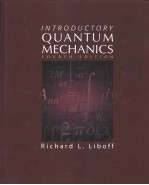
- RICHARD L.LIBOFF 著
- 出版社:
- ISBN:0805387145
- 出版时间:2003
- 标注页数:878页
- 文件大小:26MB
- 文件页数:891页
- 主题词:
PDF下载
下载说明
INTRODUCTORY QUANTUM MECHANICS FOURTH EDITIONPDF格式电子书版下载
下载的文件为RAR压缩包。需要使用解压软件进行解压得到PDF格式图书。建议使用BT下载工具Free Download Manager进行下载,简称FDM(免费,没有广告,支持多平台)。本站资源全部打包为BT种子。所以需要使用专业的BT下载软件进行下载。如 BitComet qBittorrent uTorrent等BT下载工具。迅雷目前由于本站不是热门资源。不推荐使用!后期资源热门了。安装了迅雷也可以迅雷进行下载!
(文件页数 要大于 标注页数,上中下等多册电子书除外)
注意:本站所有压缩包均有解压码: 点击下载压缩包解压工具
图书目录
PART Ⅰ ELEMENTARY PRINCIPLES AND APPLICATIONS TO PROBLEMS IN ONE DIMENSION 1
1 Review of Concepts of Classical Mechanics 3
1.1 Generalized or “Good” Coordinates 3
1.2 Energy,the Hamiltonian,and Angular Momentum 6
1.3 The State of a System 19
1.4 Properties of the One-Dimensional Potential Function 24
2 Historical Review: Experiments and Theories 30
2.1 Dates 30
2.2 The Work of Planck. Blackbody Radiation 31
2.3 The Work of Einstein. The Photoelectric Effect 36
2.4 The Work of Bohr. A Quantum Theory of Atomic States 39
2.5 Waves versus Particles 43
2.6 The de Broglie Hypothesis and the Davisson-Germer Experiment 46
2.7 The Work of Heisenberg. Uncertaintu as a Cornerstone of Natural Law 53
2.8 The Work of Born. Probabiliry Waves 55
2.9 Semiphilosophical Epilogue to Chapter 2 57
3 The Postulates of Quantum Mechanics. Operators,Eigenfunctions,and Eigenvalues 68
3.1 Observables and Operators 68
3.2 Measurement in Quantum Mechanics 74
3.3 The State Function and Expectation Values 76
3.4 Time Development of the State Function 80
3.5 Solution to the Initial-Value Problem in Quantum Mechanics 84
4 Preparatory Concepts. Function Spaces and Hermitian Operators 90
4.1 Particle in a Box and Further Remarks on Normalization 90
4.2 The Bohr Correspondence Principle 94
4.3 Dirac Notation 97
4.4 Hilbert Space 98
4.5 Hermitian Operators 104
4.6 Properties of Hermitian Operators 108
5 Superposition and Compatible Observables 115
5.1 The Superposition Principle 115
5.2 Commutator Relations in Quantum Mechanics 130
5.3 More on the Commutator Theorem 137
5.4 Commutator Relations and the Uncertainty Principle 140
5.5 “Complete” Sets of Commuting Observables 143
6 Time Development,Conservation Theorems,and Parity 152
6.1 Time Development of State Functions 152
6.2 Time Development of Expectation Values 168
6.3 Conservation of Energy,Linear and Angular Momentum 171
6.4 Conservation of Parity 176
7 Additional One-Dimensional Problems. Bound and Unbound States 187
7.1 General Properties of the One-Dimensional Schrodinger Equation 187
7.2 The Harmonic Oscillator 190
7.3 Eigenfunctions of the Harmonic Oscillator Hamiltonian 198
7.4 The Harmonic Oscillator in Momentum Space 211
7.5 Unbound States 216
7.6 One-Dimensional Barrier Problems 222
7.7 The Rectangular Barrier. Tunneling 228
7.8 The Ramsauer Effect 235
7.9 Kinetic Properties of a Wave Packet Scattered from a Potential Barrier 241
7.10 The WKB Approximation 243
7.11 Principle of Least Action and Feyntnan’s Path Integral Formulation 268
8 Finite Potential Well,Periodic Lattice,and Some Simple Problems with Two Degrees of Freedom 278
8.1 The Finite Potential Well 278
8.2 Periodic Lattice. Energy Gaps 289
8.3 Standing Waves at the Band Edges 307
8.4 Brief Qualitative Description of the Theory of Conduction in Solids 313
8.5 Two Beads on a Wire and a Particle in a Two-Dimensional Box 317
8.6 Two-Dimensional Harmonic Oscillator 324
8.7 Linear Combination of Atomic Orbitals (LCAO) Approximation 331
8.8 Density of States in Various Dimensions 336
PART Ⅱ FURTHER DEVELOPMENT OF THE THEORY AND APPLICATIONS TO PROBLEMS IN THREE DIMENSIONS 347
9 Angular Momentum 349
9.1 Basic Properties 349
9.2 Eigenvalues of the Angular Momentum Operators 358
9.3 Eigenfunctions of the Orbital Angular Momentum Operators L2 and Lz 367
9.4 Addition of Angular Momentum 386
9.5 Total Angular Momentum for Two or More Electrons 396
10 Problems in Three Dimensions 404
10.1 The Free Particle in Cartesian Coordinates 404
10.2 The Free Particle in Spherical Coordinates 410
10.3 The Free-Particle Radial Wavefunction 415
10.4 A Charged Particle in a Magnetic Field 430
10.5 The Two-Particle Problem 436
10.6 The Hydrogen Atom 446
10.7 Elementary Theory of Radiation 463
10.8 Thomas-Fermi Model 472
11 Elements of Matrix Mechanics. Spin Wavefunctions 480
11.1 Basis and Representations 481
11.2 Elementary Matrix Properties 488
11.3 Unitary and Similariry Transformations in Quantum Mechanics 492
11.4 The Energy Representation 499
11.5 Angular Momentum Matrices 504
11.6 The Pauli Spin Matrices 512
11.7 Free-Particle Wavefunctions,Including Spin 517
11.8 The Magnetic Moment of an Electron 519
11.9 Precession of an Electron in a Magnetic Field 527
11.10 The Addition of Two Spins 536
11.11 The Density Matrix 543
11.12 Other “Pictures” in Quantum Mechanics 553
11.13 Polarization States. EPR Revisited 558
11.14 The Transfer Matrix 571
12 Application to Atomic,Molecular,Solid-State,and Nuclear Physics. Elements of Quantum Statistics 579
12.1 The Total Angular Momentum,J 579
12.2 One-Electron Atoms 584
12.3 The Pauli Principle 597
12.4 The Periodic Table 602
12.5 The Slater Determinant 612
12.6 Application of Symmetrization Rules to the Helium Atom 614
12.7 The Hydrogen and Deuterium Molecules 623
12.8 Brief Description of Quantum Models for Superconductivity and Superfluidity 630
12.9 Impurity Semiconductors and the p-n Junction 641
12.10 Elements of Nuclear Physics. The Deuteron and Isospin 669
13 Perturbation Theory 681
13.1 Time-Independent,Nondegenerate Perturbation Theory 681
13.2 Time-Independent,Degenerate Perturbation Theory 692
13.3 The Stark Effect 700
13.4 The Nearly Free Electron Model 703
13.5 Time-Dependent Perturbation Theory 709
13.6 Harmonic Perturbation 712
13.7 Application of Harmonic Perturbation Theory 718
13.8 Selective Perturbations in Time 727
13.9 Atom-Radiation Interaction 739
13.10 Hartree-Fock Model 757
14 Scattering in Three Dimensions 762
14.1 Partial Waves 762
14.2 S-Wave Scattering 770
14.3 Center-of-Mass Frame 774
14.4 The Born Approximation 777
14.5 Atomic-Radiative Absorption Cross Section 782
14.6 Elements of Formal Scattering Theory. The Lippmatm-Schwinger Equation 785
15 Relativistic Quantum Mechanics 793
15.1 Preliminary Remarks 793
15.2 Klein-Gordon Equation 798
15.3 Dirac Equation 800
15.4 Electron Magnetic Moment 806
15.5 Covariant Description 810
16 Quantum Computing 817
16.1 Binary Number System 817
16.2 Logic Gates 823
16.3 Turing Machine and Complexity Classes 830
16.4 Qubits and Quantum Logic Gates 832
List of Symbols 843
APPENDIXES 847
A Additional Remarks on the x and p Representations 849
B Spin and Statistics 853
C Representations of the Delta Function 857
D Differential Vector Relations 861
E Harmonic Oscillator in Spherical Coordinates 865
F Physical Constants and Equivalence Relations 867
Index 871
精品推荐
- Northanger Abbey(1818)
- Emma(1815)
- Sense And Sensibility(1811)
- Mansfield Park(1814)
- HUMANITIES THE EVOLUTION OF VALUES
- Pride And Drejudice(1812)
- English
- 企鹅经济学词典 经济学
- 大人的友情 河合隼雄谈友谊
- Computing Concepts
- Advanced Compilpr Design and lmplementation
- 中国商事法律要览
- Introduction to polymers
- CONFICT OF LAWS IN THE WESTERN SOCIALIST AND DEVELOPING COUNTRIES
- Measurement and Research Methods in International Marketing