
图书介绍
THE“CONFLICTS”PROCESSpdf电子书版本下载
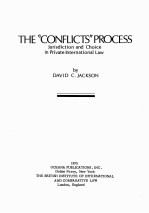
- DAVID C.JACKSON 著
- 出版社: THE BRITISH INSTITUTE OF INTERNATIONAL
- ISBN:0379003821
- 出版时间:1975
- 标注页数:408页
- 文件大小:18MB
- 文件页数:442页
- 主题词:
PDF下载
下载说明
THE“CONFLICTS”PROCESSPDF格式电子书版下载
下载的文件为RAR压缩包。需要使用解压软件进行解压得到PDF格式图书。建议使用BT下载工具Free Download Manager进行下载,简称FDM(免费,没有广告,支持多平台)。本站资源全部打包为BT种子。所以需要使用专业的BT下载软件进行下载。如 BitComet qBittorrent uTorrent等BT下载工具。迅雷目前由于本站不是热门资源。不推荐使用!后期资源热门了。安装了迅雷也可以迅雷进行下载!
(文件页数 要大于 标注页数,上中下等多册电子书除外)
注意:本站所有压缩包均有解压码: 点击下载压缩包解压工具
图书目录
PART Ⅰ THE PROCESS, ITS PURPOSE PRINCIPLES AND WORKING 1
CHAPTER 1 LEGAL SYSTEMS, RULES AND ISSUES - THE CONTACT POINTS 1
1. The limitation of forum power 1
A. Relevance of contact points 3
(ⅰ) Forum power to adjudicate 3
(ⅱ) Application of foreign rules by forum 3
(ⅲ) Recognition of foreign adjudications 4
B. Contact before content 5
2. A threefold process - primary divisions? 6
The "content11 approach 8
CHAPTER 2 PRINCIPLES OF REFERENCE 14
1. Selection criteria 17
A. The connecting links 18
(ⅰ) The flcontact-interestf? principle 18
(ⅱ) The "content11 or "policy" interest rinciple 19
(ⅲ) Contact between rule and issue 21
B. The place of the forum 22
2. Rule manipulation - the operation of judiciaL discretion 23
A. Judicial role of discretion 23
B. Discretion as part of the conflicts process 25
3. The English process and the criticisms 25
CHAPTER 3 THE PROCESS AND ITS WORKING 32
1. Judicial approaches 32
A. The power to adjudicate 34
B. The rule governing the adjudication 35
The English approach - Chaplin v. Boys 35
2. The approaches identified 39
A. One "interested" state 39
B. A choice between "interested" states 41
3. The nature of the process 45
A, The conflicts and domestic processes compared 45
Discretion and rule 46
B. The value of the approaches 48
4. The English process - the questions posed 50
CHAPTER 4 "TRUE" AND "FALSE" CONFLICTS 57
1. Categories of false conflicts 59
A. Identity of domestic rules 59
B. Applicability of one rule 62
(ⅰ) Sole interest 62
(ⅱ) "No interest" 63
C. The purposes of choice 63
2, The role of the selective process 64
PART Ⅱ SELECTION PRINCIPLES - RULES AND DISCRETION 69
CHAPTER 5 CLASSIFICATION AND LEGAL CATEGORIES 72
1. The relevance of the legal category 72
A. Categories with defective basis 74
B. Inappropriate use of categories 74
C. Categories in the "conflicts" sphere 75
2. Domestic creation and use of categories 75
A. Personal/real 76
B. Contract/tort 76
C. Restitution 78
D. "Proprietary interest11 79
E. General use and purpose in domestic sphere 80
3. Creation and use of "conflicts'1 categories 82
CHAPTER 6 "CONFLICTS" CLASSIFICATION 89
1. Classification at work 89
A. Type of issue 89
B. Type of interest at issue 92
C. Need to classify a specific issue 93
Independent reference? 96
2. Nature of classification 98
A, Categories of "liability" as connecting links 99
B. The "categories" as non-exclusive selection criteria 99
3. According to which legal system should an issue be classified? 101
A. Initial classification 102
B. Secondary or "double" classification 105
4. Avoidance of present categories - reference of specific issue 110
The nature of the "specific issue" 111
CHAPTER 7 FORUM JURISDICTION - CONTACTS AND CATEGORIES 127
1. Jurisdictional contact points 127
A. Control 127
Actions relating to foreign land 128
(a) Limitations on the limitation 130
(b) Need for a personal obligation 133
(c) The Mocambique rule and domestic concepts 134
B. Contact points other than control 135
(ⅰ) Status issues 135
(ⅱ) Non status issues 136
(ⅲ) Agreement 136
2. Jurisdictional categories 137
A. Conflicts categories 138
(ⅰ) Status/non status 138
(ⅱ) Immovable/movable 139
B. Adoption of domestic categories 141
(ⅰ) In rem/in personam 141
(ⅱ) Domestic divisions within the "status" and "non status" categories 144
(ⅲ) Imposition of forum control through domestic categories 145
(ⅳ) Confusion between jurisdiction and choice of law caused by use of domestic categories 146
3. Qualification on the category/contact approach 148
CHAPTER 8 FOREIGN JURISDICTION - CONTACTS AND CATEGORIES 164
1. Contacts 165
2. Categories 167
Conflicts and domestic categories 167
(ⅰ) Status/non status 167
(ⅱ) Immovable/movable 167
(ⅲ) In rem/in personam 168
3. General qualifications on the category/contact approach 171
CHAPTER 9 THE RESOLUTION OF ISSUES (CONTACTS AND CATEGORIES) 179
1. The contacts 179
A. The place of the proceedings 179
(ⅰ) Procedural matters 179
(ⅱ) Tort 179
B. Substantial connection 180
(ⅰ) Status 180
(ⅱ) Non status 180
C. The place of the event or thing 181
(ⅰ) Tort 182
(ⅱ) Property 184
2. The categories 185
A. A preliminary division 185
Substance/procedure 185
B. Major matter categories 187
(ⅰ) Status 187
(ⅱ) Non status 188
(a) A conflict category 188
Immovable/movable 188
(b) Adoption of domestic categories 189
ⅰ.Consequences of generalisation 189
ⅱ.Specific categories 193
Contract 193
Tort 194
Classification of the sub-stantive issue 195
The nature of foreign "liability" 196
Property 198
Is it a proprietary or "title" issue? 198
Nature of "thing at issue" 199
The movable/immovable categories 200
Restitution 201
C. Divisions within the "subject matter" categories 201
3. The contact/category approach 202
CHAPTER 10 SECONDARY SELECTION RULES 212
1. Foreign selection of governing rules 213
2. Ancillary issues or "incidental" questions 216
A. The power to adjudicate 217
B. The rule governing the dispute 218
PART Ⅲ SELECTION QUALIFICATIONS 230
CHAPTER 11 THE APPROPRIATE FORUM 230
1. Abuse of process - "oppressive or vexatious" proceedings 231
2. Assertion of the power to adjudicate 234
3. Forum shopping 236
4. The established operation of "appropriateness" 237
A. The upbringing of children 238
B. Equitable proceedings 240
C. "Exhorbitant" jurisdiction - (the "long arm") 241
(ⅰ) The discretionary power 241
(ⅱ) The exercise of the discretion 244
5. Introduction of a general principle? 247
6. Effect of forum selection by agreement 254
CHAPTER 12 EFFECTIVENESS OF THE COURTS ORDER 270
1. A jurisdictional prerequisite? 271
2. Exercise of the power to adjudicate 272
PART Ⅳ POLICY AND DISCRETION 279
CHAPTER 13 "POLICY" IN THE PROCESS 279
1. The role of forum policy 279
A. The application of a forum dispositive rule 280
B. The category approach 280
C. Forum self selection 281
D. Presumption of "Englishness" 281
E. Refusal to apply foreign rule 282
2. The need to specify the applicable "policy" ground 283
3. Interrelation of policy and rule 284
A. Distinction between status and consequence 286
B. A "penal" status 286
4. Policy and rule - The English judicial approach 287
A. The National Bank of Greece cases 287
(ⅰ) The fact situations and the judgments 287
(ⅱ) The conflicts framework and the cases 292
(ⅲ) The Metliss case 292
(a) Liability apart from the moratorium 292
(b) The effect of the moratorium 294
(c) Interrelation of the two issues 294
(ⅳ) The Adams case 295
B. Policy, classification and facing the issue 297
CHAPTER 14 THE ROLE OF JUDICIAL DISCRETION 304
1. The forum power to adjudicate 304
2. Recognition of foreign adjudication 307
CHAPTER 15 THE ROLE OF THE FORUM 312
1. The application of a forum rule 314
A. By reason of the forum dispositive rule 314
B. Through attachment of forum law to forum&categories 316
(ⅰ) Tort 316
(ⅱ) Procedure 321
2. The application of forum rules through classification 321
3. Equation of English and foreign rules 326
A. Methods of proof of foreign law 329
B. Non discovery of the content of foreign rule 332
4. Rejection of the selected foreign rule 334
A. The relevance of contact points 335
B. The development of rules from "policy" rejection 335
C. A return to undefined rejection? 338
D. Specific grounds for rejection 340
E. The need to specify relevant contacts and content 341
PART Ⅴ THE FUTURE 357
CHAPTER 16 THE PRESENT PROCESS AND ITS DEVELOPMENT 357
1. Essential elements of the process - a summary 357
2. The present process 359
A. Forum power to adjudicate 359
(ⅰ) Contact points 360
(ⅱ) The appropriate forum 361
B. Foreign power to adjudicate 362
C. The resolution of disputes 362
Chaplin v. Boys - a lament 363
D. The general approach 366
CHAPTER 17 INTEREST THROUGH CONTACT 370
1. Contact points 370
2. The place of the forum 370
3. Forum and foreign power to adjudicate 371
A. The power of the English court 371
B. Recognition by an English court of foreign court power 372
4. The resolution of disputes 372
A. The relevance of a federal system 373
B. The suggestions compared 373
(ⅰ) Category classification 373
(ⅱ) Connecting factors - contact and content 374
C. The two stage process 375
D. Interrelation of "contact" and "content" 376
5. Forum's overriding power 382
6. The need for "contact" 382
7. Conclusion 387
Index 399
精品推荐
- Northanger Abbey(1818)
- Emma(1815)
- Sense And Sensibility(1811)
- Mansfield Park(1814)
- HUMANITIES THE EVOLUTION OF VALUES
- Pride And Drejudice(1812)
- English
- 企鹅经济学词典 经济学
- 大人的友情 河合隼雄谈友谊
- Computing Concepts
- Advanced Compilpr Design and lmplementation
- 中国商事法律要览
- Introduction to polymers
- CONFICT OF LAWS IN THE WESTERN SOCIALIST AND DEVELOPING COUNTRIES
- Measurement and Research Methods in International Marketing