
图书介绍
CIVILIAN OR COMBATANT? A CHALLENGE FOR THE TWENTY-FIRST CENTURYpdf电子书版本下载
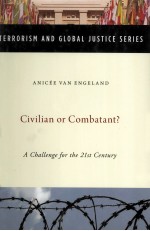
- Anicée Van Engeland 著
- 出版社: OXFORD UNIVERSITY PRESS
- ISBN:019974324X
- 出版时间:2011
- 标注页数:172页
- 文件大小:12MB
- 文件页数:190页
- 主题词:
PDF下载
下载说明
CIVILIAN OR COMBATANT? A CHALLENGE FOR THE TWENTY-FIRST CENTURYPDF格式电子书版下载
下载的文件为RAR压缩包。需要使用解压软件进行解压得到PDF格式图书。建议使用BT下载工具Free Download Manager进行下载,简称FDM(免费,没有广告,支持多平台)。本站资源全部打包为BT种子。所以需要使用专业的BT下载软件进行下载。如 BitComet qBittorrent uTorrent等BT下载工具。迅雷目前由于本站不是热门资源。不推荐使用!后期资源热门了。安装了迅雷也可以迅雷进行下载!
(文件页数 要大于 标注页数,上中下等多册电子书除外)
注意:本站所有压缩包均有解压码: 点击下载压缩包解压工具
图书目录
Chapter 1: The Distinction between Combatants and Civilians,a Cornerstone of International Humanitarian Law 1
Ⅰ. The Distinction in History: Ethics, Law, and Political Philosophy 1
A. Civilians as Incidental Victims of War: From Association with Territories, Leadership, and Population to the Emergence of the Nation State 2
B. First Attempts and Regulations to Limit War and Protect Civilians 6
C. The Emergence of an Ethic of Protection 11
Ⅱ. The Distinction as a Cornerstone of Modern International Humanitarian Law 13
A. The Legalization of War: The Laws of War 13
B. The Role of International Humanitarian Law Regarding the Distinction in the Twenty-First Century: New Challenges 16
C. Ethics 20
Ⅲ. Conclusion 24
Chapter 2: The Distinction between Civilians and Combatants 27
Ⅰ. The Principle of Distinction 28
A. Who Is a Civilian? A Civilian Is a Noncombatant 29
1. The Distinction Relies on a Negative Definition 29
a. Protection of Civilians, Civilian Populations, and Civilian Property 31
b. Violations of the Principle of Distinction 33
2. The Rationale 35
B. Who Is a Combatant? A Specific Definition 37
1. Who Is a Combatant? 37
2. Other Categories of Combatants 40
a. Rebels, Terrorists, and Insurgents 40
b. Civilians Who Take Part in Hostilities 42
c. Mercenaries and Spies 43
d. Prisoners of War 45
e. The Sick, the Wounded, and the Hors de Combat 48
C. Legitimate Military Targets 49
Ⅱ. The Distinction in Customary International Law 54
A. What Are Customary Rules of Humanitarian Law? 54
B. The ICRC Study 57
Ⅲ. Conclusion 59
Chapter 3: Protection Afforded to Civilians and Rights of Combatants 61
1. Analysis of the Protection Afforded to Civilians 61
A. The Aim of Geneva Convention IV and the Additional Protocols 61
1. Protection of Civilians as a Principle 62
2. Illustrations of Protection from Effects of War and from Attacks: Articles 31-34 GCIV 63
3. Illustrations of Civilian Protection Granted by Additional Protocol I 64
4. Illustrations of Civilian Protection in Non International Armed Conflicts 66
5. Rights and Fundamental Guarantees 68
B. Protection of Civilian Property 70
Ⅱ. Concrete Examples of Protection to Civilians 71
A. Safe Zones 72
B. Extra Protection Afforded to Civilians 75
1. Protection 75
2. Extra Protection for Women 77
3. Extra Protection for Children 78
C. Refugees and Internally Displaced People 81
1. Internally Displaced Persons: IDPs 81
2. Refugees 82
D. Journalists 84
1. Journalists Are Civilians 84
2. Embedded Journalists 87
3. Freelance Journalists 88
4. Military Journalists 89
5. Debates Regarding Journalism at War 89
E. Occupied Territories 94
Ⅲ. Conclusion 99
Chapter 4: The Shift between Categories 101
Ⅰ. From Civilian to Combatant 102
A. The Concept of Direct Participation in Hostilities 102
B. The ICRC Study 105
C. The Protection Afforded to Civilians Who Participate in Hostilities 108
D. A Sensitive Case: Human Shields 110
Ⅱ. The Blurring of the Concept of Combatant 112
A. Additional Protocol I and the Extension of the Status of Combatants and Prisoners of War 113
1. Extension of the Status of Combatants 113
2. Extension of the Status of POW 115
B. Lawful and Unlawful/Unprivileged Combatants 116
1. Who Are Unlawful Combatants? 116
2. The Argument Against the Notion 117
3. In Practice: the U.S.and Israel 119
Ⅲ. Civilians or Combatants? The Privatization of War 122
A. Mercenaries 122
1. Who Is a Mercenary? 122
2. Evolution 125
B. Private Military and Security Companies 127
1. What are Private Military/Security Companies? 127
2. Obligations under International Humanitarian Law 128
3. Combatants or Civilians? 130
C. Civilians Working for an Army 131
Ⅳ. Conclusion 132
Chapter 5: Concrete Challenges: the Evolution of War—Asymmetric Conflicts, Terrorism, and Weapon Technology 133
Ⅰ. The Definition of Asymmetric Conflict 134
A. What Is an Asymmetric Conflict? 134
B. Asymmetric Con flict in the Twenty-First Century: A Challenge 136
Ⅱ. Wars of Self-Determination and Armed Struggles: The Distinction During Wars of National Liberation 138
A. War of Self-Determination 138
B. International Humanitarian Law and Wars of Self-Determination 139
1. Applicable Law 139
2. Limits of These International Documents 141
3. Protection of Civilians 142
Ⅲ. Terrorism and the Principle of Distinction 145
A. What Is Terrorism under International Humanitarian Law? 145
B. The War on Terror 148
1. Is the War on Terror an Armed Conflict? 149
2. International Humanitarian Law Does Not Apply to Terrorists? 150
3. Humanitarian Law Does Apply to Terrorists 151
Ⅳ. Weapons and the Principle of Distinction 152
A. A New Behavior 152
B. The Regulation of Weapons under International Humanitarian Law:Protection of Civilians 153
C. Prohibition to Use Weapons Causing Unnecessary Suffering 155
D. Violations of the Principle of Distinction in Practice—The Principleof Distinction versus Military Necessity 155
Ⅴ. Conclusion159 Conclusion: Is the Principle of Distinction Still Useful? 157
Index 163
精品推荐
- Northanger Abbey(1818)
- Emma(1815)
- Sense And Sensibility(1811)
- Mansfield Park(1814)
- HUMANITIES THE EVOLUTION OF VALUES
- Pride And Drejudice(1812)
- English
- 企鹅经济学词典 经济学
- 大人的友情 河合隼雄谈友谊
- Computing Concepts
- Advanced Compilpr Design and lmplementation
- 中国商事法律要览
- Introduction to polymers
- CONFICT OF LAWS IN THE WESTERN SOCIALIST AND DEVELOPING COUNTRIES
- Measurement and Research Methods in International Marketing