
图书介绍
INTERNATIONAL CRIMINAL LAW SECOND EDITIONpdf电子书版本下载
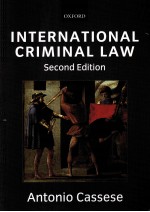
- ANTONIO CASSESE 著
- 出版社: OXFORD UNIVERSITY PRESS
- ISBN:0199203105
- 出版时间:2008
- 标注页数:455页
- 文件大小:26MB
- 文件页数:504页
- 主题词:
PDF下载
下载说明
INTERNATIONAL CRIMINAL LAW SECOND EDITIONPDF格式电子书版下载
下载的文件为RAR压缩包。需要使用解压软件进行解压得到PDF格式图书。建议使用BT下载工具Free Download Manager进行下载,简称FDM(免费,没有广告,支持多平台)。本站资源全部打包为BT种子。所以需要使用专业的BT下载软件进行下载。如 BitComet qBittorrent uTorrent等BT下载工具。迅雷目前由于本站不是热门资源。不推荐使用!后期资源热门了。安装了迅雷也可以迅雷进行下载!
(文件页数 要大于 标注页数,上中下等多册电子书除外)
注意:本站所有压缩包均有解压码: 点击下载压缩包解压工具
图书目录
PART Ⅰ INTRODUCTION 3
1 FUNDAMENTALS OF INTERNATIONAL CRIMINAL LAW 3
1.1 The notion of international criminal law (ICL) 3
1.2 General features of ICL 4
1.3 The notion of international crimes 11
1.4 Sources of ICL 13
1.5 The historical evolution of inte rnational crimes 27
2 GENERAL PRINCIPLES OF INTERNATIONAL CRIMINAL LAW 32
2.1 Preliminary remarks 32
2.2 The principle of individual criminal responsibility 33
2.3 The principle of legality of crimes 36
2.4 Articulations of the principle of legality 41
2.5 The principle of legality of penalties 51
3 THE ELEMENTS OF INTERNATIONAL CRIMES 53
3.1 The objective and subjective elements of crimes 53
3.2 The structural elements of international crimes 53
3.3 General features of the subjective element 56
3.4 Substantive rules setting out the mental element required for crimes 57
3.5 General notions of mens rea common to most legal systems of the world 58
3.6 General categories of mens rea: intent 60
3.7 Recklessness 66
3.8 Culpable or gross negligence 70
3.9 The ICC Statute 73
3.10 Judicial determination of the mental element 74
PART Ⅱ SUBSTANTIVE CRIMINAL LAW SECTION I INTERNATIONAL CRIMES 81
4 WAR CRIMES 81
4.1 The notion 81
4.2 The need for a link between the offence and an armed conflict 82
4.3 Establishing whether a serious violation of IHL has been criminalized 84
4.4 The objective elements 87
4.5 The subjective elements 92
4.6 The definition of war crimes in the ICC Statute 94
5 CRIMES AGAINST HUMANITY 98
5.1 The notion 98
5.2 The origin of the notion 101
5.3 The objective elements 109
5.4 The subjective elements 114
5.5 The possible authors 116
5.6 The possible victims 117
5.7 Customary international law and Article 7 of the ICC Statute 123
6 GENOCIDE 127
6.1 The notion 127
6.2 The 1948 Convention on Genocide 127
6.3 Developments in the case law on genocide 131
6.4 The objective elements 133
6.5 The subjective elements 137
6.6 Problematical aspects of genocide 138
6.7 Genocide and crimes against humanity 144
6.8 Article 6 of the ICC Statute and customary international law 146
7 TORTURE AS A DISCRETE CRIME, AND AGGRESSION 148
7.1 Introduction 148
7.2 Torture as a discrete crime 149
7.3 The crime of aggression 152
8 TERRORISM AS AN INTERNATIONAL CRIME 162
8.1 A current misconception: the alleged lack of a generally agreed definition of terrorism 162
8.2 Factors pointing to a generally agreed definition of terrorism in time of peace 164
8.3 The ingredients of international terrorism as a discrete international crime in time of peace 166
8.4 Specific sub-categories of international terrorism as a discrete international crime 169
8.5 International terrorism in armed conflicts: a sub-category of war crimes 171
8.6 International terrorism as a sub-category of crimes against humanity 175
8.7 Summing up 177
8.8 The general question of multiplicity of offences 178
SECTION Ⅱ MODES OF CRIMINAL LIABILITY 187
9 PERPETRATION AND JOINT CRIMINAL ENTERPRISE 187
9.1 General 187
9.2 Perpetration 188
9.3 Co-perpetration 189
9.4 Participation in a joint criminal enterprise to commit international crimes 189
10 OTHER MODES OF LIABILITY 214
10.1 Aiding and abetting 214
10.2 Incitement as a form of participation in international crimes 218
10.3 Inchoate crimes: general 219
10.4 Attempt 220
10.5 Planning 225
10.6 Conspiracy 227
10.7 Incitement to genocide 229
10.8 Ordering 230
11 CRIMINAL LIABILITY FOR OMISSIONS 233
11.1 General 233
11.2 Rules imposing a positive obligation to act 234
11.3 Culpable omission of an act mandated by an international criminal rule 235
11.4 The responsibility of superiors 236
SECTION Ⅲ CIRCUMSTANCES EXCLUDING CRIMINAL LIABILITY 255
12 JUSTIFICATIONS AND EXCUSES 255
12.1 The distinction between justifications and excuses 255
12.2 ICL: general 258
12.3 Self-defence 259
12.4 Excuses: two main categories 262
12.5 Excuses based on lack of individual autonomy 263
13 OTHER EXCUSES: SUPERIOR ORDER, NECESSITY, DURESS, AND MISTAKE 268
13.1 Excuses where lack of mens rea derives from external circumstances 268
13.2 The question of superior orders: may they be pleaded as a defence? 268
13.3 Necessity and duress 280
13.4 Mistake of fact 290
13.5 Mistake of law 294
14 IMMUNITIES 302
14.1 General: various classes of immunities 302
14.2 Functional and personal immunities provided for in international customary law 303
14.3 The customary rule lifting functional immunities with respect to international crimes 305
14.4 International personal immunities 309
14.5 National personal immunities 314
PART Ⅲ PROSECUTION AND PUNISHMENT BY INTERNATIONAL COURTS 317
15 THE ESTABLISHMENT OF INTERNATIONAL CRIMINAL TRIBUNALS 317
15.1 Abortive early attempts (1919-1945) 317
15.2 The Nuremberg and Tokyo Tribunals (1945-1947) 319
15.3 The work of the ILC (1950-1954) 323
15.4 The Post-Cold War 'new world order' and the establishment of ad hoc Tribunals (1993-1994) 324
15.5 The drafting and adoption of the Statute of the ICC (1994-1998) 328
15.6 Other criminal tribunals 330
16 INTERNATIONAL VERSUS NATIONAL JURISDICTION 336
16.1 Primacy and complementarity 336
16.2 The primacy of international ad hoc Tribunals 339
16.3 The complementarity of the ICC 342
16.4 The Nuremberg scheme versus the ICC scheme 344
16.5 The need for State cooperation 346
16.6 Models of cooperation 346
16.7 Cooperation of States under the ICTY and ICTR scheme 347
16.8 Cooperation of States under the ICC scheme 349
16.9 The question of surrender of nationals 351
17 THE ADOPTION OF THE ESSENTIAL FEATURES OF THE ADVERSARIAL SYSTEM 353
17.1 The adversarial versus the inquisitorial system: general 353
17.2 How the two models work: a comparison 355
17.3 The transposition of the adversarial model on to the international legal level 366
17.4 The principal elements of the inquisitorial model incorporated into international procedure 371
17.5 Towards a 'mixed' procedural model 376
18 GENERAL PRINCIPLES GOVERNING INTERNATIONAL CRIMINAL TRIALS 378
18.1 The nature and role of principles 378
18.2 The principle that judges must be independent and impartial 379
18.3 The presumption of innocence 380
18.4 The principle of fair and expeditious trial 383
18.5 The principle that the accused should be present at his trial 389
19 STAGES OF INTERNATIONAL PROCEEDINGS IN OUTLINE I PRE-TRIAL AND TRIAL 395
(A) PROSECUTOR'S INVESTIGATIONS AND PRE-TRIAL PROCEEDINGS 395
19.1 General 395
19.2 The setting in motion of international criminal investigations 395
19.3 Conditions the prosecutor must fulfil before initiating an investigation 397
19.4 Conduct of investigations by the prosecutor 400
19.5 Pre-trial proceedings 407
(B) TRIAL PROCEEDINGS 409
19.6 Case presentation 409
19.7 Rules of evidence 413
19.8 Control of proceedings 417
19.9 Deliberations 418
19.10 Sentencing 420
19.11 Reparation or compensation to victims 422
20 APPEALS AND ENFORCEMENT 424
20.1 General 424
(A) appeals 425
20.2 Appeals against interlocutory decisions 425
20.3 Appeals against judgment or sentence 427
(B) review 429
20.4 Review of judgment or sentence 429
20.5 Review of other final decisions 430
(C) ENFORCEMENT OF SENTENCES 431
20.6 Place of imprisonment 431
20.7 Conditions of detention 431
20.8 Reduction or commutation of sentence and pardon 432
20.9 Supervision of imprisonment 434
21 THE SPECIFICITY OF INTERNATIONAL TRIALS 435
21.1 The need for international trials 435
21.2 Merits of international criminal justice 438
21.3 The main traits of international criminal proceedings 440
21.4 Main problems besetting international criminal proceedings 442
Index 445
精品推荐
- Northanger Abbey(1818)
- Emma(1815)
- Sense And Sensibility(1811)
- Mansfield Park(1814)
- HUMANITIES THE EVOLUTION OF VALUES
- Pride And Drejudice(1812)
- English
- 企鹅经济学词典 经济学
- 大人的友情 河合隼雄谈友谊
- Computing Concepts
- Advanced Compilpr Design and lmplementation
- 中国商事法律要览
- Introduction to polymers
- CONFICT OF LAWS IN THE WESTERN SOCIALIST AND DEVELOPING COUNTRIES
- Measurement and Research Methods in International Marketing