
图书介绍
A SUBATANTIVE ENVIRONMENTAL RIGHTpdf电子书版本下载
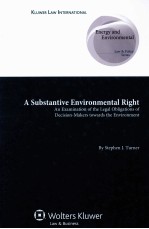
- STEPHEN J.TURNER 著
- 出版社: WOLTERS KLUWER LAW & BUSINESS
- ISBN:9041128158
- 出版时间:2009
- 标注页数:285页
- 文件大小:15MB
- 文件页数:306页
- 主题词:
PDF下载
下载说明
A SUBATANTIVE ENVIRONMENTAL RIGHTPDF格式电子书版下载
下载的文件为RAR压缩包。需要使用解压软件进行解压得到PDF格式图书。建议使用BT下载工具Free Download Manager进行下载,简称FDM(免费,没有广告,支持多平台)。本站资源全部打包为BT种子。所以需要使用专业的BT下载软件进行下载。如 BitComet qBittorrent uTorrent等BT下载工具。迅雷目前由于本站不是热门资源。不推荐使用!后期资源热门了。安装了迅雷也可以迅雷进行下载!
(文件页数 要大于 标注页数,上中下等多册电子书除外)
注意:本站所有压缩包均有解压码: 点击下载压缩包解压工具
图书目录
Chapter 1 Introduction 1
Chapter 2 The Current Status of the Development of Environmental Rights at National and International Levels 5
2.1 Introduction 5
2.2 International Environmental Law 6
2.2.1 The Status of the Development of Substantive Environmental Rights within International Environmental Law 7
2.2.2 Sovereignty 10
2.2.3 The Development of Procedural Environmental Rights 11
2.3 Human Rights Law 15
2.3.1 Different Classifications of Human Rights 16
2.3.2 Substantive Environmental Rights as Part of International and Regional Human Rights Law 17
2.3.3 Other Human Rights that can Provide Protection of the Environment 19
2.3.4 Existing 'Non-environmental' Human Rights that can be of use in the Protection of the Environment 19
2.3.5 The Status of the Development of the Right to a 'Clean' or 'Healthy' Environment 26
2.4 Constitutional Rights 27
2.5 Work of the United Nations 38
2.6 The International Court of Justice 41
2.7 Conclusions 42
Chapter 3 The Debate Relating to the Potential Development of a Substantive Environmental Right and the Proposed Design of Such a Right 45
3.1 Introduction 45
3.2 The Case against the Development of a Substantive Environmental Right 45
3.2.1 Lack of Certainty Relating to the Legal Development 48
3.2.2 Anthropocentricity and Differing Theories of Environmental Rights 49
3.2.3 Competing Issues and Decision-Making 51
3.2.4 Redundancy 53
3.2.5 Effectiveness in Operation 53
3.2.6 Cultural Issues 54
3.2.7 The Time it takes to develop a Right 55
3.2.8 The Scope of Human Rights under International Law 55
3.3 The Case for the Development of a Substantive Environmental Right 56
3.3.1 Background 56
3.3.2 Scientific Reasons 58
3.3.3 Institutional Recognition for the Link between the Environment and Man's Welfare 61
3.3.4 Realization of Intergenerational Equity 63
3.3.5 The Realization of the Potential of Procedural Rights 64
3.3.6 Issues Relating to 'Sustainable Development' 64
3.3.7 Providing a Balance to a State's Sovereignty over Natural Resources 65
3.3.8 The Need for Positive Duties for All Decision-Makers to Protect the Environment 66
3.3.9 The Development of International Law in Relation to Environmental Harm Caused by Non-state Actors 70
3.3.10 The Protection of Indigenous and Vulnerable Communities 71
3.4 The Design of a Substantive Environmental Right 72
3.4.1 The Proposed Right has the Status of a Human Right 73
3.4.2 The Proposed Right is not solely Anthropocentric 74
3.4.3 The Proposed Right Includes a Mechanism to Deal with its Relationship with other Human Rights 75
3.4.4 The Proposed Right Applies to both State and Non-state Actors 75
3.4.5 The Proposed Right Operates by Creating Clear Legal Duties and Obligations 76
3.4.6 The Proposed Right Provides an Equitable Mechanism for the Internalization of Compensation for Environmental Degradation 76
3.4.7 The Proposed Right Provides a Straightforward Process for Dealing with Decision-Making that Affects the Environment 77
3.4.8 Why the 'Human Right to a Good Environment' 78
3.5 Conclusion 78
Chapter 4 A Substantive Environmental Right and the State Actor 81
4.1 Introduction 81
4.2 Provisions of State Constitutions that Relate to the Environment 82
4.2.1 The Constitutional Provisions Relating to the Environment of South Africa, Spain, India and Peru 82
4.2.2 Key Features of Constitutional Environmental Rights 86
4.3 The Effect of Vague and Conflicting Constitutional Provisions on Legislative and Policy Decision-Making that Can Affect the Environment 87
4.3.1 The Constitutional Provisions 88
4.3.2 Environmental Laws 89
4.3.3 Law Creating Institutional Frameworks for Decision-Making 91
4.3.4 Laws Relating to the Hydrocarbon Industry 93
4.3.5 Environmental Impact Assessments (EIAs) 96
4.3.5.1 EIA Law 96
4.3.5.2 The Stage at which the EIA occurs 97
4.3.5.3 The Lack of Independence of the EIA 98
4.3.5.4 Public Participation within the EIA process 98
4.3.6 Public Participation in Decision-Making 100
4.4 Case Study: The Camisea Project: The Practical Problems for the Environment that can be Associated with Weak Environmental Provisions within Constitutions 101
4.4.1 Exploration Phase 101
4.4.2 Construction of the Weil-Heads, Pipeline and Associated Facilities 102
4.4.3 Fractionation Plant 104
4.4.4 Ongoing Operations 104
4.4.5 The Effect of the Constitutional Provisions on the Camisea Project 105
4.5 Conclusion 106
Chapter 5 Companies and Multinational Enterprises 109
5.1 Introduction 109
5.2 The Power of Modern Companies and MNEs 110
5.3 The Legal Responsibilities of Companies and MNEs 113
5.3.1 The Primary Responsibility of a Company or an MNE 114
5.3.2 The Duties of Directors 115
5.4 The Law at an International Level Relating to Companies and Multinational Enterprises 118
5.4.1 Liability 122
5.5 Attempts by the International Community to Respond to the Existing Legal Framework and Business Environment in which Companies and MNEs Operate 127
5.5.1 Corporate Governance 127
5.5.2 The Stakeholder Theory of Responsibilities 128
5.5.3 Corporate Social Responsibility 129
5.5.4 Codes of Conduct (and Guidelines) 132
5.5.5 Corporate Accountability 138
5.5.6 World Summit on Sustainable Development 139
5.5.7 Changes to the Duties of Directors 140
5.6 The Overall Deficit in the Law and Responses from the Academic Community 141
5.7 Conclusion 144
5.7.1 If a State Fails through its Laws or Lack of Enforcement to Properly Protect the Environment, are There Measures that should be taken on an International Level to Ensure that Companies Operate to Certain Minimum Environmental Standards? 145
5.7.2 If it is Primarily the Duty of the State to Regulate Companies, would there be any Purpose for Imposing upon Companies a Human Rights Responsibility that they Should Protect the Environment? 146
Chapter 6 Multilateral Development Banks 149
6.1 Introduction 149
6.2 What Capacity do MDBs have to Harm the Environment? 150
6.3 Legal Responsibilities under Constitutional Charters or Agreements 152
6.4 Legal Responsibilities under Operational Policies and Procedures 154
6.4.1 Environmental Impact Assessments 155
6.4.2 Public Participation 160
6.4.3 Specific Sectoral Policies 161
6.4.4 Indigenous Peoples 162
6.5 The Legal Character of Operational Policies and Procedures 164
6.5.1 The Role of Operational Policies and Procedures as Instruments within MDBs 164
6.5.2 The Legal Consequences of the Conditions Included within Bank Loans 166
6.5.3 The Legal Consequences of the Various Independent Accountability Mechanisms 167
6.6 International Environmental Law 173
6.7 International Human Rights Law 175
6.8 The Potential of a Rights-Based Approach to Reform 180
6.9 Conclusion 182
Chapter 7 The World Trade Organization 185
7.1 Introduction 185
7.2 The WTO in Context 186
7.2.1 The Effects that Trade and Trade Liberalization Can Have on the Environment 187
7.3 Legal Obligations towards the Environment 190
7.3.1 The Legal Obligations of the WTO towards the Environment under its own Constitution 191
7.3.2 Is there an Obligation on the WTO to Apply International Law other than that Contained in its own Agreements? 193
7.3.3 The Legal Obligations towards the Environment that Member States have as a Result of Membership of the WTO 196
7.3.4 The Development of Jurisprudence and the Extent to which Environmental Concerns are Incorporated into the Decision-Making of the Dispute Settlement Body 198
7.3.5 Issues Arising from the Existing Legal Framework 206
7.4 The Potential Application of a Substantive Environmental Right to the WTO System 207
7.5 Conclusion 213
Chapter 8 Conclusion 215
Appendix Draft Accord between States for the Development and Realization of a Substantive Environmental Right 221
Bibliography 223
Table of International Instruments 259
Table of International Cases 267
Table of National Laws 271
Table of National Cases 273
Index 277
精品推荐
- Northanger Abbey(1818)
- Emma(1815)
- Sense And Sensibility(1811)
- Mansfield Park(1814)
- HUMANITIES THE EVOLUTION OF VALUES
- Pride And Drejudice(1812)
- English
- 企鹅经济学词典 经济学
- 大人的友情 河合隼雄谈友谊
- Computing Concepts
- Advanced Compilpr Design and lmplementation
- 中国商事法律要览
- Introduction to polymers
- CONFICT OF LAWS IN THE WESTERN SOCIALIST AND DEVELOPING COUNTRIES
- Measurement and Research Methods in International Marketing