
图书介绍
STATE LIABILITY IN INVESTMENT TREATY ARBITRATION GLOBAL CONSTITUTIONAL AND ADMINISTRATIVE LAW IN THpdf电子书版本下载
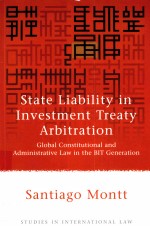
- SANTIAGO MONTT 著
- 出版社: OXFORD AND PORTLAND,OREGON
- ISBN:1849462135
- 出版时间:2012
- 标注页数:416页
- 文件大小:132MB
- 文件页数:457页
- 主题词:
PDF下载
下载说明
STATE LIABILITY IN INVESTMENT TREATY ARBITRATION GLOBAL CONSTITUTIONAL AND ADMINISTRATIVE LAW IN THPDF格式电子书版下载
下载的文件为RAR压缩包。需要使用解压软件进行解压得到PDF格式图书。建议使用BT下载工具Free Download Manager进行下载,简称FDM(免费,没有广告,支持多平台)。本站资源全部打包为BT种子。所以需要使用专业的BT下载软件进行下载。如 BitComet qBittorrent uTorrent等BT下载工具。迅雷目前由于本站不是热门资源。不推荐使用!后期资源热门了。安装了迅雷也可以迅雷进行下载!
(文件页数 要大于 标注页数,上中下等多册电子书除外)
注意:本站所有压缩包均有解压码: 点击下载压缩包解压工具
图书目录
Introduction 1
First Part: A Framework of Analysis 29
Chapter 1: The Latin American Position on State Responsibility. Looking into the Past for Lessons on the Future 31
Introduction: The Latin American Struggle against Diplomatic Protection 31
Ⅰ The Calvo Doctrine and Clause: Two Nineteenth Century Anti-Diplomatic Protection Institutions 35
A The Practice of Diplomatic Protection in the Nineteenth Century 36
B The Calvo Doctrine 38
C The Calvo Clause 45
Ⅱ The End of Gunboat Diplomacy 48
Ⅲ From the Calvo Doctrine to Expropriation Without Compensation 55
Ⅳ International Minimum Standards Strike Back 62
Ⅴ Updating the Calvo Doctrine in the BIT Generation 74
Conclusions: Building a Normative Stance Based on Equality 80
Chapter 2: The BIT Generation’s Emergence as a Collective Action Problem. Prisoner’s Dilemma or Network Effects? 83
Introduction: Why Do Developing Countries Sign BITs? 83
Ⅰ The BIT Generation as a Prisoner’s Dilemma 87
Ⅱ Weak Competition and Network Effects 90
Ⅲ A Formal Model of the BIT Generation as a Virtual Network 96
Ⅳ Evidence of the BIT Generation as a Virtual Network 104
A Five Structural Arguments 104
B Positive Externalities of the BIT System 112
V Providing answers for critical questions 115
Conclusions. Normative Implications of the Virtual Network Theory of the BIT Generation 122
Chapter 3: Trading Off Sovereignty for Credibility: Questions of Legitimacy in the BIT Generation 125
Introduction: Legitimacy in International Investment Law 125
Ⅰ The Legitimacy Problem: Ad Hoc International Arbitral Tribunals Discharging a Preservationist Constitutional Function 128
A International Law as Governance 129
B Governing with Judges 133
C Ad Hoc International Arbitral Tribunals Discharging a Preservationist Constitutional Function 135
Ⅱ Assessing Potential Sources of Legitimacy 141
A Consent Legitimacy 141
B Output Legitimacy 144
C Exit Legitimacy 145
D Rule of Law Legitimacy 146
E Institution-Building Legitimacy 154
Ⅲ Diversifying Risks in the BIT Lottery: Why an Appellate Body or an International Investment Court is Not the Solution 155
Conclusions: Future of the BIT Generation 159
Second Part: An Assessment of the Present State of Investment Treaty Arbitration Jurisprudence 163
Chapter 4: Property Rights v The Public Interests: A Comparative Approach to a Global Puzzle 165
Introduction: Risks and Benefits of Building a Comparative Patchwork 165
Ⅰ Understanding the Intertwined Relationship of PropertyRights and Regulation 168
Ⅱ The Core v The Public Interest: Hopeless Attempts to Escape Fully from Balancing 177
A Property Rights-at-the-Core as Fundamental Rights 177
B The Gateway Question of the Core 184
C the Denominator Problem and Conceptual Severance 188
D Termination of Property Rights without Compensation 191
Ⅲ The Periphery v the Public Interest: The Muddied Waters of Complex Balancing 198
A The Protection of Property Rights’ Periphery: Expropriations and Responsabilite de l’Etat 199
B Arbitrariness as Illegality 200
C Arbitrariness as Irrationality 206
D Arbitrariness as Special Sacrifice 213
E Arbitrariness as Lack of Proportionality (stricto sensu) 216
F Legitimate Expectations 222
Conclusions. Three Lessons from Comparative Law for International Investment Law 227
Chapter 5. Investments, Indirect Expropriations and the Regulatory State 231
Introduction: Why is Recognsing Indirect Takings So Difficult? 231
Ⅰ Investments and Indirect Expropriations as GlobalConstitutional Law: New Limits for States’ Police Powers 236
A The Investment-Expropriation Relationship in InvestmentTreaties as a Global Constitutional Law Problem 237
B A ‘Patterning Definition’ Approach to the Concept of Investment 243
C Does the Definition of Investment Play a Substantive Role? 251
Ⅱ The Rule of Thumb: Indirect Expropriations as Total or Substantial Deprivations 253
A The ‘Sole Effects’ Doctrine in Indirect Expropriations: Total or Substantial Deprivations 254
B What is Substantial Deprivation? 261
C The Denominator Problem in Investment Treaty Disputes 265
Ⅲ Are There Total or Substantial Deprivations That Do Not Qualify as Expropriations? 273
A Exceptions Ⅰ: Termination of Investment in Accordance with the Law 274
B Exceptions Ⅱ: Pre-eminent Public Interests 277
C Counter-Exceptions: Arbitrariness and Fair and Equitable Treatment Considerations in Expropriation Claims 281
Conclusions: Fearing Ad Hocism More than an Excessively Extensive Concept of Expropriations 288
Chapter 6: Controlling Arbitrariness through the Fair and Equitable Standard 293
Introduction: Arbitrariness in International Investment Law 293
Ⅰ The Current Debate in International Investment Law: The Alleged Autonomous Character of the FET Standard 298
A The Challenge of the FET Standard: Defining a New Standard of Review 299
B A New Standard Under Traditional Methods: FET and Treaty Interpretation under Articles 31 and 32 of the Vienna Convention 303
C IMS as a Methodological Constraint over Arbitral Tribunals 307
Ⅱ A General Framework of Analysis: Finding the Essential Dimensions of a GAL Approach to the FET Standard 310
Ⅲ The First Dimension of the GAL Approach to the FET Standard: The Legal System Falling Below IMS as the Basis of International Wrongfulness 318
Ⅳ The Second Dimension of the GAL Approach to the FET Standard: Domestic Illegalities as the Basis of International Wrongful Acts 323
A The Non-Courts of Appeal Doctrine 324
B Extent of Domestic Judicial Review 326
i First Option: Remanding Cases to Domestic Courts: The Rebirth of the Local Remedies Rule 327
ii Second Option: Reviewing Illegality, Irrationality, Special Sacrifice, and Lack of Proportionality in Accordance with Domestic Law 329
iii Third Option: Reviewing Only Illegality in Accordance with Domestic Law 330
C Standards of Review of Questions of Law 332
i First Option: Transposing Denial of Justice Age Standards to the BIT Generation: The ‘Manifestly Unjust’ Standard 333
ii Second Option: Municipal Law as Facts: De Novo Review 334
iii Third Option: The Same Level of Deference That Is Generally Applied by Domestic Courts 337
D The ‘Something More’ Doctrine 338
Ⅴ The Third Dimension of the GAL Approach to the FET Standard: Arbitrariness and the Control of Discretionary Powers 342
A The Perils of Process-Based Heightened Scrutiny and Object and Purpose Interpretation 343
B Due Process: Administrative Denial of Justice 348
C Arbitrariness as Irrationality 351
i Ends and Legitimate State Interests 351
ii Means and Their Relationship to Ends 354
D Arbitrariness as Special Sacrifice and Lack of Proportionality (Stricto Sensu) 355
E Legitimate Expectations 359
i Without Assurances 360
ii With Assurances 362
Conclusions: The Horizontal and Vertical Constraints on the FET Standard 366
Conclusions: Future of the BIT Generation: For a Global Legal Order Committed to the Rule of Law and Human Welfare 369
Bibliography 375
Index 405
精品推荐
- Northanger Abbey(1818)
- Emma(1815)
- Sense And Sensibility(1811)
- Mansfield Park(1814)
- HUMANITIES THE EVOLUTION OF VALUES
- Pride And Drejudice(1812)
- English
- 企鹅经济学词典 经济学
- 大人的友情 河合隼雄谈友谊
- Computing Concepts
- Advanced Compilpr Design and lmplementation
- 中国商事法律要览
- Introduction to polymers
- CONFICT OF LAWS IN THE WESTERN SOCIALIST AND DEVELOPING COUNTRIES
- Measurement and Research Methods in International Marketing