
图书介绍
CONSTITUTIONAL COMPARISONpdf电子书版本下载
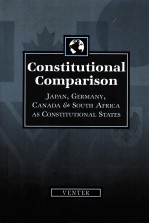
- FRANCOIS VENTER 著
- 出版社: KLUWER LAW INERNATIONAL
- ISBN:9041115102
- 出版时间:2000
- 标注页数:274页
- 文件大小:15MB
- 文件页数:308页
- 主题词:
PDF下载
下载说明
CONSTITUTIONAL COMPARISONPDF格式电子书版下载
下载的文件为RAR压缩包。需要使用解压软件进行解压得到PDF格式图书。建议使用BT下载工具Free Download Manager进行下载,简称FDM(免费,没有广告,支持多平台)。本站资源全部打包为BT种子。所以需要使用专业的BT下载软件进行下载。如 BitComet qBittorrent uTorrent等BT下载工具。迅雷目前由于本站不是热门资源。不推荐使用!后期资源热门了。安装了迅雷也可以迅雷进行下载!
(文件页数 要大于 标注页数,上中下等多册电子书除外)
注意:本站所有压缩包均有解压码: 点击下载压缩包解压工具
图书目录
Chapter 1 CONSIDERATIONS OF COMPARATIVE METHODOLOGY 1
1.1 Law and state as common denominators of humanity 1
1.1.1 The law 2
1.1.2 The state 4
1.1.2.1 The authority of the state 4
1.1.2.2 Emergence of the modern state 8
Feudalism 10
The Standestaat 10
Absolutism 11
The English parliamentary and cabinet system 11
The French Revolution 13
The Constitution of the United States 14
1.2 Comparative law: nature and issues 15
1.2.1 Is comparative law a method, a discipline or a science? 15
1.2.2 The need for a tertium comparationis 17
1.3 Comparison in the field of constitutional law 19
1.3.1 Constitutionalism 20
1.3.1.1 The hazards of definition 20
1.3.1.2 The faces of constitutionalism 20
Classic constitutionalism 21
Neo-classic constitutionalism 25
Conversions to constitutionalism 30
1.3.1.3 Crystallised constitutionalism 31
1.3.1.4 Contemporary challenges 34
1.3.2 The purposes of constitutional comparison 36
1.3.3 Published approaches to constitutional comparison 37
1.3.3.1 Empirical description 37
1.3.3.2 Historical exposition 39
1.3.3.3 Thematic comparison 39
1.3.3.4 Public law families 41
1.3.4 Layers of comparison 41
1.3.4.1 Comparison of the law of the constitution 42
1.3.4.2 Comparison of constitutional law 43
1.3.4.3 Constitutional history and constitutional comparison 43
1.3.4.4 Constitutional principles and doctrines and constitu- tional comparison 44
1.4 A matrix for constitutional comparison 44
1.4.1 Comparability 44
1.4.2 Distinction and classification 45
1.4.3 Attributes of the modern constitutional state 47
1.4.4 Stimulus, framework, purpose and focus 51
Chapter 2 PREDOMINANCE OF THE CONSTITUTION 53
2.1 Introduction 53
2.2 Why is the Constitution supreme? 53
2.3 History and foundations of the predominance of the constitution 59
2.3.1 Japan 60
2.3.2 Germany 63
2.3.3 Canada 66
2.3.4 South Africa 74
2.4 The impact of the predominance of the Constitution 79
2.4.1 Constitutional adjudication 79
2.4.1.1 The concept 79
2.4.1.2 The origins 80
2.4.1.3 The countermajoritarian dilemma 81
2.4.2 Operation of the judiciary under the Constitution 84
2.4.2.1 Japan 87
2.4.2.2 Germany 90
2.4.2.3 Canada 94
2.4.2.4 South Africa 98
2.4.3 Constitutional predominance in the legal system 104
2.4.3.1 Japan 106
2.4.3.2 Germany 110
2.4.3.3 Canada 114
2.4.3.4 South Africa 118
2.5 Comparative conclusions 123
2.5.1 The basic notion 123
2.5.2 The effect on legislation and the ligitimacy of the judiciary 124
2.5.3 Administrative acts and the Constitution 125
2.5.4 Government and the Constitution 125
2.5.5 Private relations and the Constitution 126
2.5.6 International law and the supreme constitution 126
Chapter 3 CONSTITUTIONAL RIGHTS 127
3.1 Introduction 127
3.2 The classification of constitutional rights 130
3.3 The culture of rights 132
3.3.1 Japan 133
3.3.2 Germany 135
3.3.3 Canada 137
3.3.4 South Africa 139
3.4 Analysis of selected constitutional rights 147
3.4.1 Property 147
3.4.1.1 Japan 147
3.4.1.2 Germany 149
3.4.1.3 Canada 151
3.4.1.4 South Africa 152
3.4.2 Access to the courts 156
3.4.2.1 Japan 156
3.4.2.2 Germany 158
3.4.2.3 Canada 159
3.4.2.4 South Africa 160
3.4.3 Academic freedom 163
3.4.3.1 Japan 163
3.4.3.2 Germany 164
3.4.3.3 Canada 166
3.4.3.4 South Africa 168
3.4.4 Citizenship 170
3.4.4.1 Japan 170
3.4.4.2 Germany 171
3.4.4.3 Canada 172
3.4.4.4 South Africa 173
3.4.5 State-sponsored education 175
3.4.5.1 Japan 175
3.4.5.2 Germany 176
3.4.5.3 Canada 178
3.4.5.4 South Africa 179
3.5 Limiting and balancing interests 181
3.5.1 Japan 181
3.5.2 Germany 183
3.5.3 Canada 185
3.5.4 South Africa 187
3.6 Conclusion: constitutional rights in the contemporary constitutional state 190
Chapter 4 DEMOCRACY AND THE DISTRIBUTION OF AUTHORITY 193
4.1 Introduction 193
4.2 Democracy 193
4.2.1 Working with the undefinable 193
4.2.2 Democratic representation and its British roots 195
4.2.3 Contemporary reach of democracy 200
4.2.3.1 Democracy as a universal right 201
4.2.3.2 The operation of democracy in the constitutional state 202
4.2.4 Democracy in the Constitutions 204
4.2.4.1 Japan 204
4.2.4.2 Germany 206
4.2.4.3 Canada 208
4.2.4.4 South Africa 209
4.3 The horizontal distribution of authority 211
4.3.1 Separation of Powers in the Constitutions 214
4.3.1.1 Japan 214
4.3.1.2 Germany 216
4.3.1.3 Canada 219
4.3.1.4 South Africa 220
4.3.2 Some comparative deductions 223
4.4 The vertical distribution of authority 224
4.4.1 Vertical distribution in the Constitutions 229
4.4.1.1 Japan 229
4.4.1.2 Germany 230
4.4.1.3 Canada 235
4.4.1.4 South Africa 241
4.4.2 Some comparative deductions 254
4.5 Democracy and Authority in the Constitutional State 255
Chapter 5 COMPARING CONSTITUTIONS IN 2000 256
5.1 Motives for practising comparative constitutional law 256
5.2 Limitations of constitutional comparison 257
5.2.1 The state of statehood 257
5.2.2 Comparability 262
5.3 A method for comparing constitutions 263
INDEX 265
精品推荐
- Northanger Abbey(1818)
- Emma(1815)
- Sense And Sensibility(1811)
- Mansfield Park(1814)
- HUMANITIES THE EVOLUTION OF VALUES
- Pride And Drejudice(1812)
- English
- 企鹅经济学词典 经济学
- 大人的友情 河合隼雄谈友谊
- Computing Concepts
- Advanced Compilpr Design and lmplementation
- 中国商事法律要览
- Introduction to polymers
- CONFICT OF LAWS IN THE WESTERN SOCIALIST AND DEVELOPING COUNTRIES
- Measurement and Research Methods in International Marketing