
图书介绍
Introduction to coordination chemistrypdf电子书版本下载
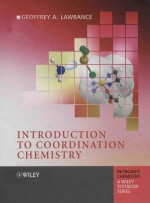
- Geoffrey A. Lawrance 著
- 出版社: Wiley
- ISBN:0470519301
- 出版时间:2010
- 标注页数:290页
- 文件大小:45MB
- 文件页数:307页
- 主题词:
PDF下载
下载说明
Introduction to coordination chemistryPDF格式电子书版下载
下载的文件为RAR压缩包。需要使用解压软件进行解压得到PDF格式图书。建议使用BT下载工具Free Download Manager进行下载,简称FDM(免费,没有广告,支持多平台)。本站资源全部打包为BT种子。所以需要使用专业的BT下载软件进行下载。如 BitComet qBittorrent uTorrent等BT下载工具。迅雷目前由于本站不是热门资源。不推荐使用!后期资源热门了。安装了迅雷也可以迅雷进行下载!
(文件页数 要大于 标注页数,上中下等多册电子书除外)
注意:本站所有压缩包均有解压码: 点击下载压缩包解压工具
图书目录
1 The Central Atom 1
1.1 Key Concepts in Coordination Chemistry 1
1.2 A Who’s Who of Metal Ions 4
1.2.1 Commoners and ‘Uncommoners 5
1.2.2 Redefining Commoners 7
1.3 Metals in Molecules 9
1.3.1 Metals in the Natural World 10
1.3.2 Metals in Contrived Environments 11
1.3.3 Natural or Made-to-Measure Complexes 12
1.4 The Road Ahead 13
Concept Keys 14
Further Reading 14
2 Ligands 15
2.1 Membership:Being a Ligand 15
2.1.1 What Makes a Ligand? 15
2.1.2 Making Attachments - Coordination 16
2.1.3 Putting the Bite on Metals - Chelation 17
2.1.4 Do I Look Big on That?- Chelate Ring Size 22
2.1.5 Different Tribes - Donor Group Variation 23
2.1.6 Ligands with More Bite - Denticity 24
2.2 Monodentate Ligands - The Simple Type 26
2.2.1 Basic Binders 26
2.2.2 Amines Ain’t Ammines - Ligand Families 27
2.2.3 Meeting More Metals - Bridging Ligands 27
2.3 Greed is Good - Polydentate Ligands 29
2.3.1 The Simple Chelate 29
2.3.2 More Teeth,Stronger Bite - Polydentates 31
2.3.3 Many-Armed Monsters - Introducing Ligand Shape 32
2.4 Polynucleating Species - Molecular Bigamists 33
2.4.1 When One is Not Enough 33
2.4.2 Vive la Difference - Mixed-metal Complexation 34
2.4.3 Supersized - Binding to Macromolecules 36
2.5 A Separate Race - Organometallic Species 36
Concept Keys 38
Further Reading 39
3 Complexes 41
3.1 The Central Metal Ion 41
3.2 Metal-Ligand Marriage 42
3.2.1 The Coordinate Bond 42
3.2.2 The Foundation of Coordination Chemistry 42
3.2.3 Complex Shape - Not Just Any Which Way 45
3.3 Holding On - The Nature of Bonding in Metal Complexes 49
3.3.1 An Ionic Bonding Model - Introducing Crystal Field Theory 53
3.3.2 A Covalent Bonding Model - Embracing Molecular Orbital Theory 57
3.3.3 Ligand Field Theory - Making Compromises 62
3.3.4 Bonding Models Extended 63
3.4 Coupling - Polymetallic Complexes 73
3.5 Making Choices 75
3.5.1 Selectivity - Of all the Molecules in all the World,Why This One? 75
3.5.2 Preferences - Do You Like What I Like? 75
3.5.3 Complex Lifetimes - Together,Forever? 77
3.6 Complexation Consequences 80
Concept Keys 81
Further Reading 82
4 Shape 83
4.1 Getting in Shape 83
4.2 Forms of Complex Life - Coordination Number and Shape 86
4.2.1 One Coordination (ML) 86
4.2.2 Two Coordination (ML2) 87
4.2.3 Three Coordination (ML3) 88
4.2.4 Four Coordination (ML4) 89
4.2.5 Five Coordination (ML5) 93
4.2.6 Six Coordination (ML6) 96
4.2.7 Higher Coordination Numbers (ML7 to ML9) 98
4.3 Influencing Shape 101
4.3.1 Metallic Genetics - Metal Ion Influences 101
4.3.2 Moulding a Relationship - Ligand Influences 103
4.3.3 Chameleon Complexes 105
4.4 Isomerism - Real 3D Effects 105
4.4.1 Introducing Stereoisomers 106
4.4.2 Constitutional (Structural) Isomerism 106
4.4.3 Stereoisomerism:in Place - Positional Isomers; in Space - Optical Isomers 109
4.4.4 What’s Best?- Isomer Preferences 113
4.5 Sophisticated Shapes 115
4.5.1 Compounds of Polydentate Ligands 116
4.5.2 Encapsulation Compounds 117
4.5.3 Host-Guest Molecular Assemblies 121
4.6 Defining Shape 123
Concept Keys 123
Further Reading 124
5 Stability 125
5.1 The Makings of a Stable Relationship 125
5.1.1 Bedded Down - Thermodynamic Stability 125
5.1.2 Factors Influencing Stability of Metal Complexes 127
5.1.3 Overall Stability Constants 138
5.1.4 Undergoing Change - Kinetic Stability 141
5.2 Complexation - Will It Last? 143
5.2.1 Thermodynamic and Kinetic Stability 143
5.2.2 Kinetic Rate Constants 144
5.2.3 Lability and Inertness in Octahedral Complexes 145
5.3 Reactions 146
5.3.1 A New Partner - Substitution 147
5.3.2 A New Body - Stereochemical Change 155
5.3.3 A New Face - Oxidation-Reduction 160
5.3.4 A New Suit - Ligand-centred Reactions 169
Concept Keys 170
Further Reading 170
6 Synthesis 173
6.1 Molecular Creation - Ways to Make Complexes 173
6.2 Core Metal Chemistry - Periodic Table Influences 173
6.2.1 s Block:Alkali and Alkaline Earth Metals 173
6.2.2 p Block:Main Group Metals 174
6.2.3 d Block:Transition Metals 175
6.2.4 f Block:Inner Transition Metals (Lanthanoids and Actinoids) 176
6.2.5 Beyond Natural Elements 178
6.3 Reactions Involving the Coordination Shell 179
6.3.1 Ligand Substitution Reactions in Aqueous Solution 179
6.3.2 Substitution Reactions in Nonaqueous Solvents 184
6.3.3 Substitution Reactions without using a Solvent 186
6.3.4 Chiral Complexes 189
6.3.5 Catalysed Reactions 190
6.4 Reactions Involving the Metal Oxidation State 190
6.5 Reactions Involving Coordinated Ligands 194
6.5.1 Metal-directed Reactions 194
6.5.2 Reactions of Coordinated Ligands 197
6.6 Organometallic Synthesis 203
Concept Keys 206
Further Reading 207
7 Properties 209
7.1 Finding Ways to Make Complexes Talk - Investigative Methods 209
7.2 Getting Physical - Methods and Outcomes 210
7.3 Probing the Life of Complexes - Using Physical Methods 214
7.3.1 Peak Performance - Illustrating Selected Physical Methods 216
7.3.2 Pretty in Red?- Colour and the Spectrochemical Series 220
7.3.3 A Magnetic Personality?- Paramagnetism and Diamagnetism 223
7.3.4 Ligand Field Stabilization 225
Concept Keys 227
Further Reading 227
8 A Complex Life 229
8.1 Life’s a Metal Ion 229
8.1.1 Biological Ligands 229
8.1.2 Metal Ions in Biology 231
8.1.3 Classes of Metallobiomolecules 233
8.2 Metalloproteins and Metalloenzymes 233
8.2.1 Iron-containing Biomolecules 234
8.2.2 Copper-containing Biomolecules 240
8.2.3 Zinc-containing Biomolecules 242
8.2.4 Other Metal-containing Biomolecules 243
8.2.5 Mixed-Metal Proteins 244
8.3 Doing What Comes Unnaturally - Synthetic Biomolecules 245
8.4 A Laboratory-free Approach - In Silico Prediction 247
Concept Keys 249
Further Reading 250
9 Complexes and Commerce 251
9.1 Kill or Cure?- Complexes as Drugs 251
9.1.1 Introducing Metallodrugs 252
9.1.2 Anticancer Drugs 252
9.1.3 Other Metallodrugs 255
9.2 How Much?- Analysing with Complexes 256
9.2.1 Fluoroimmunoassay 256
9.2.2 Fluoroionophores 258
9.3 Profiting from Complexation 259
9.3.1 Metal Extraction 259
9.3.2 Industrial Roles for Ligands and Coordination Complexes 261
9.4 Being Green 263
9.4.1 Complexation in Remediation 264
9.4.2 Better Ways to Synthesize Fine Organic Chemicals 264
9.5 Complex Futures 264
9.5.1 Taking Stock 265
9.5.2 Crystal Ball Gazing 265
Concept Keys 266
Further Reading 266
Appendix A:Nomenclature 269
Appendix B:Molecular Symmetry:The Point Group 277
Index 283
精品推荐
- Northanger Abbey(1818)
- Emma(1815)
- Sense And Sensibility(1811)
- Mansfield Park(1814)
- HUMANITIES THE EVOLUTION OF VALUES
- Pride And Drejudice(1812)
- English
- 企鹅经济学词典 经济学
- 大人的友情 河合隼雄谈友谊
- Computing Concepts
- Advanced Compilpr Design and lmplementation
- 中国商事法律要览
- Introduction to polymers
- CONFICT OF LAWS IN THE WESTERN SOCIALIST AND DEVELOPING COUNTRIES
- Measurement and Research Methods in International Marketing