
图书介绍
CRIME PREVENTION THEORY AND PRACTICEpdf电子书版本下载
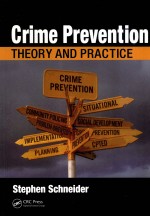
- STEPHEN SCHNEIDER 著
- 出版社: CRC PRESS
- ISBN:142006214X
- 出版时间:2010
- 标注页数:369页
- 文件大小:31MB
- 文件页数:385页
- 主题词:
PDF下载
下载说明
CRIME PREVENTION THEORY AND PRACTICEPDF格式电子书版下载
下载的文件为RAR压缩包。需要使用解压软件进行解压得到PDF格式图书。建议使用BT下载工具Free Download Manager进行下载,简称FDM(免费,没有广告,支持多平台)。本站资源全部打包为BT种子。所以需要使用专业的BT下载软件进行下载。如 BitComet qBittorrent uTorrent等BT下载工具。迅雷目前由于本站不是热门资源。不推荐使用!后期资源热门了。安装了迅雷也可以迅雷进行下载!
(文件页数 要大于 标注页数,上中下等多册电子书除外)
注意:本站所有压缩包均有解压码: 点击下载压缩包解压工具
图书目录
Section Ⅰ CRIME PREVENTION: AN OVERVIEW 3
1 The Theory and Practice of Crime Prevention: An Overview 3
1.1 Learning Objectives 3
1.2 Introduction 3
1.3 Definitions and Descriptions 4
1.4 Identifying the Targets of Crime Prevention 5
1.5 Crime Prevention vs. the Criminal Justice System 7
1.5.1 Crime Prevention Efforts Are Proactive 8
1.5.2 Crime Prevention Emphasizes a"Problem-Oriented" Approach 9
1.5.3 Responsibility for Crime Prevention Is Partially Shifted to Private Actors 12
1.5.4 (Community) Crime Prevention Stresses Informal Social Control 14
1.5.5 Focus Shifted from the Offender to the Victim and Potential Offender 15
1.5.6 Crime Prevention Targets Not Only the Criminal Act, but Also Criminality, Fear, and Disorder 15
1.5.7 The Goals of Crime Prevention Differ from Those of the Criminal Justice System 18
1.6 Classifying Crime Prevention Approaches 20
1.6.1 Situational vs. Social Developmental Approaches 20
1.6.2 Primary, Secondary, and Tertiary Approaches 21
1.6.3 Collective vs. Individualistic Crime Prevention 24
1.6.4 Four Pillars of Crime Prevention 24
1.6.5 Program vs. Practice 25
1.7 Institutions through Which Crime Prevention Programs and Practices Are Delivered 25
1.7.1 Families 25
1.7.2 Schools 27
1.7.3 Labor Markets 28
1.7.4 Neighborhoods and Communities 30
1.7.5 Places 31
1.7.6 Police and the Criminal Justice System 32
1.7.7 Other Government Agencies, Services, and Policies 33
1.7.8 (Psychological and Mental) Health-Care Systems 33
1.8 Conclusion 36
1.9 Discussion Questions and Exercises 36
1.10 Important Terms 37
Further Reading 38
Internet Resources 38
Section Ⅱ DOMINANT CRIME PREVENTION APPROACHES 41
2 Situational Crime Prevention and CPTED 41
2.1 Learning Objectives 41
2.2 Introduction 41
2.3 Theoretical Assumptions Underlying Situational Crime Prevention 42
2.3.1 Routine Activity Theory 43
2.3.2 Rational Choice Theory 43
2.3.3 Offender Search Theory 44
2.4 Situational Crime Prevention: Definitions and Descriptions 45
2.4.1 Increase the Effort Necessary to Offend 46
2.4.2 Increase the Risks of Detection 51
2.4.3 Reduce the Rewards 55
2.4.4 Remove Excuses 56
2.5 Crime Prevention Through Environmental Design (CPTED) 57
2.6 Reducing Crime Opportunities by Modifying the Behavior of Potential Victims 65
2.7 Conclusion 68
2.8 Discussion Questions and Exercises 73
2.9 Important Terms 74
Further Reading 74
Internet Resources 75
Organizations 75
3 Crime Prevention through Social Development 77
3.1 Learning Objectives 77
3.2 Introduction 77
3.3 Etiological (Crime Causation) Theories Underlying CPSD 79
3.3.1 Anomie and Strain Theory 79
3.3.2 Differential Association Theory 80
3.3.3 Social Learning Theory 82
3.3.4 Control Theory/Social Bond Theory 84
3.3.5 Developmental Criminology: Identifying Risk Factors among Children and Youth 87
3.3.5.1 Personal Risk Factors 88
3.3.5.2 Family (Parental) Risk Factors 92
3.3.5.3 School Risk Factors 92
3.3.5.4 Neighborhood and Community Risk Factors 93
3.3.5.5 Peer Group Risk Factors 94
3.3.6 Summary: Risk Factors among Children and Youth 94
3.4 Crime Prevention through Social Development 95
3.4.1 CPSD Targeting Children and Youth 99
3.4.2 Interventions Targeting At-RiskYouth Directly 100
3.4.2.1 Preschool Programs 100
3.4.2.2 Critical Thinking, Social Competency, and Life Skills Training 101
3.4.2.3 Cognitive Behavioral Treatment and Therapy 105
3.4.2.4 Education and Schools: Academic, Intellectual, and Cognitive Development 106
3.4.2.5 Mentoring 116
3.4.2.6 Recreational and Leisure Activities 117
3.4.3 Interventions Targeting the At-Risk Individual Indirectly (Modifying the Social Environment) 119
3.4.3.1 Promoting Stable Families and Effective Parenting 119
3.4.4 Crime Prevention Strategies for Youth 122
3.4.4.1 Preventing Teenage Pregnancy 123
3.4.4.2 Gang Prevention Programs 124
3.4.4.3 Youth-Centered Agencies (Including Youth Workers) 126
3.4.5 CPSD for Older Youth and Adults: Employment and Labor Markets 126
3.5 Conclusion 129
3.6 Discussion Questions and Exercises 134
3.7 Important Terms 134
Further Reading 134
Internet Resources 135
4 Community Crime Prevention 137
4.1 Learning Objectives 137
4.2 Introduction 137
4.3 Crime Causation Theories Underlying Community Crime Prevention 140
4.4 The Community Defense Model 143
4.4.1 Community Based 144
4.4.2 Informal Social Control (and Social Cohesion) 146
4.4.3 Collective Action 148
4.4.4 Behavioral Reinforcement/Modification 150
4.4.5 Situational Crime Prevention Measures 150
4.4.6 Summary: The Theorized Process of the Community Defense Model 150
4.4.7 Neighborhood Watch 153
4.5 Community Crime Prevention Organizations 156
4.5.1 The Community Policing and Crime Prevention Office 159
4.6 Crime Prevention through Community Development 161
4.6.1 Social (Socio-Economic) Development 163
4.6.2 Community Building 166
4.6.3 Physical Development and Beautification 168
4.7 Comprehensive Community-Based Approaches to Grime Prevention 169
4.8 Critiques of and Challenges to Community Crime Prevention 172
4.9 Conclusion 174
4.10 Discussion Questions and Exercises 175
4.11 Important Terms 176
Further Reading 176
Internet Resources 177
Section Ⅲ THE ROLE OF GOVERNMENT AND POLICE IN CRIME PREVENTION 181
5 The State and Crime Prevention 181
5.1 Introduction 181
5.2 The Role of the State in Crime Prevention 182
5.3 Case Studies: National and State/Provincial Governments 186
5.3.1 United States 186
5.3.2 Canada 191
5.3.3 United Kingdom 193
5.3.4 France 197
5.3.5 The Netherlands 199
5.3.6 New South Wales, Australia 200
5.4 Case Studies: Municipal Governments 201
5.4.1 United States 203
5.4.1.1 San Antonio, Texas 203
5.4.1.2 Gainesville, Florida 204
5.4.1.3 Joliet, Illinois 204
5.4.2 Canada 204
5.4.2.1 Toronto, Ontario 204
5.4.2.2 Vancouver, British Columbia 206
5.4.3 United Kingdom 206
5.4.3.1 Borough of Brent (London, England) 206
5.4.4 France 208
5.4.4.1 Aix en Provence 208
5.4.5 Australia 208
5.4.5.1 Brisbane 208
5.4.6 Africa 209
5.4.6.1 South Africa 210
5.5 Conclusion 211
5.6 Discussion Questions and Exercises 213
Further Reading 214
Internet Resources 214
6 Policing for the Prevention of Crime: Community and Problem-Oriented Policing 215
6.1 Learning Objectives 215
6.2 Introduction 215
6.3 Retracing the Origins of Community Policing: A Brief History of Policing in Western Societies 217
6.3.1 Early "Policing" in England 217
6.3.2 Early Policing in North America 221
6.3.3 Policing in the Twentieth Century 221
6.3.4 The Crisis in Policing 223
6.4 Community and Problem-Oriented Policing 224
6.4.1 Community Policing 225
6.4.1.1 Key Elements of Community Policing 226
6.5 Conclusion 249
6.6 Discussion Questions and Exercises 256
6.7 Important Terms 257
Further Reading 257
Internet Resources 258
Section Ⅳ PLANNING, IMPLEMENTING, AND EVALUATING A CRIME PREVENTION PROJECT 261
7 The Crime Prevention Project, Phase One: Planning 261
7.1 Learning Objectives 261
7.2 Introduction 261
7.3 The Crime Prevention Plan as a Strategic Plan 262
7.4 Key Stages in the Planning a Crime Prevention Project 263
7.4.1 Initial Community Outreach 263
7.4.1.1 Stage One: Define and Understand the Community;Identify Community Members and Other Key Stakeholders 263
7.4.1.2 Stage Two: Hold an Initial Community Meeting 266
7.4.2 Research 267
7.4.2.1 Stage Three: Involve Community Members and Other Key Partners in the Research Process 267
7.4.2.2 Stage Four: Plan the Data Collection (Draft a Research Proposal) 269
7.4.2.3 Stage Five: Conduct Research (Collect Information) 278
7.4.2.4 Stage Six: Collate and Analyze the Collected Information 278
7.4.3 The Crime Prevention Plan 282
7.4.3.1 Stage Seven: Develop the Crime Prevention Plan 282
7.4.3.2 Stage Eight: Plan for How the Strategies Will Be Monitored and Evaluated 285
7.4.3.3 Stage Nine: Prepare the Crime Prevention Planning Report 286
7.4.3.4 Stage Ten: Disseminate a (Draft) Crime Prevention Plan 286
7.4.3.5 Stage Eleven: Modify the Crime Prevention Plan (if Necessary) 286
7.4.3.6 Stage Twelve: Finalize the Crime Prevention Plan 287
7.4.3.7 Stage Thirteen: Seek Funding to Support the Crime Prevention Activities 287
7.4.5 Stage Fourteen: Collect Pre-Test Evaluation Data 288
7.5 Exercise 288
7.6 Important Terms 289
Further Reading and Internet Resources 289
The Crime Prevention Project Process 289
Community Organizing 290
Community Leadership 290
Collecting Information on Local Crime and Disorder Problems 290
The Research Process (General) 290
Safety Audits 290
Victimization Surveys 290
Analyzing Data (Applying Critical Thinking Skills) 291
Report Writing 291
Crime Prevention Plans 291
8 The Crime Prevention Project, Phase Two: Implementing a Crime Prevention Project 293
8.1 Learning Objectives 293
8.2 Introduction 293
8.3 Mobilizing the Community: Obtaining Community Support for and Participation in the Crime Prevention Activities 295
8.3.1 Community Outreach and Communication: Intensive,Varied, Personal, and Appropriate 296
8.3.2 Organize at the Micro Level 297
8.3.3 Reaching"Communities within a Community" 298
8.3.4 Reaching Out to and Involving Those Who Typically Do Not Become Active Locally 299
8.3.5 Leadership 302
8.3.6 Working with Volunteers 303
8.3.7 Partnerships and Team-Building 304
8.4 Determining the Type of Organization That Will Carry Out the Crime Prevention Activities 305
8.5 Sustaining a Crime Prevention Program and Activities over Time 307
8.6 Conclusion 308
8.7 Discussion Questions and Exercises 309
8.8 Important Terms 309
Further Reading/Internet Resources 309
9 The Crime Prevention Project, Phases Three and Four: Evaluating and Adjusting the Crime Prevention Plan 311
9.1 Learning Objectives 311
9.2 Introduction 311
9.3 An Overview of Evaluations 312
9.3.1 Why Evaluations Are Important for Crime Prevention 312
9.3.2 When the Evaluation Process Should Begin 313
9.3.3 Who Should Conduct the Evaluation 313
9.4 Evaluation Methodologies 314
9.4.1 Pre-Test/Post-Test Comparison 315
9.4.2 Planned vs. Actual Performance 315
9.4.3 Comparison between "Treatment" and "Control" Groups 316
9.5 Important Variables to Measure 317
9.6 Research Methods and Information Sources 318
9.7 A Step-by-Step Guide to Carrying Out an Evaluation 319
9.7.1 Stage One: Planning and Designing the Evaluation 320
9.7.2 Stage Two: Pre-Test Information Collection 327
9.7.3 Stage Three: Implement and Monitor the Project 327
9.7.4 Stage Four: Post-Test Information Collection 327
9.7.5 Stage Five: Collate and Analyze the Data 328
9.7.6 Stage Six: Compile the Final Evaluation Report 329
9.7.7 Stage Seven: Disseminate the Report and Solicit Feedback 330
9.8 Phase Four: Modifying the Project 331
9.9 Exercises 331
9.10 Important Terms 331
Further Reading/Internet Resources 332
Appendix: Crime Prevention Survey 333
A. Victimization/Fear of Crime 333
B. Calls for Police Service 333
C. Social Integration, Cohesion and Territoriality 334
D. Awareness of and Participation in Safety and Security Measures 334
Bibliography 335
Index 365
精品推荐
- Northanger Abbey(1818)
- Emma(1815)
- Sense And Sensibility(1811)
- Mansfield Park(1814)
- HUMANITIES THE EVOLUTION OF VALUES
- Pride And Drejudice(1812)
- English
- 企鹅经济学词典 经济学
- 大人的友情 河合隼雄谈友谊
- Computing Concepts
- Advanced Compilpr Design and lmplementation
- 中国商事法律要览
- Introduction to polymers
- CONFICT OF LAWS IN THE WESTERN SOCIALIST AND DEVELOPING COUNTRIES
- Measurement and Research Methods in International Marketing