
图书介绍
跨文化交际叙事研究pdf电子书版本下载
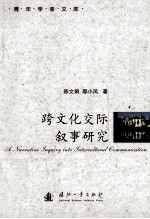
- 陈文娟,鄢小凤著 著
- 出版社: 北京:国防工业出版社
- ISBN:9787118080001
- 出版时间:2012
- 标注页数:388页
- 文件大小:15MB
- 文件页数:409页
- 主题词:文化交流-研究
PDF下载
下载说明
跨文化交际叙事研究PDF格式电子书版下载
下载的文件为RAR压缩包。需要使用解压软件进行解压得到PDF格式图书。建议使用BT下载工具Free Download Manager进行下载,简称FDM(免费,没有广告,支持多平台)。本站资源全部打包为BT种子。所以需要使用专业的BT下载软件进行下载。如 BitComet qBittorrent uTorrent等BT下载工具。迅雷目前由于本站不是热门资源。不推荐使用!后期资源热门了。安装了迅雷也可以迅雷进行下载!
(文件页数 要大于 标注页数,上中下等多册电子书除外)
注意:本站所有压缩包均有解压码: 点击下载压缩包解压工具
图书目录
CHAPTER 1 THE IMPORTANCE AND HISTORY OF INTERCULTURAL COMMUNICATION 1
1.1 The Nature of Intercultural Communication 2
1.1.1 Defining Intercultural Communication 2
1.1.2 The Problem of Cultural Difference and Cultural Sensitivity 3
1.2 The Importance of Intercultural Communication 8
1.2.1 New Technology and Information Systems 12
1.2.2 Changes in the World Population 14
1.2.3 Economic Globalization 19
1.2.4 Development of Multiculturalism 23
1.3 An Overview of Intercultural Communication 29
1.3.1 The Development of Intercultural Communication in the West 30
1.3.2 The Contents of Intercultural Communication Study 36
1.3.3 Intercultural Communication Research Situation in China 60
1.4 The Significance of Intercultural Communication Research 65
Questions for Discussion 66
References 66
CHAPTER 2 CULTUURE AND COMMUNICATION 73
2.1 Culture 73
2.1.1 The Essence of Culture 76
2.1.2 Defining Culture 78
2.1.3 Layers of Culture 85
2.1.4 The Elements of Culture 90
2.1.5 The Basic Functions of Culture 92
2.1.6 The Characteristics of Culture 93
2.2 Communication 100
2.2.1 The Essence of Communication 102
2.2.2 Defining Communication 102
2.2.3 Types of Communication 106
2.2.4 Characteristics of Communication 108
2.2.5 Means of Communication 111
2.2.6 A Major Issue in Communicatiorr—Stereotyping 112
2.3 The Relationship between Culture and Communication 118
Questions for Discussion 120
References 120
CHAPTER 3 LANGUAGE AND CULTURE 124
3.1 Language and Communication 124
3.1.1 The Importance of Language in Intercultural Communication 124
3.1.2 The Components of Language 134
3.1.3 Characteristics of Language 142
3.1.4 Functions of Language 147
3.1.5 Changes in Language 152
3.2 Language,Culture,and Thought Processing 157
3.2.1 Linguistic Determinism/Sapir-Whorf Hypothesis 159
3.2.2 Language and Cultural Attachment 171
3.2.3 Culture and the Rules of Interaction 175
3.2.4 Culture and Meaning of Words 180
3.3 Language Varieties 183
3.3.1 Pidgin 183
3.3.2 Creole 184
3.3.3 Regional Dialect 184
3.3.4 Minority Dialect 184
3.3.5 Indigenized Variety 185
3.3.6 World Englishes 186
3.4 Gender and Language 196
3.4.1 Gender and Gender Stereotypes 197
3.4.2 Family Influence on Boys and Girls' Communication Manners 199
3.4.3 Gender Differences in Communication 201
3.4.4 Gender and Intercultural Communication 206
Questions for Discussion 208
References 208
CHAPTER 4 NONVERBAL COMMUNICATION AND CULTURE 214
4.1 The Importance of Nonverbal Communication in Intercultural Communication 215
4.2 The Relationship between Nonverbal Communication and Culture 222
4.2.1 Nonverbal Communication Is Culture Bound 222
4.2.2 What Nonverbal Behavior Communicates 224
4.2.3 Larger Cultural Patterns Reflected in the Nonverbal Behavior 224
4.3 Defining Nonverbal Communication 226
4.3.1 Origin 226
4.3.2 Definition 227
4.4 Functions of Nonverbal Communication 228
4.5 Classifications of Nonverbal Communication 230
4.5.1 Kinesics 230
4.5.2 Haptics:Touching in Communication 243
4.5.3 Appearance and Dress 247
4.5.4 Olfactics 250
4.5.5 Oculesics 251
4.5.6 Paralanguage 253
4.5.7 Proxemics 256
4.5.8 Chronemics 261
4.5.9 Silence 268
Questions for Discussion 270
References 271
CHAPTER 5 IDENTITY AND VALUES 274
5.1 Identity 274
5.1.1 The Need to Understand Identity 274
5.1.2 Classification of Identity 277
5.1.3 Immigration and Displacement 282
5.1.4 Identity Crisis and Identity Reconstruction 286
5.2 Values 296
5.2.1 What Is Value 297
5.2.2 Different Values and Misunderstandings 301
Questions for Discussion 332
References 333
CHAPTER 6 INTERCULTURAL COMMUNICATION AND INTERCULTURAL EDUCATION/MULTICULTURAL EDUCATION 336
6.1 Introduction 336
6.2 Culture,Diversity,and Education 340
6.2.1 Culture 340
6.2.2 Diversity 341
6.2.3 The Abandonment of Assimilation Model and the Rise of the Multiculturalism Model 342
6.3 The Nature of Intercultural Education/Multicultural Education 346
6.4 Barriers to Multiculturalism 352
6.4.1 Whiteness 352
6.4.2 Cultural Elitism 353
6.5 Present Situation for Minority Students in Multicultural Classroom 355
6.5.1 Chinese Immigrant Children in Canada 357
6.5.2 Latin and African American Students 360
6.5.3 Muslim Students 362
6.6 Teaching in a Multicultural Classroom 363
6.6.1 Challenges Faced by Teachers in the New Century 363
6.6.2 Teachers'Role in a Multicultural Classroom 365
6.7 Dilemma for Internationally Educated Professionals 370
6.8 Intercultural Education in China 376
6.9 Intercultural Education in Business 380
Questions for Discussion 381
References 382