
图书介绍
元语篇 跨文化视域下的理论与实证 英文本pdf电子书版本下载
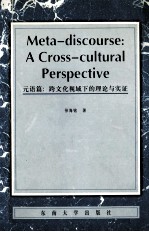
- 徐海铭著 著
- 出版社: 南京:东南大学出版社
- ISBN:7810508148
- 出版时间:2001
- 标注页数:375页
- 文件大小:63MB
- 文件页数:387页
- 主题词:语言学(学科: 研究) 语言学
PDF下载
下载说明
元语篇 跨文化视域下的理论与实证 英文本PDF格式电子书版下载
下载的文件为RAR压缩包。需要使用解压软件进行解压得到PDF格式图书。建议使用BT下载工具Free Download Manager进行下载,简称FDM(免费,没有广告,支持多平台)。本站资源全部打包为BT种子。所以需要使用专业的BT下载软件进行下载。如 BitComet qBittorrent uTorrent等BT下载工具。迅雷目前由于本站不是热门资源。不推荐使用!后期资源热门了。安装了迅雷也可以迅雷进行下载!
(文件页数 要大于 标注页数,上中下等多册电子书除外)
注意:本站所有压缩包均有解压码: 点击下载压缩包解压工具
图书目录
Introduction 1
0.0 Introduction 1
0.1 Need for the Study 2
0.1.1 Uncovering the Patterned Developmental Changes in the Use of Meta-discourse Devices by Chinese EFL Learners 3
0.1.2 Unraveling the Causes beneath the Patterns Uncovered 6
0.1.3 Unveiling the Relationship between the Use of Meta-discourse Devices and the Writing Quality 8
0.1.4 Informing and Improving Classroom Writing Instruction 11
0.1.5 Summary 12
0.2 Overview of the Book 12
Part Ⅰ Literature Review 17
Chapter 1 Theoretical Studies on Meta-discourse:Perspectives and Problems 17
1.1 Introduction 17
1.2 Primary Discourse and Meta-discourse:Definitions and Functions 17
1.3 Theoretical Perspectives 22
1.3.1 Communicative Perspective 22
1.3.2 Sociolinguistic Perspective 24
1.3.3 Psycholinguistic Perspective 26
1.3.4 Functional Perspective 27
1.3.5 Cognitive Perspective 33
1.3.6 Rhetorical Perspective 34
1.3.7 Evaluation:Perspectives and Problems 37
1.4 Functional Classifications of Meta-discourse 40
1.4.1 Meyer's Classification 40
1.4.2 Lautamatti's Classification 41
1.4.3 Williams' Classification 43
1.4.4 Vande Kopple's Classification 45
1.4.5 Summary 49
1.5 The Classifications of Meta-discourse Revisited 52
1.5.1 Problems Unsolved in Previous Classifications 52
1.5.2 Inclusion and Exclusion of some Candidates 55
1.6 Summary 62
Chapter 2 Empirical Studies:Insights and Inadequacies 64
2.1 Introduction 64
2.2 Relevant Empirical Studies on Meta-discourse 64
2.3 Inadequacies in the Empirical Inquiries 73
2.4 Summary 76
Chapter 3 Towards a Framework of the Main Factors Affecting L2 Learners' Use of Meta-discourse Devices 79
3.1 Introduction 79
3.2 A Conceptual Framework of the Main Factors Affecting L2 Learners' Use of Meta-discourse Devices is Needed 79
3.3 Towards a Framework of the Main Factors Affecting L2 Learners' Use of Meta-discourse Devices 81
3.3.1 A General Description ofthe Conceptual Framework 82
3.4 Summary 95
Part Ⅱ Methodology 99
Chapter 4 Research Background 99
4.1 Introduction 99
4.2 Pre-college Writing Training 99
4.3 In-college Writing Training 100
4.4 In-college Writing Curriculum 101
4.5 Writing Teachers 102
4.6 Summary 103
Chapter 5 Research Design 104
5.1 Introduction 104
5.2 Research Purpose and Research Questions 104
5.3 The Design 105
5.3.1 Research Participants and Informauts 105
5.3.2 Instruments 111
5.3.3 Procedures for Data Collection 115
5.3.4 Data Analysis 117
5.4 Summary 134
Part Ⅲ Results and Discussion 139
Chapter 6 Patterned Changes in the Use of Textual Meta-discourse Devices 139
6.1 Introduction 139
6.2 Patterned Changes in the Use of Textual Meta-discourse Devices 140
6.3 Comparing the Patterned Changes in the Use of Textual Meta-discourse Devices 140
6.4 Possible Explanations for the Patterned Changes 142
6.4.1 Possible Causes for the Trough at Year 3 143
6.4.2 Possible Causes for the Rise at Year 4 154
6.4.3 Summary 159
6.5 Qualitative Differences in the Use of Textual Meta-discourse Devices 160
6.5.1 Types of Errors 160
6.5.2 Functions Realized by the Use of Textual Meta-discourse Devices 175
6.5.3 Summary 182
6.6 Underlying Reasons for the Qualitative Differences 183
6.6.1 Knowledge Telling Writing Model 184
6.6.2 Knowledge Transforming Writing Model 188
6.7 Summary 195
Chapter 7 Patterned Changes in the Use of Interpersonal Meta-discourse Devices 197
7.1 Introduction 197
7.2 Patterned Changes in the Use of Interpersonal Meta-discourse Devices 198
7.3 Comparing the Patterned Changes 199
7.4 A General Explanation for the Decreasing Tendency 200
7.5 Patterned Changes in the Use of Illocutionary and Attitudinal Markers 203
7.5.1 Patterned Changes in the Use of Illocutionary and Attitudinal Markers 204
7.5.2 Comparing the Patterned Changes in the Use of Illocutionary and Attitudinal Markers 205
7.5.3 The Underlying Causes for the Straight Decreasing Tendency 206
7.6 The Use of Validity Markers 220
7.6.1 Patterned Changes in the Use of Validity Markers 220
7.6.2 Comparing the Patterned Changes in the Use of Validity Markers 221
7.6.3 The Use of Modal Verbs 222
7.6.4 Causes for the Common Tendency of Overusing Modal Verbs 223
7.7 Summary:Bringing Together the Developmental Patterns 236
Chapter 8 The Relationship between the Use of Meta-discourse Devices and the Writing Quality 238
8.1 Introduction 238
8.2 Quantitative Results 239
8.3 Qualitative Results from Interviews 242
8.3.1 Textual Connectives' Effect on the Writing Quality 242
8.3.2 Validity Markers' Effect on the Writing Quality 246
8.3.3 Attitudinal Markers' Effect on the Writing Quality 249
8.3.4 Illocutionary Markers' Effect on the Writing Quality 252
8.4 Further Qualitative Results 257
8.5 Summary 260
Part Ⅳ Conclusion 265
Chapter 9 Conclusion 265
9.1 Introduction 265
9.2 Major Findings of the Study 265
9.3 Theoretical Implications of the Study 271
9.3.1 L2 Learners' Developmental Path in the Use of Meta-discourse Expands the Vision of the Development of L2 Writing 271
9.3.2 Further Inquiry into L2 Learners' Knowledge Base of Writing Needs to be Made 273
9.3.3 Cognition Involved in L2 Learners' Use of Meta-discourse Devices Needs to be Further Probed 274
9.4 Pedagogical Implications of the Study 276
9.5 Strengths and Weaknesses of This Study 279
9.6 Suggested Future Research Dimensions 281
9.7 Summary 283
References 285
Appendix 1 305
Appendix 2 307
Appendix 3 313
Appendix 4 332
Appendix 5 350