
图书介绍
THE ECONOMIC APPROACH TO LAWpdf电子书版本下载
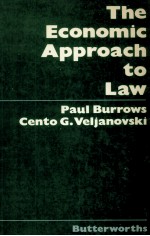
- PAUL BURROWS 著
- 出版社:
- ISBN:
- 出版时间:1981
- 标注页数:343页
- 文件大小:18MB
- 文件页数:352页
- 主题词:
PDF下载
下载说明
THE ECONOMIC APPROACH TO LAWPDF格式电子书版下载
下载的文件为RAR压缩包。需要使用解压软件进行解压得到PDF格式图书。建议使用BT下载工具Free Download Manager进行下载,简称FDM(免费,没有广告,支持多平台)。本站资源全部打包为BT种子。所以需要使用专业的BT下载软件进行下载。如 BitComet qBittorrent uTorrent等BT下载工具。迅雷目前由于本站不是热门资源。不推荐使用!后期资源热门了。安装了迅雷也可以迅雷进行下载!
(文件页数 要大于 标注页数,上中下等多册电子书除外)
注意:本站所有压缩包均有解压码: 点击下载压缩包解压工具
图书目录
1 Introduction: the economic approach to law&Paul Burrows and Cento G. Veljanovski 1
1.1 The economic approach to law 2
1.2 The benefits and costs of the economic approach 13
1.3 Positive economic theories of law—prediction v description 17
1.4 Toward an economic approach of the third kind 22
1.5 Statutory control 25
1.6 Concluding remarks 25
Part one Contract 35
2 Contract analysis: the transaction cost approach&Oliver E. Williamson 39
2.1 Economic approaches to contracting 39
2.2 A three-way classification of contracts 42
2.3 Transaction cost economics 45
2.4 Commercial contracting 48
2.5 Other applications 55
2.6 Concluding remarks 56
3 Economic analysis of contractual relations&Ian R. Macneil 61
3.1 Neoclassical microeconomic model, transactions costs and relational contract 62
3.2 Discrete transactions and modern contractual relations 64
3.3 Neoclassical microeconomic analysis of contractual relations 75
3.4 Conclusion 85
4 Judicial control of standard form contracts&M.J. Trebilcock and D.N. Dewees 93
4.1 Introduction 93
4.2 Standard form contracts and monopoly 98
4.3 Standard form contracts and information asymmetries 104
4.4 Comparative institutional competence 116
Part two Tort 121
5 The economic theory of tort liability—toward a corrective justice approach&Cento G. Veljanovski 125
5.1 Introduction 125
5.2 The legal and economic objectives of tort liability 126
5.3 A corrective justice framework 133
5.4 Some applications 140
5.5 Conclusion 144
6 Nuisance, legal rules and decentralized decisions: a different view of the cathedral crypt&Paul Burrows 151
6.1 Introduction 151
6.2 Justice and efficiency defined 151
6.3 Tertiary costs, information and general deterrence 152
6.4 Criteria for selecting legal rules 154
6.5 Conclusion 163
7 Negligent misrepresentation: an economic reformulation&William Bishop 167
7.1 Introduction 167
7.2 Conventional debate 168
7.3 Information production and appropriability 170
7.4 Two party negligent misrepresentation: transaction costs and quality signalling 176
7.5 Three party negligent misrepresentation 180
7.6 Public authorities 183
7.7 Conclusion 184
Part three The judicial process 187
8 Economic aspects of legal procedure&Roger A. Bowles 191
8.1 Introduction 191
8.2 Analytical background 192
8.3 Procedural issues 197
8.4 Concluding remarks 207
9 Quantitative rules and judicial decision making&Anthony I. Ogus 210
9.1 Optimal precision of legal rules 210
9.2 Trends in judicial rulemaking 215
9.3 Conclusions 222
10 The plea bargain in England and America: a comparative institutional view&Richard P. Adelstein 226
10.1 Criminal price exaction and the development of procedure 226
10.2 The negotiated plea in the price exaction framework 229
10.3 External aspects of the price exaction procedure: moral cost considerations 237
10.4 A direction for further research 246
11 Judicial responses to exchange rate instability&Roger A. Bowles and Christopher J. Whelan 253
11.1 Introduction 253
11.2 The law before 1975 254
11.3 The law since 1975 256
11.4 Some difficulties 259
11.5 Behaviour of defendants 265
11.6 Conclusions 267
Part four Public law 273
12 Landlord-tenant relations law&Werner Z. Hirsch 277
12.1 Introduction 277
12.2 Habitability laws 278
12.3 Rent control laws 290
12.4 Just-cause eviction laws 295
12.5 Age discrimination laws 298
12.6 Conclusions 300
13 The law and economics of the misconduct rule of unemployment insurance&Paul T. Fenn 307
13.1 Introduction 307
13.2 The misconduct rule: objectives and interpretation 308
13.3 Dismissal for misconduct: optimizing behaviour where the law is given 312
13.4 Disqualification for unemployment benefit as a result of misconduct: some evidence 315
13.5 Conclusion 318
14 Tax avoidance&J. Feldman and J. A. Kay 320
14.1 Introduction 320
14.2 Origins of tax avoidance 321
14.3 Tax avoidance and the definition of income 323
14.4 Tax avoidance in practice 325
14.5 Is tax avoidance inevitable? 331
Index 334