
图书介绍
二语写作任务与语言表现 英文pdf电子书版本下载
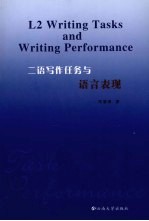
- 陈慧媛著 著
- 出版社: 昆明:云南大学出版社
- ISBN:9787811125733
- 出版时间:2008
- 标注页数:266页
- 文件大小:9MB
- 文件页数:288页
- 主题词:第二语言-写作-研究-英文
PDF下载
下载说明
二语写作任务与语言表现 英文PDF格式电子书版下载
下载的文件为RAR压缩包。需要使用解压软件进行解压得到PDF格式图书。建议使用BT下载工具Free Download Manager进行下载,简称FDM(免费,没有广告,支持多平台)。本站资源全部打包为BT种子。所以需要使用专业的BT下载软件进行下载。如 BitComet qBittorrent uTorrent等BT下载工具。迅雷目前由于本站不是热门资源。不推荐使用!后期资源热门了。安装了迅雷也可以迅雷进行下载!
(文件页数 要大于 标注页数,上中下等多册电子书除外)
注意:本站所有压缩包均有解压码: 点击下载压缩包解压工具
图书目录
Chapter 1 Introduction 1
1.1 Research orientation 1
1.2 Definition of the terms 2
1.3 Rationale of the study 5
1.4 Research questions 11
1.5 Organization of the thesis 13
Notes to Chapter 1 15
Chapter 2 Theoretical Models of Language Production 16
2.1 The L1 production model and its application 17
2.1.1 Levelt's speech production model 18
2.1.2 Issues in adopting Levelt's model for bilingual speech production 23
2.2 L1 writing process models 25
2.2.1 Flower & Hayes's cognitive model of writing 26
2.2.2 The two-process model 29
2.2.3 Kellogg's working memory model of writing 33
2.3 L2 writing models and the relevant research 37
2.3.1 Zimmermann's formulating model of L2 writing 38
2.3.2 L2 writing research and writing performance 41
2.4 Summary 42
Notes to Chapter 2 47
Chapter 3 Language Tasks and Task Related Performance 48
3.1 Language tasks and task effect 49
3.1.1 Theoretical perspectives of task research 49
3.1.2 Task complexity 51
3.1.3 Tasks and general linguistic performance 53
3.1.4 Task types 55
3.1.5 Task types and performance tendency 57
3.2 Effect of task conditions 60
3.2.1 Theoretical aspect of time conditions in language production 60
3.2.2 Effect of time and planning on oral production 62
3.2.3 Effect of time and planning on L2 writing 67
3.2.4 Issues of planning and planning time 70
3.3 Other affecting variables in language production 73
3.3.1 Effect of proficiency 73
3.3.2 Use of strategies 75
3.4 Summary 76
Notes to Chapter 3 80
Chapter 4 Measuring Linguistic Performance 82
4.1 Fluency 83
4.2 Accuracy 85
4.3 Complexity 88
4.3.1 Syntactic complexity 89
4.3.2 Lexical complexity 91
4.4 Summary 92
Notes to Chapter 4 93
Chapter 5 Theoretical Framework and Task Analysis 94
5.1 Overall structure of the framework 94
5.2 Composing components 99
5.2.1 The sub-processors of L2 production 99
5.2.2 The working memory 101
5.2.3 Monitoring 102
5.3 Task component 103
5.3.1 Accommodation of task component 104
5.3.2 Cognitive complexity of writing tasks 106
5.3.3 Linguistic demand of writing tasks 109
5.3.4 Task conditions 111
5.4 Writing requirements and writing performance 112
5.4.1 Linguistic complexity 112
5.4.2 Linguistic accuracy 113
5.4.3 Linguistic fluency 115
5.5 Task analyses 116
5.5.1 Why those four writing tasks? 117
5.5.2 Topic writing 118
5.5.3 Picture writing 119
5.5.4 Graph writing 121
5.5.5 Summary writing 122
5.5.6 A tentative ranking of the four writing tasks 123
5.6 Summary and hypotheses 125
Notes to Chapter 5 130
Chapter 6 Method 132
6.1 Design 132
6.2 Participants 133
6.3 Instruments 135
6.4 Procedures 137
6.5 Data analyses 139
6.5.1 Accuracy 140
6.5.2 Syntactic complexity 141
6.5.3 Lexical variation 142
6.5.4 Fluency 143
6.5.5 Statistical analysis 143
6.5.6 Qualitative analysis 144
6.6 Summary 145
Notes to Chapter 6 145
Chapter 7 Results and Analyses 148
7.1 Quantitative results 149
7.1.1 General effects 149
7.1.2 Accuracy 150
7.1.3 Syntactic complexity 154
7.1.4 Lexical variation 157
7.1.5 Fluency 160
7.2 Time effect 163
7.3 Effect of proficiency 166
7.4 Qualitative results of task performance 169
7.4.1 TW 169
7.4.2 PW 171
7.4.3 GW 172
7.4.4 SW 175
7.5 Inter-rating and intra-rating analyses 178
7.5.1 Inter-rating analysis 179
7.5.2 Intra-rating analysis 181
7.6 Summary 182
Notes to Chapter 7 183
Chapter 8 Discussion 186
8.1 Major findings 186
8.2 Task performance and measurements 188
8.2.1 Linguistic accuracy 189
8.2.2 Syntactic complexity 191
8.2.3 Lexical variation 193
8.2.4 Linguistic fluency 195
8.3 Writing tasks revisited 198
8.3.1 TW 198
8.3.2 PW 202
8.3.3 GW 204
8.3.4 SW 206
8.4 Theoretical framework revisited 208
8.4.1 Major components of L2 writing process 208
8.4.2 Conceptual demand vs.linguistic demand 211
8.4.3 Linear or recursive 213
8.4.4 Time effect and working memory 216
8.4.5 Use of strategies 218
8.5 Summary 220
Notes to Chapter 8 222
Chapter 9 Conclusions and Implications 224
9.1 Summary of the study 224
9.2 Pedagogical implications 227
9.3 Limitations and future studies 230
References 233
Appendices 254
List of Figures 20
Figure 1 Levelt's speech production model(Levelt 1989:9) 20
Figure 2 Flower & Hayes's process model of composing(From Hayes et al 1987:186) 28
Figure 3 Kellogg's model of working memory to writing(Kellogg 1996:59) 34
Figure 4 Zimmermann's formulating model of L2 writing(Zimmermann 1997:63) 40
Figure 5 A tentative structure of L2 writing process 97
List of Tables 149
Table 1 Summary of effect of all factors(SPSS) 149
Table 2 Task effect on accuracy 150
Table 3 Post hoc test on the accuracy measure:EFS/S(SPSS) 152
Table 4 Post hoc test on the accuracy measure:E/T 152
Table 5 Post hoc test on the accuracy measure:E/W 153
Table 6 Task effect on syntactic complexity 154
Table 7 Post hoc test on the syntactic complexity measure:S/T 155
Table 8 Post hoc test on the syntactic complexity measure:W/T 155
Table 9 Task effect on lexical variation 157
Table 10 Post hoc test on the lexical variation measure:t/t 158
Table 11 Post hoc test on the lexical variation measure:t/? 158
Table 12 Task effect on fluency 161
Table 13 Post hoc test on the fluency measure:length 162
Table 14 Post hoc test on the fluency measure:R/W 162
Table 15 Time effect on the nine dependent variables(t-test) 164
Table 16 Effect of proficiency on the nine dependent variables(t-test) 167
List of appendices 254
Appendix Ⅰ Writing instruments 254
Appendix Ⅱ A coding sample 258
Appendix Ⅲ 2-way interaction charts(time by proficiency) 259
Appendix Ⅳ Time effect on individual tasks(t-test) 264
Appendix Ⅴ Effect of proficiency on TW(t-test) 266