
图书介绍
汉英数字文化内涵对比研究pdf电子书版本下载
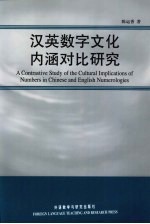
- 陈运香著 著
- 出版社: 北京:外语教学与研究出版社
- ISBN:9787560078007
- 出版时间:2009
- 标注页数:240页
- 文件大小:69MB
- 文件页数:255页
- 主题词:数字-文化-对比研究-汉、英
PDF下载
下载说明
汉英数字文化内涵对比研究PDF格式电子书版下载
下载的文件为RAR压缩包。需要使用解压软件进行解压得到PDF格式图书。建议使用BT下载工具Free Download Manager进行下载,简称FDM(免费,没有广告,支持多平台)。本站资源全部打包为BT种子。所以需要使用专业的BT下载软件进行下载。如 BitComet qBittorrent uTorrent等BT下载工具。迅雷目前由于本站不是热门资源。不推荐使用!后期资源热门了。安装了迅雷也可以迅雷进行下载!
(文件页数 要大于 标注页数,上中下等多册电子书除外)
注意:本站所有压缩包均有解压码: 点击下载压缩包解压工具
图书目录
Chapter 1 Introduction 1
1.0 Introduction 1
1.1 Motivation of the present research 2
1.2 Research questions 4
1.3 Theoretical framework 4
1.4 Research objectives 6
1.5 Methodology and data 7
1.6 Organization of the book 8
Chapter 2 Literature Review and Evaluation 10
2.0 Introduction 10
2.1 A review of theories related to language and culture 11
2.1.1 The concept of culture 11
2.1.1.1 Defining culture 11
2.1.1.2 The property of culture 15
2.1.2 Some main branches concerning language and culture 16
2.1.2.1 Language and culture 16
2.1.2.2 Anthropological linguistics 17
2.1.2.3 Cultural linguistics 19
2.1.2.4 National Cultural Semantics 22
2.2 Evaluation of the previous research on numerology 24
2.2.1 Features of the previous research 24
2.2.2 Limitations of the previous research 25
2.3 Summary 26
Chapter 3 Theoretical Framework and Methodology 28
3.0 Introduction 28
3.1 The SWH and language and culture 30
3.1.1 Historical retrospect of the SWH 30
3.1.2 Basic principles of the SWH on language and culture 31
3.1.2.1 About its definition 31
3.1.2.2 Strong and weak versions of the SWH 33
3.1.2.3 Essences ofthe SWH 34
3.1.2.4 Working hypotheses of language and thought for this study 35
3.2 Applications of theoretical contrastive models to this study 36
3.2.1 Comparative and contrastive 36
3.2.2 Diachrony and synchrony 38
3.2.3 Micro-and macro-perspectives 39
3.2.4 Linguistic peculiarities and universals 41
3.3 Working definitions of terms 42
3.3.1 Definitions of terms 42
3.3.2 Defining numerological culture 43
3.4 Methodology and data 44
3.4 Summary 46
Chapter 4 Philosophy in Numbers 47
4.0 Introduction 47
4.1 Comparison of the philosophical notions from different cultures 48
4.1.1 Lao Zi's views on numbers 48
4.1.1.1 Lao Zi and Tao Te Ching 48
4.1.1.2 Lao Zi's Taoist philosophy 50
4.1.1.3 Lao Zi's philosophical view of numbers 52
4.1.2 The Pythagorean view on numbers 57
4.1.2.1 Pythagoras and the Pythagoreans 57
4.1.2.2 The Pythagorean view on numbers 58
4.1.2.3 The Pythagorean influence in philosophy 63
4.2 Corpus-based analysis of numbers from the philosophical perspective 65
4.2.1 A case study of the Chinese"Yi"(one) 66
4.2.1.1 "Yi"and"unity" 66
4.2.1.2 Yi in A Dream of Red Mansion 69
4.2.1.3 A comparison of ONE in Chinese and English 85
4.2.2 A case study of the English SEVEN in the Bible 92
4.2.2.1 The importance of SEVEN in the Bible 92
4.2.2.2 The origins of the symbolic SEVEN 96
4.2.2.3 The sacred SEVEN in the Bible 101
4.2.2.4 A comparison of Qi in Chinese and seven in English 110
4.3 Summary 120
Chapter 5 Thought in Numbers 122
5.0 Introduction 122
5.1 Numbers and worldviews 123
5.1.1 Collectivism and individualism innumbers 123
5.1.2 Even and odd numbers 126
5.2 Numbers and religion 127
5.2.1 Numbers and Christianity 128
5.2.1.1 Three 128
5.2.1.2 Seven 130
5.2.1.3 Thirteen 132
5.2.1.4 666 134
5.2.2 Numbers and Taoism 136
5.2.2.1 One 136
5.2.2.2 Three 137
5.2.2.3 Five 138
5.2.2.4 Eight 140
5.2.3 Numbers and Buddhism 141
5.2.3.1 Three 142
5.2.3.2 Five 143
5.2.3.3 Eight 143
5.2.3.4 Ten 144
5.3 Numbers and superstitions 145
5.3.1 Numbers and homonymy 146
5.3.1.1 Jiu九(nine)with jiu久(eternity) 146
5.3.1.2 Ba八(eight)with fa发(success andprosperity) 148
5.3.1.3 Liu六(six)with lu禄(luck and wealth)and lu路(way) 150
5.3.1.4 Shi十(ten)with shi实(full;completeness;satisfaction) 151
5.3.1.5 Si(four)with si死(death) 152
5.3.1.6 San三(three)with sheng生(growth)or san散(separation) 154
5.3.1.7 Yi一(one)with yi易(easy)or yi实(sure) 155
5.3.2 Feng shui numbers 156
5.3.3 Numbers and names 157
5.4 Summary 159
Chapter 6 Vagueness in Numbers 160
6.0 Introduction 160
6.1 Precise numbers with vague meanings 161
6.1.1 Vagueness indicated by single numbers 162
6.1.1.1 One 162
6.1.1.2 Three 165
6.1.1.3 Nine 169
6.1.1.4 Ten 171
6.1.2 Vagueness indicated by combined numbers 173
6.1.2.1 The reduplicative patterns 174
6.1.2.2 The successive patterns 180
6.1.2.3 The numeral-inlaid patterns 182
6.2 Rhetorical devices in numbers 185
6.2.1 Numbers and metaphor 186
6.2.2 Numbers and hyperbole 188
6.2.3 Numbers and metonymy 193
6.2.4 Numbers and euphemism 197
6.2.5 Numbers and antithesis 198
6.3 Transfer of"vague"numbers in CE or EC translation 202
6.3.1 Direct transfer of numbers 204
6.3.2 Change of numbers 206
6.3.3 Proxy for numbers 208
6.4 Summary 211
Chapter 7 Discussion and Conclusion 213
7.0 Introduction 213
7.1 Summary and discussions 213
7.1.1 On numbers and culture 214
7.1.2 On differences between Chinese-English numerological cultures 215
7.1.3 On factors which lead to differences 219
7.1.4 On similarities between Chinese-English numerological cultures 222
7.2 Implications of this study 226
7.3 Limitations of this study 229
7.4 Suggestions for further research 229