
图书介绍
经济学专业英语pdf电子书版本下载
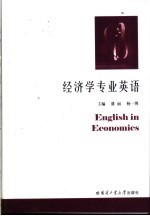
- 潘丽主编 著
- 出版社: 哈尔滨:哈尔滨工业大学出版社
- ISBN:7560323820
- 出版时间:2006
- 标注页数:367页
- 文件大小:10MB
- 文件页数:377页
- 主题词:经济学-英语-高等学校-教材
PDF下载
下载说明
经济学专业英语PDF格式电子书版下载
下载的文件为RAR压缩包。需要使用解压软件进行解压得到PDF格式图书。建议使用BT下载工具Free Download Manager进行下载,简称FDM(免费,没有广告,支持多平台)。本站资源全部打包为BT种子。所以需要使用专业的BT下载软件进行下载。如 BitComet qBittorrent uTorrent等BT下载工具。迅雷目前由于本站不是热门资源。不推荐使用!后期资源热门了。安装了迅雷也可以迅雷进行下载!
(文件页数 要大于 标注页数,上中下等多册电子书除外)
注意:本站所有压缩包均有解压码: 点击下载压缩包解压工具
图书目录
1.1 Macro and Microeconomics 2
1 Introduction to Economics 2
1.2 Scarcity 4
1.3 Society's Technological Possibilities 5
1.4 Money and Capital 12
1.5 Important Concepts and Definitions 14
Part Ⅰ Microeconomics 20
2 Demand and Supply 20
2.1 Demand 20
2.2 Supply 24
2.3 Equilibrium and Disequilibrium 27
2.4 Shifts in Supply and Demand 34
2.5 Shifts in Equilibrium 40
3.1 Price Elasticity of Demand 44
3 Elasticity of Supply and Demand 44
3.2 Price Elasticity of Supply 54
4 Consumer Behavior 58
4.1 Consumer Decision Making 58
4.2 Utility Analysis 59
4.3 Evaluating the Benefits of Consumption 66
5 Production and Costs 73
5.1 Business Organization 73
5.2 Theory of Production 77
5.3 Production in the Short-run 83
5.4 Cost 90
5.5 Costs in the Short-run 91
5.6 Production and Cost in the Long-run 93
5.7 Economic vs.Accounting Costs 97
6.1 Conditions for a Perfectly Competitive Environment 100
6 Perfect Competition 100
6.2 Profit Maximization and Equilibrium of a Competitive Firm 102
6.3 Short-run Price and Output Under Perfect Competition 105
6.4 Long-run Price and Output Under Perfect Competition 107
6.5 The Efficiency of Competition 108
7 Imperfect Competition 112
7.1 Monopoly 112
7.2 Oligopoly and Duopoly 116
7.3 Price Discrimination 119
7.4 Restrictions in the Labor Market 121
7.5 Antitrust Policy 122
8 Game Theory 126
8.1 Some Basics 126
8.2 Zero-sum Games and Mixed Strategy 131
8.3 Nash Equilibrium 138
9 Income Distribution and Market Failure 146
9.1 Marginal Productivity 146
9.2 The Demand for Inputs 149
9.3 Market Failure and Government Intervention 155
9.4 Regulation 158
Part Ⅱ Macroeconomics 166
10 Measuring Output of the Macroeconomy 166
10.1 Measuring Total Output—Gross Domestic Product(GDP) 166
10.2 GDP Accounting Complications 171
10.3 How to Measure GDP—Circular Flow of Income and Expenditures 175
10.4 Real GDP 181
10.5 Empirical Applications 183
11 Equilibrium in Product Market and Money Market 186
11.1 The IS-LM Interactive Graphical Model 186
11.2 Equilibrium 192
12.1 Fiscal Policy 194
12 Fiscal Policy 194
12.2 Discretionary Fiscal Expenditures vs.Automatic Stabilizers 195
12.3 Federal Government Expenditures 196
12.4 Federal Government Revenues 197
12.5 State and Local Government Spending 199
12.6 State and Local Government Revenues 199
12.7 The Multiplier Model 200
13 Functions of Money 204
13.1 Functions of Money 204
13.2 Money Supply Measures 205
13.3 The Federal Reserve System 205
13.4 Federal Reserve System Organization 206
13.5 Federal Reserve Tools to Change the Money Supply 206
13.6 Balance Sheets 207
13.8 Required and Excess Reserves 208
13.7 Fractional Reserve Banking 208
13.9 Describe the significance of the Federal Deposit Insurance Corporation(F.D.I.C.) 209
13.10 Money Creation 209
13.11 The Velocity of Circulation of Money 212
13.12 The Quantity Theory of Money 213
14 The Keynesian Model 214
14.1 Simple Keynesian Model 214
14.2 Aggregate Expenditures 217
14.3 Equilibrium 217
14.4 Consumption Function 218
Part Ⅲ Dynamic Economics 221
15 Unemployment and Labor Markets 221
15.1 Specialization 221
15.2 Production Possibilities Curve 227
15.3 Applications of the Production Possibilities Curve 235
16.1 Employment and Unemployment 241
16 Unemployment and the Labor Market 241
16.2 Labor Market Model 251
17 Measuring Changes in Prices 261
17.1 Inflation and Deflation 261
17.2 Costs of Inflation 262
17.3 Measuring Inflation with Price Indexes 265
17.4 Causes of Inflation 271
18 Business Cycles 275
18.1 Characteristics of Business Cycles 275
18.2 Business Cycle Relationships 281
18.3 Forecasting Business Cycles 286
19 Economic Growth 290
19.1 Compound Rates of Growth 290
19.2 Growth in Income Per Capita 291
19.3 Growth and Recipes 292
19.4 Objects and Ideas 294
19.5 Meta-ideas 297
Part Ⅳ Reading Materials 300
1.Adam Smith-Capitalism's Prophet 300
2.Making Visible the Miracle of the Invisible Hand 304
3.David Hume-Foundations of the Classical School of Economics 306
4.Paper Money and Sound Banking 309
5.Do Low Interest Rates Stimulate Economic Activity? 310
6.The Growth of Growth Theory 312
7.Baby Boom and Bust 315
8.Microeconomics 318
9.Benefit-Cost Analysis 325
10.Gender Gap 330
11.Minimum Wages 335
12.Industrial Concentration 342
Glossary 347