
图书介绍
中学英语课堂教学活动指南pdf电子书版本下载
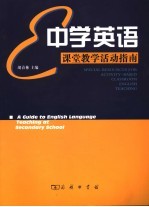
- 胡春林主编;周文兰,焦晓骏,陆绍寅,宗凤昌编 著
- 出版社: 北京:商务印书馆
- ISBN:7100049156
- 出版时间:2006
- 标注页数:160页
- 文件大小:8MB
- 文件页数:172页
- 主题词:英语课-课堂教学-中学-教学参考资料
PDF下载
下载说明
中学英语课堂教学活动指南PDF格式电子书版下载
下载的文件为RAR压缩包。需要使用解压软件进行解压得到PDF格式图书。建议使用BT下载工具Free Download Manager进行下载,简称FDM(免费,没有广告,支持多平台)。本站资源全部打包为BT种子。所以需要使用专业的BT下载软件进行下载。如 BitComet qBittorrent uTorrent等BT下载工具。迅雷目前由于本站不是热门资源。不推荐使用!后期资源热门了。安装了迅雷也可以迅雷进行下载!
(文件页数 要大于 标注页数,上中下等多册电子书除外)
注意:本站所有压缩包均有解压码: 点击下载压缩包解压工具
图书目录
Part One English Teaching Planning 2
Ⅰ.What is a lesson plan? 2
Ⅱ.What should go into an English language lesson? 2
Ⅲ.Why is planning important? 3
Ⅳ.How should we plan a lesson? 3
Ⅴ.Micro-teaching lesson 6
Ⅵ.Tips for classroom teachers 7
Ⅶ.Sample lesson plan 9
Part Two Activity-based Teaching Methods 15
Section 1 Guidance to Listening and Speaking 15
Ⅰ.Listening development 15
(Ⅰ)Students'problems in listening 15
(Ⅱ)Suggestions for the development of listening 16
Ⅱ.Speaking development 19
(Ⅰ)Students'problems in speaking 19
(Ⅱ)Ways to deal with the problems 19
(Ⅲ)Suggestions for the development of speaking 22
Ⅲ.Sample lesson plan 23
Ⅳ.Suggested listening and speaking activities 27
(Ⅰ)Cuisenaire rods 27
(Ⅱ)Circle games 28
(Ⅲ)Picture consequences 33
(Ⅳ)Word guessing games 34
(Ⅴ)Role play 37
(Ⅵ)True/False stories 41
(Ⅶ)Picture talking or description 42
(Ⅷ)"For or Against"debates 45
Ⅴ.Other effective speaking and talking activities 45
(Ⅰ)Bribery 45
(Ⅱ)Hangman 46
(Ⅲ)Time out 46
(Ⅳ)The untrophy 46
(Ⅴ)The last word 47
(Ⅵ)Doctors and patients 47
(Ⅶ)Jigsaw puzzle challenge 47
(Ⅷ)Something in common or"give me five" 48
(Ⅸ)Create a biography 48
(Ⅹ)Top five lists 49
(Ⅺ)Mini-talks 50
(Ⅻ)Erase the dialogue 50
(ⅩⅢ)Motivating speaking activities 51
(ⅩⅣ)Chain story telling activity 52
(ⅩⅤ)Improving discussion lessons 53
Section 2 Guidance to Reading 54
Ⅰ.Guided reading 54
Ⅱ.Reading comprehension 57
(Ⅰ)The purpose of reading 57
(Ⅱ)How to improve reading comprehension? 58
(Ⅲ)Reading approaches 59
(Ⅳ)Sample lesson plans 67
Ⅲ.Suggested reading activities 78
(Ⅰ)Newspaper reading activities 78
(Ⅱ)Text quickies 81
(Ⅲ) Reading aloud 82
(Ⅳ)The spending maze 83
(Ⅴ)Jigsaw reading 84
(Ⅵ)Working with classroom readers 85
(Ⅶ)Activities to do with texts 86
Section 3 Guidance to Writing 87
Ⅰ.Provide many opportunities for students to write daily 87
Ⅱ.An idealised procedure for teaching writing 88
Ⅲ.Give students guidance and explicit instruction that develop effective writing skills and strategies 90
(Ⅰ)Model writing process 90
(Ⅱ)Guide writing strategies 91
Ⅳ.Suggested writing activities 104
(Ⅰ)Block buster 104
(Ⅱ)Dangerous road 105
(Ⅲ)Writing an essay on cause and effect 107
(Ⅳ)Lexical threads 109
(Ⅴ)Role-play writing 110
Ⅴ.Other effective writing activities 113
(Ⅰ)Story starters 113
(Ⅱ)Collaborative/Co-authored writing 113
(Ⅲ)Writing/Writers'circles 113
(Ⅳ)Writer's notebook 113
(Ⅴ)Interactive writing 114
(Ⅵ)Writing workshops 114
(Ⅶ)Writing through"reverse reading" 115
(Ⅷ)Postcards 116
(Ⅸ)Writing conferences 117
(Ⅹ)Sentence frames 118
(Ⅺ)Improving paragraph writing 118
(Ⅻ)Songs and storytelling 119
(ⅩⅢ)Freeze the writing 119
(ⅩⅣ)Organise argument essays 120
(ⅩⅤ)Writing organizers and maps 121
(ⅩⅥ)Note writing 122
(ⅩⅦ)A dark and stormy night—A creative writing activity 123
(ⅩⅧ)Inquiry and research writing 124
Part Three Related Teaching Methodologies 127
Ⅰ.Task-based Language Teaching(TBLT) 127
(Ⅰ)What is a task? 129
(Ⅱ)What are the reasons for TBLT? 130
(Ⅲ)What are the differences between TBLT and the traditional teaching method? 131
(Ⅳ)How do teachers design tasks? 132
(Ⅴ)What are the stages of TBLT? 133
(Ⅵ)How do teachers plan tasks for a lesson? 135
(Ⅶ)What are the misconceptions in TBLT? 135
(Ⅷ)Sample lesson plan 136
Ⅱ.Student-centred Learning(SCL) 138
(Ⅰ)The definition of student-centred learning 138
(Ⅱ)The features of student-centred learning 139
(Ⅲ)Teacher skills needed in student-centred approaches 140
(Ⅳ)The shift from teacher-centred to student-centred learning 141
(Ⅴ)Creative student-ccntred materials 143
(Ⅵ)Sample lesson plan 144
Ⅲ.Action Research(AR)Overview 148
(Ⅰ)What is Action Research? 148
(Ⅱ)Why should teachers do Action Research? 148
(Ⅲ)What are the steps in the Action Research process? 149
(Ⅳ)Where can your research question(s)come from? 149
(Ⅴ)What evidence can you collect to see whether your solution has worked? 150
(Ⅵ)Guidelines for planning action research projects 151
(Ⅶ)Sample teaching plan 154
Ⅳ.The Reflective Approach(RA) 155
(Ⅰ)Why is RA important? 155
(Ⅱ)What is the beginning of the process of reflection? 156
(Ⅲ)What to do next? 157
(Ⅳ)How to become a reflective teacher? 158
(Ⅴ)Sample teaching plan 158
(Ⅵ)How is RA different from AR? 160