
图书介绍
西方研究与理论视角下的银川中小学新教师培训pdf电子书版本下载
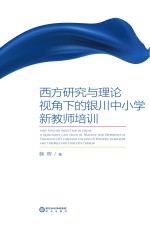
- 韩煦著 著
- 出版社: 阳光出版社
- ISBN:9787552532722
- 出版时间:2016
- 标注页数:398页
- 文件大小:7MB
- 文件页数:414页
- 主题词:中小学-教师培训-研究-银川
PDF下载
下载说明
西方研究与理论视角下的银川中小学新教师培训PDF格式电子书版下载
下载的文件为RAR压缩包。需要使用解压软件进行解压得到PDF格式图书。建议使用BT下载工具Free Download Manager进行下载,简称FDM(免费,没有广告,支持多平台)。本站资源全部打包为BT种子。所以需要使用专业的BT下载软件进行下载。如 BitComet qBittorrent uTorrent等BT下载工具。迅雷目前由于本站不是热门资源。不推荐使用!后期资源热门了。安装了迅雷也可以迅雷进行下载!
(文件页数 要大于 标注页数,上中下等多册电子书除外)
注意:本站所有压缩包均有解压码: 点击下载压缩包解压工具
图书目录
Part Ⅰ Research Design 1
Chapter 1 Introduction 1
1.1.Statement of the Problems 1
1.2.Purpose and Significance of the Study 2
1.3.Research Questions 4
1.4.Theoretical Framework for the Study 6
1.5.Structure of the Thesis 9
Chapter 2 Literature Review 13
2.1.Introduction 13
2.2.The Chinese Context 14
2.2.1.Decentralization and Its Impact on Teacher Education 14
2.2.2.Professionalization,Quality Education and Curriculum Reform 17
2.2.3.Teacher Induction 21
2.2.4.Summary 24
2.3.Review of a Selection of the Western English Language Literature 25
2.3.1.Overview 25
2.3.2.What do New Teachers Need?-Maslow's Hierarchy of Needs 27
2.3.3.What if the needs are not met? 39
2.4.What Can Be Done to Help New Teachers? 41
2.4.1.What is Induction and Why Induction? 41
2.4.2.Comprehensive Approaches to Induction 44
2.5.Emerging Themes 50
2.5.1.Teacher Identity 50
2.5.2.Professional Identity as Contextual,Relational and Emotional 53
2.5.3.The Awareness of the Professional Identity 56
2.5.4.The Narrative Constitution of identity 57
2.6.Summary 58
Chapter 3 Methodology,Research Design,and Methods 62
3.1.Overview:an Interpretive Case Study 62
3.2.Method of Inquiry:A Narrative Approach 63
3.3.Combining Narrative Interviews with Topical Interviews:Developing a Frame-work for Interviews 67
3.3.1.Overview 67
3.3.2.The Narrative Interview 69
3.3.3.The Topical Interview 72
3.3.4.Combining the Two Approaches 73
3.4.Participants and Data Collection Process 74
3.4.1.Initial Planning of Participants Selection and Data Collection 74
3.4.2.Phase One Data Collection and Some Reflections 76
3.4.3.Overview of Data Collection Process 80
3.5.Data Analytical Approach:a Voice-centred Relational Approach 82
3.5.1.Overview 82
3.5.2.A voice-centred relational method of data analysis(VCR) 83
3.5.3.Summary 97
3.6.Reliability,Validity and Generalisability 98
3.7.Ethical Considerations 100
3.8.Summary 101
Part Ⅱ Analysis and Discussion of Findings 103
Chapter 4 Induction Programme 103
4.1.Overview 103
4.2.Induction Policy Directives and Programme Arrangement 104
4.2.1.An Overview of the System in Yinchuan 104
4.2.2.Context 105
4.2.3.Induction Policy Directives 106
4.2.4.Induction Programme Emphases and Implementation 109
4.2.5.Teacher Assessment 121
4.2.6.Evaluation 125
4.3.Beginning teachers'expectations about and attitudes towards induction 126
4.3.1.Support Expected by New Teachers 127
4.3.2.Common Induction strategies experienced by new teachers 137
4.4.Summary and Discussion:Characteristics of Secondary School Induction Arrangement in Yinchuan-a Culture of Mentoring 148
Chapter 5 Job Motivation 155
5.1.Overview 155
5.2.Entry into the Profession 158
5.2.1.Entry into the ITT Programme 158
5.2.2.Entry into Teaching 160
5.2.3.Summary 163
5.3.Beginning Teaching 165
5.3.1.Working with Children 168
5.3.2.Working with Colleagues 176
5.3.3.Conflict with Individual Principles 179
5.3.4.Responsibilities,Workload and Recognition 186
5.3.5.Employment Status and Career Directions 192
5.4.Summary and Discussion 196
Chapter 6 Self-Image 200
6.1.Overview 200
6.2.Beginning Teachers'Self-Images 205
6.2.1.Early Experiences 205
6.2.2.Qualification and Employment Status 214
6.2.3.Professional Relationship with Students 221
6.2.4.Professional Relationships with Mentors and Colleagues 229
6.2.5.School and Academic Subjects 240
6.3.Summary and Discussion 245
Chapter 7 Subjective Educational Theory 250
7.1.Overview 250
7.2.Beginning Teachers'Subjective Educational Theories 257
7.2.1.Being a Learner and Conception of Professional Learning 257
7.2.2.Routines and Practical Knowledge 266
7.2.3.Pedagogical Perspectives 273
7.3.Summary and Discussion 282
Part Ⅲ Conclusion 292
Chapter 8 Conclusion 292
8.1.Overview 292
8.2.Answers to Research Questions 293
8.2.1.Beginning Teacher Induction in Yinchuan City 293
8.2.2.The First Year of Teaching 296
8.2.3.Summary 302
8.3.Limitations to This Research 304
8.4.Implications 306
8.4.1.Implications for Teacher Education and Induction 307
8.4.2.Implications for Future Research on New Teacher Induction 309
8.5.A Final Word 311
References 313
List of Tables 53
Table 2.1:Four Ways to View Identity 53
Table 3.1:Data Collection Process 81
Table 3.2:Story One 88
Table 3.3:Story Two 88
Table 4.1:Stage of Teacher Development 106
Table 4.2:Stages of Teacher Development 108
Table 4.3:Content of Induction Programme Curricula 111
Table 4.4:School A New Teacher Professional Development Plan 120
Appendices 348
Appendix 1:Short Explanations for Terms in Chinese 348
Appendix 2:Models of pre-service teacher preparation 350
Appendix 3:Six goals of the new curriculum reform 351
Appendix 4:Induction Support for new teachers in Shanghai 352
Appendix 5:Key Features of Limited versus Comprehensive Induction Programmes 354
Appendix 6:Interview Schedule 355
Appendix 7:Participants 366
Appendix 8:Consent Form 371
Appendix 9:The Life Story Method 374
Appendix 10:A sample of Pronouns Used by Mr.Fu 390
Appendix 11:School D Classroom Teaching Assessment Standard(2009-2010) 394
Appendix 12:Student-oriented Classroom Teaching Assessment Form 397
Appendix 13:Ningxia Secondary School Teachers Basic Teaching Qualities and Skills Test Form and Rating standard 398