
图书介绍
第三人合同权利比较研究pdf电子书版本下载
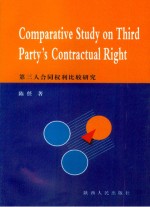
- 陈任著 著
- 出版社: 西安:陕西人民出版社
- ISBN:9787224087628
- 出版时间:2008
- 标注页数:379页
- 文件大小:726MB
- 文件页数:392页
- 主题词:合同法-对比研究-英文
PDF下载
下载说明
第三人合同权利比较研究PDF格式电子书版下载
下载的文件为RAR压缩包。需要使用解压软件进行解压得到PDF格式图书。建议使用BT下载工具Free Download Manager进行下载,简称FDM(免费,没有广告,支持多平台)。本站资源全部打包为BT种子。所以需要使用专业的BT下载软件进行下载。如 BitComet qBittorrent uTorrent等BT下载工具。迅雷目前由于本站不是热门资源。不推荐使用!后期资源热门了。安装了迅雷也可以迅雷进行下载!
(文件页数 要大于 标注页数,上中下等多册电子书除外)
注意:本站所有压缩包均有解压码: 点击下载压缩包解压工具
图书目录
1 Introduction to Chinese contract law 1
1.1 Historical review of the Chinese Contract Law 1
1.1.1 From 1840 to 1950 1
1.1.2 From 1950 to 1979 7
1.1.3 From 1979 to 1999 11
1.1.3.1 The Chinese constitution 11
1.1.3.2 Three contract statutes 13
1.1.3.3 The Chinese Civil Law 17
1.1.3.4 Constitution revision 19
1.1.3.5 Call for reform 20
1.1.3.6 The Chinese Economic Contract Law modification 22
1.2 Chinese Contract Law 1999 23
1.2.1 Background 23
1.2.2 Purpose of the law 25
1.2.3 Definition of contract 25
1.2.4 The fundamental principles 27
1.2.4.1 Freedom of contract 27
1.2.4.2 Justice, trustworthiness and honesty 28
1.2.5 Privity doctrine in the 1999 Chinese Contract Law 31
1.2.6 Legal theories-exceptions to the privity doctrine 33
1.2.6.1 Agency 33
1.2.6.2 Assignment 34
1.2.6.3 Subrogation 38
1.3 Theories on rights of third parties in China 39
1.3.1 Basic theories on rights of third parties 39
1.3.1.1 Nature of the contract for third parties’ right 39
1.3.1.2 Legal effect on the third party 42
1.3.1.3 Legal effect on the obligee 44
1.3.1.4 Legal effect on the obligor 46
1.3.2 Comparative study on rights of third parties 47
1.4 Experiences from reform of rights of third parties 48
1.4.1 Precedents for reform 48
1.4.2 Value of comparative study to Chinese Contract Law 53
2 Basic theory of third party rights 57
2.1 Role of the privity doctrine in China 57
2.1.1 Origin of the privity doctrine in China 57
2.1.2 The embodiment of the privity doctrine in Chinese Statutes 60
2.1.3 Application of the privity doctrine in Chinese judicial practice 62
2.1.3.1 Contracts of sale 64
2.1.3.2 Lease contracts 67
2.1.3.3 Contracts for financial lease 71
2.1.3.4 Contracts for work 73
2.1.3.5 Contract of storage 74
2.2Exceptions to the privity doctrine in China 75
2.2.1 Creating exceptions to the privity doctrine on basic principles 76
2.2.1.1 Principle -Freedom of contract 80
2.2.1.2The principle of justice & the principle of honesty and trustworthiness 90
2.3 Various ways of application of fundamental principles to produce exceptions to the privity doctrine 97
2.3.1 Forseeable third party benefits and damages 97
2.3.1.1 Landlord’s liability to third parties 97
2.3.1.2Contractual chains 98
2.3.1.3Contracts of services 100
2.3.2Third party beneficiary’s reliance 102
2.3.3Performance objectives of the contracting parties’ transactions 107
2.3.3.1Interpretation of contracts 108
2.3.3.2 Substantial breach of contracts 108
2.4Call for reform 110
2.4.1The existing problems of the ways to creat exceptions to the privity doctrine 110
2.4.2Problems arising from article 64 of the Chinese Contract Law 113
3Test of enforceability 116
3.1Various tests for third parties acquiring enforceable right beyond privity 117
3.1.1 Intention test 117
3.1.1.1Intention to give enforceable right to third parties expressly 117
3.1.1.2Intent-to-benefit test 120
3.1.1.3 Dual intention test 133
3.1.2 Performance objective test 139
3.1.2.1American law 139
3.1.2.2 German law 142
3.1.2.3French law 145
3.1.3Justice test 145
3.1.3.1 American law 146
3.1.3.2French law 147
3.1.3.3German law 149
3.2 Recommendation of tests for the third party rule in Chinese law reform 151
3.2.1The preferred test 151
3.2.2The application of the preferred test 157
3.2.2.1Liability for defective products 157
3.2.2.2Liability for defective construction 162
3.2.3Liability for professional service 182
3.2.3.1Liability to disappointed legatees 182
3.2.3.2Liability of professionals to third parties 196
3.3Conclusion 198
4 Variation and cancellation 201
4.1Guideline to establish variation and cancellation rules 201
4.2Various possible tests 207
4.2.1Awareness 208
4.2.2Intimation to the third party and delivery of document to the third party 211
4.2.3Acceptance 213
4.2.4Reliance 223
4.2.4.1Conduct induced by the belief of the contract 224
4.2.4.2Reasonable anticipation 225
4.2.4.3Material change of position 227
4.2.4.4Protection of the third party’s expectation interest 229
4.2.4.5Burden of proof 231
4.2.4.6Detrimental reliance 232
4.2.5 Put the contract out of contracting parties’ power 234
4.2.6Promisee’s death 236
4.3Reservation of right to vary or cancel 240
4.3.1Right to choose the crystallisation test 241
4.3.2Right to set condition 244
4.3.3Reservation of the right of variation or cancellation 245
4.4Judicial discretion to authorise or prohibit variation or cancellation 249
4.5Conclusion 253
5Defences, set - offs and counterclaims against the third party 255
5.1Validity of the third party’s enforceable right 256
5.2Validity and enforcement of the contract 260
5.2.1Contracts awaiting being validated 260
5.2.2Invalid contract 264
5.2.3Voidable contract 266
5.2.4Conditional contract 268
5.3Defences based on the promisee’s action or inaction 270
5.3.1Invalidity of rescission of the contract as a result of the promisee’s action or inaction 270
5.3.2Defences based on the promisee’s non-perfor-mance or unsatisfactory performance 272
5.3.3Insurance contracts 277
5.3.4Contracts involving multiple transactions 281
5.4 Defences based on the third party’s action or inaction 283
5.4.1Invalidity of the contract caused by the third party’s action or inaction 284
5.4.2The third party’s cooperation required by the principle of honesty and trustworthiness 285
5.4.3Negative prescription rule applied in the third party’s claim 286
5.4.4Pre - condition of the third party’s claim 287
5.5Defences based on exemption clauses 290
5.5.1Statutory grounds for exemption 293
5.5.2 Promissory grounds for exemption 295
5.5.3Defences against the third party’s claim for specific performance 297
5.6Some Specific issues 299
5.6.1Relation between a promisee and a third party 299
5.6.2Set-offs available to the promisor 301
5.6.3Counter-claim available to the promisor 303
5.7Conclusion 305
6The third party’s remedies 308
6.1Third party’s right to contractual remedies 308
6.2The application of the English 1999 Act 311
6.2.1The test of enforceability 311
6.2.2 The application of the Act in some past cases 313
6.2.2.1Construction cases 313
6.2.2.2Junior Books v Veitchi Co Ltd 318
6.2.2.3Negligent will-drafting 320
6.3The third party rule and existing problems 322
6.3.1Role of the third party rule 322
6.3.2 Black hole problem of characterisation 326
6.3.3Solutions in English law 329
6.3.3.1Narrow ground 331
6.3.3.2Broad ground 333
6.3.3.3Problems of English solutions for solving the black hole problem 334
6.3.4Application of English solutions in recent Scottish cases 335
6.4The third party’s loss remedies-comparative study 339
6.4.1German law 339
6.4.1.1Transferred loss 339
6.4.1.2Contracts with protective effects towards third parties 342
6.4.2French law 343
6.4.3 Chinese law 346
6.4.3.1Statutes and regulations providing remedies for third parties 346
6.4.3.2 Third persons in action 347
6.5Conclusion 351
7Conclusion 356
7.1Theoretical framework for the rule of third party right in China 356
7.1.1Reasons for the Chinese reform 356
7.1.2Framework of the third party rule in China 360
7.1.2.1Primary issues 360
7.1.2.2 The proposed third party rule in China and the existing statutes 365
7.2 Recommendations and open-ended research 369
Bibliography 372