
图书介绍
统一理论和超对称 第3版 英文版pdf电子书版本下载
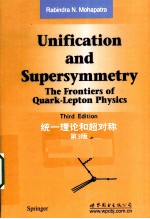
- (美)莫哈帕特拉著 著
- 出版社: 北京;西安:世界图书出版公司
- ISBN:9787510005718
- 出版时间:2010
- 标注页数:421页
- 文件大小:15MB
- 文件页数:440页
- 主题词:大统一理论-英文;超对称-英文
PDF下载
下载说明
统一理论和超对称 第3版 英文版PDF格式电子书版下载
下载的文件为RAR压缩包。需要使用解压软件进行解压得到PDF格式图书。建议使用BT下载工具Free Download Manager进行下载,简称FDM(免费,没有广告,支持多平台)。本站资源全部打包为BT种子。所以需要使用专业的BT下载软件进行下载。如 BitComet qBittorrent uTorrent等BT下载工具。迅雷目前由于本站不是热门资源。不推荐使用!后期资源热门了。安装了迅雷也可以迅雷进行下载!
(文件页数 要大于 标注页数,上中下等多册电子书除外)
注意:本站所有压缩包均有解压码: 点击下载压缩包解压工具
图书目录
1 Important Basic Concepts in Particle Physics 1
1.1 Introduction 1
1.2 Symmetries and Currents 4
1.3 Local Symmetries and Yang-Mills Fields 8
1.4 Quantum Chromodynamic Theory of Strong Interactions 11
1.5 Hidden Symmetries of Weak Interactions 14
References 18
2 Spontaneous Symmetry Breaking 21
2.1 Symmetries and Their Realizations 21
2.2 Nambu-Goldstone Bosons for an Arbitrary Non-Abelian Group 24
2.3 Some Properties of Nambu-Goldstone Bosons 26
2.4 Phenomenology of Massless and Near-Massless Spin-0 Bosons 28
2.5 The Higgs-Kibble Mechanism in Gauge Theories 30
2.6 Group Theory of the Higgs Phenomenon 33
2.7 Renormalizability and Triangle Anomalies 34
References 36
3 The SU(2)L×U(1) Model 38
3.1 The SU(2)L×U(1) Model of Glashow,Weinberg,and Salam 38
3.2 Neutral-Current Interactions 43
3.3 Masses and Decay Properties of W and Z Bosons 47
3.4 Fermion Masses and Mixing 52
3.5 Higher-Order-Induced Flavor-Changing Neutral-Current Effects 54
3.6 The Higgs Bosons 56
3.7 SU(2)L×U(1) Model with Two Higgs Doublets 59
3.8 Puzzles of the Standard Model 61
3.9 Outline of the Various Scenarios 64
3.10 Beyond the Standard Model 64
References 71
4 CP Violation:Weak and Strong 74
4.1 CP Violation in Weak Interactions 74
4.2 CP Violation in Gauge Models:Generalities 78
4.3 The Kobayashi-Maskawa Model 80
4.4 Left-Right Symmetric Models of CP Violation 85
4.5 The Higgs Exchange Models 92
4.6 Strong CP Violation and the θ-Problem 94
4.7 Solutions to the Strong CP Problem without the Axion 98
4.8 Summary 100
References 102
5 Grand Unification and the SU(5) Model 106
5.1 The Hypothesis of Grand Unification 106
5.2 SU(N) Grand Unification 107
5.3 Sin2θW in Grand Unified Theories(GUT) 108
5.4 SU(5) 109
5.5 Grand Unification Mass Scale and Sin2θW at Low Energies 114
5.6 Detailed Predictions of the SU(5) Model for Proton Decay 118
5.7 Some Other Aspects of the SU(5) Model 121
5.8 Gauge Coupling Unification with Intermediate Scales before Grand Unification 125
References 128
6 Symmetric Models of Weak Interactions and Massive Neutrinos 130
6.1 Why Left-Right Symmetry? 130
6.2 The Model,Symmetry Breaking,and Gauge Boson Masses 133
6.3 Limits on MZR and mWR from Charged-Current Weak Interactions 140
6.3.1 Limits on the WR-WL Mixing Parameter ? 145
6.4 Properties of Neutrinos and Lepton-Number-Violating Processes 146
6.5 Baryon Number Nonconservation and Higher Unification 157
6.6 Sin2θW and the Scale of Partial Unification 163
6.7 Left-Right Symmetry—An Alternative Formulation 164
6.8 Higher Order Effects 166
6.9 Conclusions 168
References 170
7 SO(10) Grand Unification 175
7.1 Introduction 175
7.2 SO(2N) in an SU(N) Basis[3] 176
7.3 Fermion Masses and the"Charge Conjugation" Operator 179
7.4 Symmetry-Breaking Patterns and Intermediate Mass Scales 183
7.5 Decoupling Parity and SU(2)R Breaking Scales 189
7.6 Second Z' Boson 191
References 192
8 Technicolor and Compositeness 193
8.1 Why Compositeness? 193
8.2 Technicolor and Electroweak Symmetry Breaking 194
8.3 Techni-Composite Pseudo-Goldstone Bosons 197
8.4 Fermion Masses 199
8.5 Composite Quarks and Leptons 201
8.6 Light Quarks and Leptons and't Hooft Anomaly Matching 204
8.7 Examples of 't Hooft Anomaly Matching 206
8.8 Some Dynamical Constraints on Composite Models 209
8.9 Other Aspects of Composite Models 210
8.10 Symmetry Breaking via Top-Quark Condensate 213
References 216
9 Global Supersymmetry 220
9.1 Supersymmetry 220
9.2 A Supersymmetric Field Theory 222
9.3 Two-Component Notation 225
9.4 Superfields 227
9.5 Vector and Chiral Superfields 230
References 235
10 Field Theories with Global Supersymmetry 236
10.1 Supersymmetry Action 236
10.2 Supersymmetric Gauge Invariant Lagrangian 240
10.3 Feynman Rules for Supersymmetric Theories[3] 242
10.4 Allowed Soft-Breaking Terms 246
References 248
11 Broken Supersymmetry and Application to Particle Physics 249
11.1 Spontaneous Breaking of Supersymmetry 249
11.2 Supersymmetric Analog of the Goldberger-Treiman Relation 251
11.3 D-Type Breaking of Supersymmetry 253
11.4 O'Raifeartaigh Mechanism or F-Type Breaking of Supersymmetry 254
11.5 A Mass Formula for Supersymmetric Theories and the Need for Soft Breaking 256
References 258
12 Minimal Supersymmetric Standard Model 260
12.1 Introduction,Field Content and the Lagrangian 260
12.2 Constraints on the Masses of Superparticles 268
12.3 Other Effects of Superparticles 273
12.4 Why Go beyond the MSSM? 276
12.5 Mechanisms for Supersymmetry Breaking 277
12.6 Renormalization of Soft Supersymmetry-Breaking Parameters 284
12.7 Supersymmetric Left-Right Model 286
References 291
13 Supersymmetric Grand Unification 293
13.1 The Supersymmetric SU(5) 293
13.2 Proton Decay in the Supersymmetry SU(5) Model 296
13.2.1 Problems and Prospects for SUSY SU(5) 299
13.3 Supersymmetric SO(10) 301
13.3.1 Symmetry Breaking and Fermion Masses 301
13.3.2 Neutrino Masses,R-Parity Breaking,126 vrs.16 304
13.3.3 Doublet-Triplet Splitting(D-T-S): 306
References 308
14 Local Supersymmetry(N=1) 310
14.1 Connection Between Local Supersymmetry and Gravity 310
14.2 Rarita-Schwinger Formulation of the Massless Spin-3/2 Field 312
14.3 Elementary General Relativity 313
14.4 N=1 Supergravity Lagrangian 316
14.5 Group Theory of Gravity and Supergravity Theories 317
14.6 Local Conformal Symmetry and Gravity 320
14.7 Conformal Supergravity and Matter Couplings 323
14.8 Matter Couplings and the Scalar Potential in Supergravity 327
14.9 Super-Higgs Effect 331
14.10 Different Formulations of Supergravity 332
References 334
15 Application of Supergravity(N=1) to Particle Physics 335
15.1 Effective Lagrangian from Supergravity 335
15.2 The Polonyi Model of Supersymmetry Breaking 337
15.3 Electroweak Symmetry Breaking and Supergravity 340
15.4 Grand Unification and N=1 Supergravity 343
References 347
16 Beyond N=1 Supergravity 348
16.1 Beyond Supergravity 348
16.2 Extended Supersymmetries(N=2) 349
16.3 Supersymmetries with N>2 351
16.4 Higher-Dimensional Supergravity Theories 352
16.5 d=10 Super-Yang-Mills Theory 356
References 359
17 Superstrings and Quark-Lepton Physics 361
17.1 Introduction to Strings 361
17.2 Light Cone Quantization and Vacuum Energy of the String 368
17.3 Neveu-Schwarz and Ramond Strings 370
17.4 GSO Projection and Supersymmetric Spectrum 372
17.5 Heterotic String 374
17.6 N=1 Super-Yang-Mills Theory in Ten Dimensions 376
17.7 Compactification and the Calabi-Yau Manifold 377
17.8 Brief Introduction to Complex Manifolds 381
17.9 Calabi-Yau Manifolds and Polynomial Representations for(2,1) Forms 383
17.10 Assignment of Particles,the E6-GUT Model[18],and Symmetry Breaking 388
17.11 Supersymmetry Breaking 398
17.12 Cosmological Implications of the Intermediate Scale 401
17.13 A Real Superstring Model with Four Generations 402
17.14 String Theories,Extra Dimensions,and Gauge Coupling Unification 407
17.14.1 Weakly Coupled Heterotic String,Mass Scales,and Gauge Coupling Unification 407
17.14.2 Strongly Coupled Strings,Large Extra Dimensions,and Low String Scales 408
17.14.3 Effect of Extra Dimensions on Gauge Coupling Unification 409
17.15 Conclusion 412
References 413
Index 419