
图书介绍
有限元方法流体力学 第6版pdf电子书版本下载
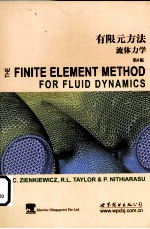
- 本社 著
- 出版社: 北京:北京世图出版社
- ISBN:9787506292566
- 出版时间:2008
- 标注页数:435页
- 文件大小:65MB
- 文件页数:455页
- 主题词:有限元法-应用-流体力学-英文
PDF下载
下载说明
有限元方法流体力学 第6版PDF格式电子书版下载
下载的文件为RAR压缩包。需要使用解压软件进行解压得到PDF格式图书。建议使用BT下载工具Free Download Manager进行下载,简称FDM(免费,没有广告,支持多平台)。本站资源全部打包为BT种子。所以需要使用专业的BT下载软件进行下载。如 BitComet qBittorrent uTorrent等BT下载工具。迅雷目前由于本站不是热门资源。不推荐使用!后期资源热门了。安装了迅雷也可以迅雷进行下载!
(文件页数 要大于 标注页数,上中下等多册电子书除外)
注意:本站所有压缩包均有解压码: 点击下载压缩包解压工具
图书目录
1 Introduction to the equations of fluid dynamics and the finite element approximation 1
1.1 General remarks and classification of fluid dynamics problems discussed in this book 1
1.2 The governing equations of fluid dynamics 4
1.3 Inviscid,incompressible flow 11
1.4 Incompressible(or nearly incompressible)flows 13
1.5 Numerical solutions:weak forms,weighted residual and finite element approximation 14
1.6 Concluding remarks 26
References 27
2 Convection dominated problems-finite element approximations to the convection-diffusion-reaction equation 28
2.1 Introduction 28
2.2 The steady-state problem in one dimension 31
2.3 The steady-state problem in two(or three)dimensions 45
2.4 Steady state-concluding remarks 49
2.5 Transients-introductory remarks 50
2.6 Characteristic-based methods 53
2.7 Taylor-Galerkin procedures for scalar variables 65
2.8 Steady-state condition 66
2.9 Non-linear waves and shocks 66
2.10 Treatment of pure convection 70
2.11 Boundary conditions for convection-diffusion 72
2.12 Summary and concluding remarks 73
References 74
3 The characteristic-based split(CBS)algorithm.A general procedure for compressible and incompressible flow 79
3.1 Introduction 79
3.2 Non-dimensional form of the governing equations 81
3.3 Characteristic-based split(CBS)algorithm 82
3.4 Explicit,semi-implicit and nearly implicit forms 92
3.5 Artificial compressibility and dual time stepping 95
3.6 ’Circumvention’of the Babu?ka-Brezzi(BB)restrictions 97
3.7 A single-step version 98
3.8 Boundary conditions 100
3.9 The performance of two-step and one-step algorithms on an inviscid problem 103
3.10 Concluding remarks 104
References 105
4 Incompressible Newtonian laminar flows 110
4.1 Introduction and the basic equations 110
4.2 Use of the CBS algorithm for incompressible flows 112
4.3 Adaptive mesh refinement 123
4.4 Adaptive mesh generation for transient problems 131
4.5 Slow flows-mixed and penalty formulations 131
4.6 Concluding remarks 136
References 136
5 Incompressible non-Newtonian flows 141
5.1 Introduction 141
5.2 Non-Newtonian flows-metal and polymer forming 141
5.3 Viscoelastic flows 154
5.4 Direct displacement approach to transient metal forming 163
5.5 Concluding remarks 165
References 166
6 Free surface and buoyancy driven flows 170
6.1 Introduction 170
6.2 Free surface flows 170
6.3 Buoyancy driven flows 189
6.4 Concluding remarks 191
References 193
7 Compressible high-speed gas flow 197
7.1 Introduction 197
7.2 The governing equations 198
7.3 Boundary conditions-subsonic and supersonic flow 199
7.4 Numerical approximations and the CBS algorithm 202
7.5 Shock capture 203
7.6 Variable smoothing 205
7.7 Some preliminary examples for the Euler equation 206
7.8 Adaptive refinement and shock capture in Euler problems 212
7.9 Three-dimensional inviscid examples in steady state 217
7.10 Transient two-and three-dimensional problems 226
7.11 Viscous problems in two dimensions 227
7.12 Three-dimensional viscous problems 240
7.13 Boundary layer-inviscid Euler solution coupling 241
7.14 Concluding remarks 242
References 242
8 Turbulent flows 248
8.1 Introduction 248
8.2 Treatment of incompressible turbulent flows 251
8.3 Treatment of compressible flows 264
8.4 Large eddy simulation 267
8.5 Detached Eddy Simulation(DES) 270
8.6 Direct Numerical Simulation(DNS) 270
8.7 Concluding remarks 271
References 271
9 Generalized flow through porous media 274
9.1 Introduction 274
9.2 A generalized porous medium flow approach 275
9.3 Discretization procedure 279
9.4 Non-isothermal flows 282
9.5 Forced convection 282
9.6 Natural convection 284
9.7 Concluding remarks 288
References 289
10 Shallow water problems 292
10.1 Introduction 292
10.2 The basis of the shallow water equations 293
10.3 Numerical approximation 297
10.4 Examples of application 298
10.5 Drying areas 310
10.6 Shallow water transport 311
10.7 Concluding remarks 313
References 314
11 Long and medium waves 317
11.1 Introduction and equations 317
11.2 Waves in closed domains-finite element models 318
11.3 Difficulties in modelling surface waves 320
11.4 Bed friction and other effects 320
11.5 The short-wave problem 320
11.6 Waves in unbounded domains(exterior surface wave problems) 321
11.7 Unbounded problems 324
11.8 Local Non-Reflecting Boundary Conditions(NRBCs) 324
11.9 Infinite elements 327
11.10 Mapped periodic(unconjugated)infinite elements 327
11.11 Ellipsoidal type infinite elements of Burnett and Holford 328
11.12 Wave envelope(or conjugated)infinite elements 330
11.13 Accuracy of infinite elements 332
11.14 Trefftz type infinite elements 332
11.15 Convection and wave refraction 333
11.16 Transient problems 335
11.17 Linking to exterior solutions(or DtN mapping) 336
11.18 Three-dimensional effects in surface waves 338
11.19 Concluding remarks 344
References 344
12 Short waves 349
12.1 Introduction 349
12.2 Background 349
12.3 Errors in wave modelling 351
12.4 Recent developments in short wave modelling 351
12.5 Transient solution of electromagnetic scattering problems 352
12.6 Finite elements incorporating wave shapes 352
12.7 Refraction 364
12.8 Spectral finite elements for waves 372
12.9 Discontinuous Galerkin finite elements(DGFE) 374
12.10 Concluding remarks 378
References 378
13 Computer implementation of the CBS algorithm 382
13.1 Introduction 382
13.2 The data input module 383
13.3 Solution module 384
13.4 Output module 387
References 387
Appendix A Non-conservative form of Navier-Stokes equations 389
Appendix B Self-adjoint differential equations 391
Appendix C Postprocessing 392
Appendix D Integration formulae 395
Appendix E Convection-diffusion equations:vector-valued variables 397
Appendix F Edge-based finite element formulation 405
Appendix G Multigrid method 407
Appendix H Boundary layer-inviscid flow coupling 409
Appendix I Mass-weighted averaged turbulence transport equations 413
Author index 417
Subject index 427