
图书介绍
跨文化交际视域下的修辞学pdf电子书版本下载
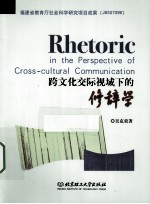
- 吴克炎著 著
- 出版社: 北京:北京理工大学出版社
- ISBN:9787564032333
- 出版时间:2010
- 标注页数:234页
- 文件大小:21MB
- 文件页数:246页
- 主题词:修辞-对比研究-英语、汉语
PDF下载
下载说明
跨文化交际视域下的修辞学PDF格式电子书版下载
下载的文件为RAR压缩包。需要使用解压软件进行解压得到PDF格式图书。建议使用BT下载工具Free Download Manager进行下载,简称FDM(免费,没有广告,支持多平台)。本站资源全部打包为BT种子。所以需要使用专业的BT下载软件进行下载。如 BitComet qBittorrent uTorrent等BT下载工具。迅雷目前由于本站不是热门资源。不推荐使用!后期资源热门了。安装了迅雷也可以迅雷进行下载!
(文件页数 要大于 标注页数,上中下等多册电子书除外)
注意:本站所有压缩包均有解压码: 点击下载压缩包解压工具
图书目录
Chapter One Introduction 1
Ⅰ.Definitions of rhetoric 1
A.Denotation of rhetoric 1
B.Connotation of rhetoric 1
C.Six basic features of good expressions 3
Ⅱ.Functions of rhetoric 14
A.Being more appropriate 15
B.Being more attractive 15
C.Being more forcible 15
D.Being more humorous 16
Ⅲ.Classification of rhetoric 17
Ⅳ.Rhetoric in the perspective of cross-cultural communication 18
Chapter Two Comparison and Contrast Between English and Chinese Rhetoric 20
Ⅰ.Language and rhetoric 20
Ⅱ.Language,rhetoric and thought 21
Ⅲ.English and Chinese rhetoric 22
A.Passive rhetorical techniques 23
B.Active rhetorical techniques 24
Chapter Three The Faculty of Rhetorical Invention 32
Ⅰ.The origin of rhetorical invention 32
Ⅱ.The essence of rhetorical invention 33
Ⅲ.The cases of rhetorical invention 33
A.Controversial topic 33
B.Non-controversial topic 43
Chapter Four Passive Rhetorical Techniques 48
Section One Contextual Choice of Words and Expressions 49
Ⅰ.Being fit for a certain situation 49
Ⅱ.Being appropriate stylistically 52
A.English examples 52
B.Chinese examples 54
Ⅲ.Being idiomatic 54
A.Using idioms 54
B.Using words in their figurative sense in English vs.words with vague reference or enigmatic folk similes in Chinese 56
Section Two Textual Choice of Words,Expressions and Sentence Structures 60
Part 1 English Prominent Feature:Elegant Variation 60
Ⅰ.The solid basis 62
A.Vocabulary 62
B.Grammar 63
Ⅱ.Various forms of variation 67
A.Forms in diction 67
B.Forms in sentence structures 70
Part 2 Chinese Prominent Features 77
Ⅰ.Sentence structure:elegance of balance 78
Ⅱ.Elegance of artistic conception 79
Section Three Application 81
Part 1 Application of the English Prominent Features 81
Ⅰ.Elegant variation 81
A.Forms in diction 81
B.Forms in sentence structures 87
Ⅱ.English words in their figurative sense 91
Part 2 Application of the Chinese Prominent Features 93
Ⅰ.Chinese balanced structures 93
Ⅱ.Periodic sentences 93
Ⅲ.Chinese words with vague reference 94
Ⅳ.Xiehouyu 95
Part 3 Application of English/Chinese Idiomaticness 95
Chapter Five Active Rhetorical Techniques 97
Section One Devices Whose Rhetorical Effects Can Generally Be Retained 101
A.Apostrophe 101
B.Asyndeton,poly-syndeton 104
C.Climax,anticlimax 105
D.Contrast 108
E.Epanorthosis 111
F.Hyperbole,understatement 111
G.Paradox,oxymoron 115
H.Parallelism 121
I.Personification,Niwu 125
J.Rhetorical question 127
Section Two Devices Whose Rhetorical Effects Can Partly Be Retained 129
Ⅰ.On the psychological basis 130
A.Allusion 130
B.Metonymy,simile,metaphor 134
C.Parody 161
D.Symbol 165
E.Synaesthesia 168
F.Transferred epithet 171
G.Zeugma,syllepsis 173
Ⅱ.On the aesthetical basis 176
H.Anadiplosis 176
I.Antithesis 178
J.Euphemism 181
K.Irony,sarcasm,innuendo 185
L.Malapropism 189
M.Onomatopoeia 190
N.Palindrome,antimetabole 193
O.Pun 196
Ⅲ.On the emphatic basis 198
P.Anastrophe 198
Q.Repetition 199
Section Three Devices Whose Rhetorical Effects Cannot in General Be Retained 206
Ⅰ.Figure of sound 206
A.End rhyme 206
B.Internal rhyme 210
C.Assonance 211
D.Alliteration 212
E.Halfrhyme 213
F.Consonance 214
G.Paregrnenon 215
Ⅱ.Other figures of speech 216
A.Cangci 216
B.Chaizi 217
C.Xiangqian 217
D.Qianci 218
Bilingual Glossary of Terms 219
Bibliography 224
后记 231