
图书介绍
课程设计 英文本pdf电子书版本下载
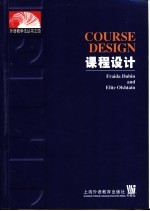
- (英)FraidaDubin,(英)EliteOlshtain著 著
- 出版社: 上海:上海外语教育出版社
- ISBN:7810806173
- 出版时间:2002
- 标注页数:194页
- 文件大小:8MB
- 文件页数:207页
- 主题词:外语教学(学科: 课程设计) 外语教学 课程设计
PDF下载
下载说明
课程设计 英文本PDF格式电子书版下载
下载的文件为RAR压缩包。需要使用解压软件进行解压得到PDF格式图书。建议使用BT下载工具Free Download Manager进行下载,简称FDM(免费,没有广告,支持多平台)。本站资源全部打包为BT种子。所以需要使用专业的BT下载软件进行下载。如 BitComet qBittorrent uTorrent等BT下载工具。迅雷目前由于本站不是热门资源。不推荐使用!后期资源热门了。安装了迅雷也可以迅雷进行下载!
(文件页数 要大于 标注页数,上中下等多册电子书除外)
注意:本站所有压缩包均有解压码: 点击下载压缩包解压工具
图书目录
Introduction 1
1 The fact-finding stage:assessing societal factors 5
Overview 5
1.1 The language setting 6
1.1.1 The continuum:ESL——EFL 7
1.2 Patterns of language use in society 8
1.2.1 Education 8
1.2.2 The labor market 12
1.2.3 The process of modernization 13
1.3 Group and individual attitudes toward language 13
1.4 The political and national context 17
Practical applications 18
References 21
2 The basis for curriculum and syllabus designing 23
Overview 23
2.1.1 In an EFL setting 24
2.1 Establishing realistic goals 24
2.1.2 In an ESL setting 25
2.1.3 Planning for courses outside the school system 26
2.1.4 Language analysis or language use as course goals 26
2.2 Surveying existing programs 27
2.2.1 The existing syllabus 27
2.2.2 The materials in use 29
2.2.3 The teachers 30
2.2.4 The learners 31
2.2.5 The resources 32
2.3 When the materials in use constitute the curriculum and a syllabus 32
2.4 The separate purposes of a curriculum and a syllabus 34
2.4.1 The components of a curriculum 35
2.4.2 Types of syllabuses 37
Practical applications 38
References 39
3.1 Translating general goals into syllabus objectives 40
3.1.1 A curriculum provides a statement of policy 40
3 How goals become realized through instructional plans 40
Overview 40
3.1.2 The link between goals and objectives 42
3.1.3 Syllabuses without a curriculum 44
3.2 Language content, process, and product in syllabus designs 45
3.2.1 The language content dimension 45
3.2.2 The process dimension 46
3.2.3 The product dimension 49
3.3.1 The linear format 51
3.3 Selecting the shape of the syllabus 51
3.3.2 The modular format 53
3.3.3 The cyclical format 55
3.3.4 The matrix format 58
3.3.5 The story-line format 61
3.4 The place of method 63
Practical applications 66
References 66
Overview 68
4 A curriculum developed on communicative goals 68
4.1 Sociocultural views of the nature of language 69
4.2 A cognitively-based view of language learning 70
4.2.1 Strategies and tactics 71
4.2.2 Context-embedded and context-reduced language use 72
4.2.3 The holistic approach to language learning 73
4.2.4 What learners errors tell us 74
4.3 The fundamentals of a humanistic curriculum 75
4.4 Exploring the roles of teachers, learners and others within a communicative curriculum 76
4.4.1 Teaching/learning as a metaphor 77
4.4.2 Is teaching/learning adequate? 78
4.4.3 Cross-cultural implications 78
4.4.4 Developing alternative metaphors 80
Practical applications 84
References 85
5 The scope of a communicative syllabus 88
Overview 88
5.1 Expansion of the language content dimension 88
5.1.1 Conceptual and functional meaning 88
5.1.2 Sociocultural appropriateness 92
5.1.3 Longer spans of discourse 93
5.2 Communicative processes: workouts 94
5.2.1 Workouts 94
5.2.2 A scale for assessing the communicative potential of workouts 98
5.2.3 A scale for assessing the cognitive potential of workouts 99
5.3 Expanded product: emphasis on skills, needs 100
5.3.1 Implementation of language skills 100
5.3.3 Learner autonomy: an added product 102
5.3.2 Individual needs 102
5.3.4 Highlighting particular syllabus components 103
Practical applications 104
References 105
6 Focusing on language content in a communicative syllabus 106
Overview 106
6.1 Integrating notional and functional meaning with grammar, thematic content and lexis 106
6.1.1 Developing inventories 107
6.1.2 The choice of lexis 111
6.2 Discrete and holistic views:the horns of a dilemma 112
6.2.1 The holistic view 113
6.2.2 The discrete view 114
6.2.3 Evidence of the discrete vs. holistic paradox in language content, process, and product 114
6.2.4 Reconciling opposites in the instructional plans 117
6.2.5 Other systems, other worlds 118
Practical applications 119
References 120
7.1 Incorporating grammars of social norms: a discrete element view 122
Overview 122
7 Focusing on process:materials that deal with Sociocultural appropriateness 122
7.1.1 The state of the art 124
7.2 Scripting roleplays: a holistic view of Sociocultural content 135
7.2.1 A brief geneology 135
7.2.2 Issues for writers 136
Practical applications 145
References 146
8.1 The materials preparer s role 147
Overview 147
8 Focusing on product: materials that deal with the reading skill 147
8.1.1 The three elements 148
8.1.2 The designer s task 149
8.2 A model reading lesson: A moral for any age by Jacob Bronowski 152
8.2.1 Strategies for developing reading skills 152
8.2.2 Features of the text 152
8.2.3 Accommodating learners s interests: working on hunches 153
8.3 Guided questions for creating a reading lesson 161
8.3.2 Textual discovery procedures 164
8.3.1 Motivation for reading 164
8.3.3 Sharing ideas 165
8.3.4 Producing a reading lesson 165
Practical applications 165
References 166
9 Creating materials: the link between syllabus and audience 167
Overview 167
9.1 The audience for materials 167
9.1.1 Writing for a local audience 168
9.1.2 Writing for a wider audience 169
9.1.3 Issues common to both audiences 170
9.2 Commissioned and self-initiated projects 171
9.2.1 Commissioned projects 171
9.2.2 Self-initiated projects 171
9.2.3 1 have an idea... 172
9.3 Writing as a team effort 173
9.3.1 An idealized team 173
9.3.2 Other team models 174
9.4 A checklist for writers 175
9.4.1 Questions about basic assumptions 175
9.4.2 Questions about shape and design 176
Practical applications 177
References 179
Epilogue 180
Cumulative bibliography 184
Acknowledgements 190
Index 191