
图书介绍
实用普通语言学引论pdf电子书版本下载
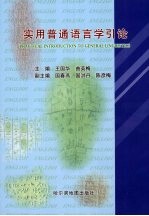
- 王国华,曲英梅主编 著
- 出版社: 哈尔滨:哈尔滨地图出版社
- ISBN:9787807176343
- 出版时间:2007
- 标注页数:154页
- 文件大小:8MB
- 文件页数:164页
- 主题词:普通语言学
PDF下载
下载说明
实用普通语言学引论PDF格式电子书版下载
下载的文件为RAR压缩包。需要使用解压软件进行解压得到PDF格式图书。建议使用BT下载工具Free Download Manager进行下载,简称FDM(免费,没有广告,支持多平台)。本站资源全部打包为BT种子。所以需要使用专业的BT下载软件进行下载。如 BitComet qBittorrent uTorrent等BT下载工具。迅雷目前由于本站不是热门资源。不推荐使用!后期资源热门了。安装了迅雷也可以迅雷进行下载!
(文件页数 要大于 标注页数,上中下等多册电子书除外)
注意:本站所有压缩包均有解压码: 点击下载压缩包解压工具
图书目录
Chapter one Language and Linguistics 1
1.1 What is language? 1
1.1.1 Design features of human language 3
1.1.2 Functions of language 6
1.1.3 Origin of language 7
1.2 What is linguistics? 8
1.2.1 Fundamental distinctions in linguistics 8
1.2.2 Scope of linguistics 11
1.2.3 Characteristics of modern linguistics 12
Study Questions: 12
Chapter Two Phonetics 15
2.1 Speech sounds 15
2.1.1 Sound segments 15
2.1.2 Transcription of speech sounds 15
2.2 Division of phonetics 16
2.3 Classification and description of speech sounds 17
2.3.1 Voicing 17
2.3.2 Classification and description of English consonants 18
2.3.3 Classification and description of vowels 22
2.3.4 Natural classes of speech sounds 24
Study Questions: 25
Chapter Three Phonology 28
3.1 The study of sound systems and patterns 28
3.2 Phonemes,phones and allophones 28
3.3 Discovering phonemes 30
3.3.1 Minimal pairs and sets 30
3.3.2 Contrastive distribution 30
3.3.3 Complementary distribution 31
3.3.4 Free variation 31
3.3.5 The discovery procedure 31
3.4 Distinctive features and non-distinctive features 32
3.5 Phonological rules 33
3.6 Syllables and clusters 33
3.7 Prosodic phonology and suprasegmental phonology 34
Study questions: 36
Chapter Four Morphology 39
4.1 Morphemes 39
4.1.1 Morpheme,morph and allomorph 39
4.1.2 Classification of morphemes 40
4.2 Morphological process of word-formation 44
4.2.1 Compounding 45
4.2.2 Derivation 46
4.2.3 Conversion 46
4.2.4 Other ways of word-formation 47
Study questions: 49
Chapter Five Syntax—Sentence patterns 51
5.1 The traditional approach 52
5.2 The structural approach 53
5.3 The generative approach 55
5.3.1 Tenets of generative grammar 56
5.3.2 Generative approach 59
5.4 Functional approach 70
5.4.1 Systemic grammar 71
5.4.2 Functional grammar 74
Study questions: 78
Chapter Six Semantics 80
6.1 The meaning of'meaning' 80
6.2 Some views concerning the study of meaning 81
6.2.1 The naming theory 81
6.2.2 The conceptualist view 81
6.2.3 Contextualism 82
6.2.4.Behaviorism 83
6.3 The study of lexical meaning 83
6.3.1 Sense and reference 83
6.3.2 Classification of lexical meanings 84
6.3.3 Lexical Sense relations 85
6.3.4 Componential analysis of meaning 88
6.3.5 Prototype theory 89
6.4 The study of sentence meaning 89
6.4.1 Sense relations between sentences 89
6.4.2 The analysis of Sentence meaning 91
Study questions: 96
Chapter Seven Discourse Analysis 99
7.1 Historical development of discourse analysis 99
7.2 Definition of discourse analysis 100
7.3 Basic framework for the study of discourse 101
7.3.1 Language as system and as activity 101
7.3.2 Language use with purpose and function 103
7.3.3 Language in situation 104
7.4 Cohesion 107
7.4.1 Reference 108
7.4.2 Ellipsis 110
7.4.3 Conjunction 110
7.4.4 Lexical cohesion 111
7.5 Coherence 111
7.6 Schema Theory 112
Study questions: 114
Chapter Eight Pragmatics 116
8.1 What is pragmatics? 116
8.1.1 Context 116
8.1.2 Scope of pragmatics 117
8.2 Deixis 118
8.2.1 Defining deixis 118
8.2.2 Types of deixis 119
8.3 Conversational analysis 119
8.3.1 Conversational implicature 120
8.3.2 Conversational principles 122
8.4 Speech act theory 123
8.5 Presuppositions 126
8.6 Politeness Principle(PP) 126
8.7 Communication and relevance 129
8.8 Conversation analysis 130
Study questions: 133
Chapter Nine Language Culture and Society 136
9.1 Relationship between language and culture 136
9.1.1 Sapir-Whorf hypothesis 138
9.1.2 Culture in language teaching classroom 140
9.2 Language and society 140
9.2.1 Relationship between language and society 140
9.2.2 About sociolinguistics 142
9.2.3 Some basic methodological concern 143
9.2.4 Sociolects 144
9.2.5 Idiolect 148
9.2.6 Style,register and jargon 148
Study questions: 150
Bibliography 152