
图书介绍
医学生物识别 数字化中医数据分析 英文版pdf电子书版本下载
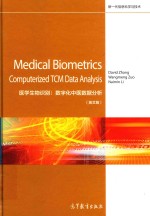
- David Zhang,Wangmeng Zuo,Naimin Li著 著
- 出版社: 北京:高等教育出版社
- ISBN:9787040428834
- 出版时间:2015
- 标注页数:398页
- 文件大小:48MB
- 文件页数:407页
- 主题词:数字技术-应用-中医诊断学-研究-英文
PDF下载
下载说明
医学生物识别 数字化中医数据分析 英文版PDF格式电子书版下载
下载的文件为RAR压缩包。需要使用解压软件进行解压得到PDF格式图书。建议使用BT下载工具Free Download Manager进行下载,简称FDM(免费,没有广告,支持多平台)。本站资源全部打包为BT种子。所以需要使用专业的BT下载软件进行下载。如 BitComet qBittorrent uTorrent等BT下载工具。迅雷目前由于本站不是热门资源。不推荐使用!后期资源热门了。安装了迅雷也可以迅雷进行下载!
(文件页数 要大于 标注页数,上中下等多册电子书除外)
注意:本站所有压缩包均有解压码: 点击下载压缩包解压工具
图书目录
PART Ⅰ:DIAGNOSIS METHODS IN TRADITIONAL CHINESE MEDICINE 3
Chapter 1 Introduction 3
1.1 Diagnosis Methods in Traditional Chinese Medicine 3
1.1.1 Tongue Diagnosis 3
1.1.2 Pulse Diagnosis 5
1.1.3 Breath Odor Diagnosis 6
1.2 Computerized TCM Diagnosis 7
1.2.1 Computerized Tongue Diagnosis 7
1.2.2 Computerized Pulse Diagnosis 11
1.2.3 Computerized Breath Odor Diagnosis 14
1.3 Summary 17
References 17
PART Ⅱ:COMPUTERIZED TONGUE IMAGE ANALYSIS 29
Chapter 2 Tongue Image Acquisition and Preprocessing 29
2.1 Tongue Image Acquisition 29
2.1.1 Requirement Analysis 31
2.1.2 System Design and Implementation 33
2.1.3 Performance Analysis 43
2.2 Color Correction 49
2.2.1 Color Correction Algorithms 51
2.2.2 Evaluation of Correction Algorithms 53
2.2.3 Discussion 61
2.3 Summary 67
References 68
Chapter 3 Automated Tongue Segmentation 73
3.1 Bi-Elliptical Deformable Contour 73
3.1.1 Bi-Elliptical Deformable Template for the Tongue 74
3.1.2 Combined Model for Tongue Segmentation 78
3.1.3 Results and Analysis 84
3.2 Snake with Polar Edge Detector 91
3.2.1 The Segmentation Algorithm 91
3.2.2 Experimental Results 99
3.3 Gabor Magnitude-based Edge Detection and Fast Marching 104
3.3.1 2D Gabor Magnitude-based Edge Detection 105
3.3.2 Contour Detection Using Fast Marching and Active Contour Model 109
3.3.3 Experimental Results 111
3.4 Summary 114
References 114
Chapter 4 Tongue Image Feature Analysis 117
4.1 Color Feature Analysis 117
4.1.1 Exploratory Tongue Color Analysis 118
4.1.2 Statistical Analysis of Tongue Color Distribution 124
4.2 Tongue Texture Analysis 143
4.3 Tongue Shape Analysis 144
4.3.1 Shape Correction 144
4.3.2 Extraction of Shape Features 149
4.3.3 Tongue Shape Classification 153
4.4 Extraction of Other Local Pathological Features 158
4.4.1 Petechia 158
4.4.2 Tongue Crack 160
4.4.3 Tongueprint 160
4.4.4 Sublingual Veins 161
4.5 Summary 162
References 163
Chapter 5 Computerized Tongue Diagnosis 167
5.1 Bayesian Network for Computerized Tongue Diagnosis 167
5.1.1 Quantitative Pathological Features Extraction 167
5.1.2 Bayesian Networks 169
5.1.3 Experimental Results 171
5.2 Diagnosis Based on Hyperspectral Tongue Images 178
5.2.1 Hyperspectral Tongue Images 179
5.2.2 The SVM Classifier Applied to Hyperspectral Tongue Images 180
5.2.3 Experimental Results 183
5.3 Summary 186
References 187
PART Ⅲ:COMPUTERIZED PULSE SIGNAL ANALYSIS 191
Chapter 6 Pulse Signal Acquisition and Preprocessing 191
6.1 Pressure Pulse Signal Acquisition 191
6.1.1 Application Scenario and Requirement Analysis 192
6.1.2 System Architecture 193
6.1.3 Multi-Channel Pulse Signals 201
6.2 Baseline Wander Correction of Pulse Signals 206
6.2.1 Detecting the Onsets of Pulse Wave 207
6.2.2 Wavelet Based Cascaded Adaptive Filter 209
6.2.3 Results on Actual Pulse Signals 221
6.3 Summary 223
References 224
Chapter 7 Feature Extraction of Pulse Signals 227
7.1 Spatial Feature Extraction 227
7.1.1 Fiducial Point-based Methods 227
7.1.2 Approximate Entropy 229
7.2 Frequency Feature Extraction 230
7.2.1 Hilbert-Huang Transform 230
7.2.2 Wavelet and Wavelet Packet Transform 232
7.3 AR Model 234
7.4 Gaussian Mixture Model 236
7.4.1 Two-term Gaussian Model 236
7.4.2 Feature Selection 240
7.4.3 FCM Clustering 242
7.5 Summary 242
References 243
Chapter 8 Classification of Pulse Signals 245
8.1 Pulse Waveform Classification 245
8.1.1 Modules of Pulse Waveform Classification 246
8.1.2 The EDFC and GEKC Classifiers 251
8.1.3 Experimental Results 255
8.2 Arrhythmic Pulses Derection 257
8.2.1 Clinical Value of Pulse Rhythm Analysis 257
8.2.2 Automatic Recognition of Pulse Rhythms 259
8.2.3 Experimental Results 272
8.3 Combination of Heterogeneous Features for Pulse Diagnosis 274
8.3.1 Multiple Kernel Learning 275
8.3.2 Experimental Results and Discussion 279
8.4 Summary 282
References 283
PART Ⅳ:COMPUTERIZED ODOR SIGNAL ANALYSIS 289
Chapter 9 Breath Analysis System:Design and Optimization 289
9.1 Breath Analysis 289
9.2 Design of Breath Analysis System 291
9.2.1 Description of the System 291
9.2.2 Signal Sampling and Preprocessing 296
9.3 Sensor Selection 299
9.3.1 Linear Discriminant Analysis 299
9.3.2 Sensor Selection in Breath Analysis System 304
9.3.3 Comparison Experiment and Performance Analysis 314
9.4 Summary 317
References 317
Chapter 10 Feature Extraction and Classification of Breath Odor Signals 321
10.1 Feature Extraction of Odor Signals 321
10.1.1 Geometry Features 322
10.1.2 Principal Component Analysis 324
10.1.3 Wavelet Packet Decomposition 324
10.1.4 Gaussian Function Representation 325
10.1.5 Gaussian Basis Representation 331
10.1.6 Experimental Results 334
10.2 Common Classifiers for Odor Signal Classification 336
10.2.1 K Nearest Neighbor 337
10.2.2 Artificial Neural Network 337
10.2.3 Support Vector Machine 337
10.3 Sparse Representation Classification 338
10.3.1 Data Expression 338
10.3.2 Test Sample Representation by Training Samples 339
10.3.3 Samples Sampling Errors 340
10.3.4 Voting Rules 341
10.3.5 Identification Steps 342
10.4 Support Vector Ordinal Regression 342
10.4.1 Problem Analysis 342
10.4.2 Basic Idea of Support Vector Regression 343
10.4.3 Support Vector Ordinal Regression 344
10.4.4 The Dual Problem 345
10.4.5 Identification Steps 346
10.5 Evaluation on Classification methods 347
10.5.1 Evaluation on SRC 347
10.5.2 Evaluation on SRC 351
10.6 Summary 355
References 355
Index 359