
图书介绍
语言语用及认知研究pdf电子书版本下载
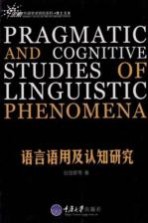
- 刘国辉等著 著
- 出版社: 重庆:重庆大学出版社
- ISBN:9787562442417
- 出版时间:2007
- 标注页数:284页
- 文件大小:11MB
- 文件页数:294页
- 主题词:英语-对比语言学-汉语
PDF下载
下载说明
语言语用及认知研究PDF格式电子书版下载
下载的文件为RAR压缩包。需要使用解压软件进行解压得到PDF格式图书。建议使用BT下载工具Free Download Manager进行下载,简称FDM(免费,没有广告,支持多平台)。本站资源全部打包为BT种子。所以需要使用专业的BT下载软件进行下载。如 BitComet qBittorrent uTorrent等BT下载工具。迅雷目前由于本站不是热门资源。不推荐使用!后期资源热门了。安装了迅雷也可以迅雷进行下载!
(文件页数 要大于 标注页数,上中下等多册电子书除外)
注意:本站所有压缩包均有解压码: 点击下载压缩包解压工具
图书目录
Chapter One A Contrastive Study of Responses to Requests in English and Chinese 1
1.1 Introduction 2
1.2 Subjects 7
1.3 The Questionnaire 8
1.4 Instrument—The Discourse Completion Test 9
1.5 Quantitative Findings Concerning Request Responses among Americans and the Chinese People 10
1.6 Contextual Variables in the Responses to Requests 13
1.7 Tentative Analysis of the Common Features of Request Responses 23
1.8 Limitations and Further Research 27
1.9 Conclusions 27
Chapter Two Middle Construction in English and Chinese:A Cognitive Semantic Study 32
2.1 Introduction 33
2.1.1 Orientation and Motivation of the Study 33
2.1.2 The Concept of Middle Construction 34
2.1.3 Aims and Hypotheses of the Study 34
2.1.4 Layout and Scope of the Study 35
2.2 Literature Review 36
2.2.1 Middle Construction 36
2.2.2 Construction Grammar 46
2.3 Middle Construction in English 53
2.3.1 Classification of Middle Construction in English 53
2.3.2 Characteristics of Middle Construction in English 56
2.4 Middle Construction in Chinese 74
2.4.1 Middle Construction in Chinese 74
2.4.2 The Classification of Chinese Middle Construction 77
2.4.3 The Characteristics of Chinese Middle Construction 78
2.4.4 The Selectional Restriction of Middle Verbs in Chinese 82
2.4.5 Particularity of Chinese Middle Construction 83
2.5 Conclusions 86
2.5.1 Findings of the Study 86
2.5.2 Limitations of the Study 87
2.5.3 Suggestions for Further Research 88
Chapter Three A Comparison of Nominal Possessives in English and Chinese from a Cognitive Perspective 89
3.1 Introduction 90
3.1.1 Orientation of the Title 90
3.1.2 The Significance of the Present Study 90
3.1.3 Methods 92
3.1.4 The Aims of the Present Study 92
3.1.5 Layout and Scope of the Study 93
3.2 Literature Review 93
3.2.1 Traditional Grammar 94
3.2.2 Transformational and Generative Grammar 96
3.2.3 Cognitive Linguistics 103
3.3 Concepts of Possession 107
3.3.1 Definition of Possession 107
3.3.2 Classification of Possession 108
3.3.3 Possessive Morphemes 111
3.4 A Cognitive Approach 116
3.4.1 Possessor as Reference Point 117
3.4.2 Possessor Specification and Possessee Specification 127
3.4.3 Possessive Prototypes 133
3.4.4 From Iconicity to Possessive Constructions 142
3.5 Conclusions 147
Chapter Four Iconicity in Ulysses 151
4.1 Introduction 152
4.1.1 Motivation of the Present Study 152
4.1.2 The Concept and Criteria of Iconicity 154
4.1.3 The Nature of the Study and Iconicity 155
4.1.4 Methods 156
4.1.5 The Aims and Hypotheses of the Present Study 156
4.1.6 Layout and Scope of the Study 157
4.2 Literature Review 158
4.2.1 Introduction 158
4.2.2 Iconicity Studies in Language 159
4.2.3 Literature Review of the Stream of Consciousness Novel Studies 165
4.2.4 Summary 169
4.3 The Application of Iconicity in Ulysses 169
4.3.1 Introduction 169
4.3.2 From the Phonological View 170
4.3.3 From the Morphological View 173
4.3.4 From the Syntactic View 178
4.3.5 From the Textual View 198
4.4 Contrastive Analysis 200
4.4.1 The Differences and Similarities of Iconicity between Ulysses and Other Streams of Consciousness Novels in Western Culture 200
4.4.2 The Differences and Similarities of Iconicity Studies in the Stream of Consciousness Novels between Western and Eastern Culture 204
4.5 Conclusions 205
4.5.1 Findings 205
4.5.2 Limitations of the Study 206
4.5.3 Suggestions for Further Studies in This Field 207
Chapter Five A Cognitive Approach to Temporal Metaphors in English and Chinese 208
5.1 Introduction 209
5.1.1 The Basic Concepts 209
5.1.2 Orientation of the Title 212
5.1.3 Motivations of the Study 213
5.1.4 The Aims and Hypotheses of the Present Study 215
5.1.5 Basic Approaches to the Present Study 216
5.1.6 Layout and Scope of the Study 217
5.1.7 Summary 218
5.2 Literature Review 218
5.2.1 Literature Review of Metaphor Studies in the West and China 218
5.2.2 Theoretical Background of Temporal Metaphor 222
5.2.3 Literature Review of Temporal Metaphor Studies in English and Chinesec 234
5.2.4 Summary 236
5.3 A Contrastive Study of Temporal Metaphors in English and Chinese 237
5.3.1 Classification of Temporal Metaphors 237
5.3.2 Similarities between Temporal Metaphors in English and Chinese 239
5.3.3 Motivations for the Similarities Between Temporal Metaphors in English and Chinese 254
5.3.4 Differences Between Temporal Metaphors in English and Chinese 255
5.3.5 Motivations for the Differences Between Temporal Metaphors in English and Chinese 262
5.3.6 Special Temporal Metaphors in Chinese 262
5.3.7 Summary 263
5.4 The Application of the Present Study to Foreign Language Teaching 265
5.4.1 Guides for Foreign Language Teaching 266
5.4.2 Contrastive Study for Foreign Language Teaching 266
5.5 Conclusions 268
5.5.1 Major Findings 268
5.5.2 Speculations about the Future Studies of Temporal Metaphors 270
References 271