
图书介绍
高级英语写作教程 上pdf电子书版本下载
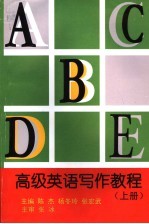
- 陈杰,杨冬玲,张宏武主编 著
- 出版社: 哈尔滨:哈尔滨地图出版社
- ISBN:7807175532
- 出版时间:2007
- 标注页数:295页
- 文件大小:9MB
- 文件页数:306页
- 主题词:英语-写作-高等学校-教材
PDF下载
下载说明
高级英语写作教程 上PDF格式电子书版下载
下载的文件为RAR压缩包。需要使用解压软件进行解压得到PDF格式图书。建议使用BT下载工具Free Download Manager进行下载,简称FDM(免费,没有广告,支持多平台)。本站资源全部打包为BT种子。所以需要使用专业的BT下载软件进行下载。如 BitComet qBittorrent uTorrent等BT下载工具。迅雷目前由于本站不是热门资源。不推荐使用!后期资源热门了。安装了迅雷也可以迅雷进行下载!
(文件页数 要大于 标注页数,上中下等多册电子书除外)
注意:本站所有压缩包均有解压码: 点击下载压缩包解压工具
图书目录
Part One An Introduction to Writing in English 1
1.Why Is Writing So Important 1
1.1 Writing Influences the Way We Think 2
1.2 Writing Contributes to the Way We Learn 3
1.3 Good Writing Leads to Success in College and Career 4
1.4 Writing Enriches Personal Growth 5
2.What Is Good Writing 6
2.1 Good Writing Is Good Thinking 6
2.2 Good Writing Involves Thoughtful Revision 8
2.3 Good Writing Is Directed Toward an Audience 10
2.4 Good Writing Achieves a Clear Purpose 12
2.5 Good Writing Expreses Ideas Clearly 13
3.Your Road To Success As A Non-native Speaker 14
3.1 Your Advantages as a Non-native Speaker 14
3.2 Your Disadvantages as a Non-native Speaker 16
3.3 Tips for Improving Your English 18
Part Two Writing Process With New Views 28
1.Writing As A Social Act 28
1.1 Topic or Subject 30
1.2 Audience 30
1.3 Analyze your audience in terms of your social relations 31
1.4 Analyze your audience in your writing 31
1.5 Analyze your audience 32
1.6 Audiences who agree 33
1.7 Audiences who are neutral or undecided 33
1.8 Audiences who disagree 34
1.9 Purpose and Role 35
2.Writing As A Process 37
2.1 Inventing 38
2.2 Planning and Drafting 39
2.3 Revising 41
2.4 Writing as a Recursive Process 42
Part Three Strategies for IRTR 44
1.Freewriting 44
2.Brainstorming 48
3.Branching 52
4.Cubing 54
5.Planning and Outlining 58
6.Scratch Outline 59
7.Phrase and Sentence Outlining 59
8.Sentence Outline 62
Part Four Reading with a Critical Eye 66
1.Reading Activity 66
1.1 Previewing 66
1.2 Skimming 70
1.3 Annotating 71
2.Comprehending Constructively 73
2.1 Outlining 73
2.2 Paraphrasing 76
2.3 Summarizing 77
3.Responding Thoughtfully 81
3.1 Exploring 81
3.2 Evaluating 83
3.3 Evaluating Content 83
3.4 Evaluating Form 85
Part Five Thinking Critically 89
1.What is Critical Thinking 89
2.Writing to Facilitate Critical Thinking 91
3.Inductive Reasoning 95
3.1 What's Inductive Reasoning 95
3.2 The More the Merrier 97
3.3 A Word of Caution 100
4.Deductive Reasoning 101
4.1 What Is Deductive Reasoning 101
4.2 Premises and Syllogism 104
4.3 Soundness.Truth.and Validity 105
4.4 FALLACIES 113
4.5 Equivocation 114
4.6 Circular Reasoning(Tautology) 115
4.7 Begging the Question 115
4.8 Guilt by Association 115
4.9 Overgeneralization 116
4.10 Hasty Generalization 117
4.11 Oversimplification 117
4.12 Post Hoc 118
Part Six Lead To My Writing 121
1.Effective Writing 121
2.Demands of the Course 125
3.Autobiography 128
Part Seven Make Your Words Perfect 133
1.General and Specific Words 133
2.Denotation and Connotation 136
3.Figurative Language 138
4.Levels of Diction 139
Part Eight How to Write Good Sentences 150
1.Sentence Fragments 150
2.Sentence Variety 150
2.1 Varying sentence length 150
2.2 Varying sentence structure 155
2.3 Varying sentence beginnings 155
2.4 Sentence Patterns 156
2.5 Impressive Sentences 157
3.Precise Vocabulary for Complete Ideas 163
4.Sentence Emphasis 164
4.1 Periodic sentences 164
4.2 Cumulative sentences 165
4.3 Climactic sentences 166
4.4 Antithetical sentences 167
4.5 Short sentences 167
4.6 The dash 168
5.Symbols That Stand for Errors in an Essay 169
6.Concise Sentences 174
6.1 Wordiness 177
6.2 Needless repetition 175
6.3 Redundancy 176
6.4 Buzzwords 176
6.5 Pretentious language 177
Part Nine How to Make Paragraphs Wonderful 180
1.Paragraph Structure 180
1.1 Beginning Sentences 180
1.2 Supporting sentences 191
1.3 Concluding sentence 195
2.Topic Sentence 197
3.Paragraph Unity 199
4.Patterns for Presenting'Information 202
4.1 General-to-Specific Pattern 202
4.2 Specific-to-General Pattern 204
4.3 Problem-Cause-Solution Pattern 205
4.4 Discussing Raw Data 208
4.5 Summary 209
4.6 Book Report 210
4.7 Developing Levels of Specificity 213
4.8 Paragraph Coherence 216
5.Paragraph Size 220
5.1 Examples and details 221
5.2 Comparison and contrast 222
5.3 Analogy 223
5.4 Classification 224
5.5 Cause and effect 225
5.6 Process 226
5.7 Space order 227
5.8 Question-answer order 227
5.9 Order of importance 228
Part Ten How to Write Narrative Paragraphs 230
1.Framework of a Narrative 230
1.1 Order of events 230
1.2 Point of view 232
1.3 Setting 234
1.4 Dialogue 236
2.About an Activity 238
3.About an Experience 248
Part Eleven Organize Information Gathered and Ideas 248
1.Forming Ideas with Information Gathered 259
2.Knowing Your Goals and Strategies for Tapping Memory 261
2.1 Free-writing 266
2.2 Talking on Tape 267
2.3 Making a Web 267
2.4 Using Lists of Questions 268
2.5 Talking with Others 270
3.Reading and Narrowing Main Ideas 270
3.1 Brainstorming 271
3.2 Skimming 271
3.3 Keeping a Journal 271
3.4 Free-writing 271
3.5 Talking with Others 272
3.6 Integrating Your Own Interests 272
3.7 Floodlight Stage Reading 273
3.8 Spotlight Stage Reading 274
4.Observation and Arranging Ideas as Well as Models 275
4.1 Observation 275
4.2 Listing 280
4.3 Clustering 286