
图书介绍
高级英语写作教程 下pdf电子书版本下载
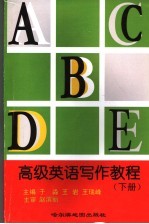
- 于淼,王岩,王瑞峰主编 著
- 出版社: 哈尔滨:哈尔滨地图出版社
- ISBN:7807175532
- 出版时间:2007
- 标注页数:301页
- 文件大小:9MB
- 文件页数:311页
- 主题词:英语-写作-高等学校-教材
PDF下载
下载说明
高级英语写作教程 下PDF格式电子书版下载
下载的文件为RAR压缩包。需要使用解压软件进行解压得到PDF格式图书。建议使用BT下载工具Free Download Manager进行下载,简称FDM(免费,没有广告,支持多平台)。本站资源全部打包为BT种子。所以需要使用专业的BT下载软件进行下载。如 BitComet qBittorrent uTorrent等BT下载工具。迅雷目前由于本站不是热门资源。不推荐使用!后期资源热门了。安装了迅雷也可以迅雷进行下载!
(文件页数 要大于 标注页数,上中下等多册电子书除外)
注意:本站所有压缩包均有解压码: 点击下载压缩包解压工具
图书目录
Part One How to Write Descriptive Paragraphs1.About an Object 1
2.About a Person 6
3.About a Place 15
Part Two Elements of Writing Essays 22
1.Emotion 22
2.Timeliness 27
3.Thesis Statement 31
3.1 What Is a Thesis Statement? 31
3.2 Why Should Your Essay Contain a Thesis Statement? 32
3.3 How Can You Write Good Thesis Statement? 32
3.4 How to Tell a Strong Thesis Sentence from a Weak One 35
Part Three Comparison and Contrast Writing1.Elements of Comparison and Contrast 42
1.1 Frame of Reference 42
1.2 Grounds for Comparison 43
1.3 Thesis 43
1.4 Organizational Scheme 44
1.5 Linking of A and B 45
2.Keeping Balance 48
3.Drawing an Analogy 53
Part Four How To Write Argument 56
1.Appreciation Your Opposition 56
2.Argumentative Essays Exist Everywhere 58
3.The Context Argument 58
4.My Proposition 59
5.Expanding Arguments 60
6.Tradition and Innovation for Writing 61
7.Three Argumentative Appeals 64
7.1 Reason 65
7.2 Ethics 66
7.3 Emotion 67
8.Consensus Argument 69
Part Five Deductive and Inductive Reasoning 69
1.Deductive Reasoning 71
1.1 Categorical Argument 71
1.2 The Conditional Argument 72
2.Inductive Reasoning 75
2.1 Steps in Inductive Reasoning 75
2.2 Guidelines for Inductive Reasoning 76
2.3 Generalizing from Data 78
2.4 Elements of Induction 80
Part Six How to Write Research Paper 80
1.The Nature of Research 82
2.Collecting Information 84
2.1 Resources of the Library 85
2.2 Surfing the Net 87
2.3 Primary and Secondary Sources 88
2.4 Covering All Standard Sources 90
3.Techniques for Preparing Paper 91
3.1 Following a Curiosity Trail 91
3.2 Note-taking 93
3.3 Deciding and Limiting an Appropriate Topic 96
4.If the Topic Is Researchable 98
5.The distinctive feature of the research paper assignment 99
Part Seven How to Format Documenting Sources1.Using explanatory notes 112
2.In-text citations 113
3.A sample list 118
Part Eight How to Write Logical Argument1.Persuasion and argument 122
2.Induction 123
3.Deduction 124
4.Arguing from authority,testimony 125
5.Building a good argument 126
6 Avoiding fallacies 128
Part Nine How to Write an Abstract 130
1.What Is an Abstract? 130
2.Guidelines for Writing an Abstract 131
3.Structure of an Abstract 132
4.The Style of an Abstract 133
5.Key Words 135
Part Ten How to Use Quotation and documenting1.Locating the Sources 136
2.Introducing a Quotation 137
3.When to Use Quotation Marks;When to Document 138
4.Format and Punctuation for Quotations 139
4.1 Formatting Quotations 139
4.2 Punctuating with Quotation Marks 142
Part Eleven How to Complete the Final Paper1.Doing Research 145
1.1 Daily Grind 145
1.2 Motivation for Your Paper 148
1.3 Coming to Your Thesis 150
1.4 Getting Feedback 160
1.5 Getting Financial Support 163
2.Becoming Part of the Research Community 165
2.1 Attending Conferences 165
2.2 Publishing Papers 166
Part Twelve Writing About Literature 166
1.The Elements of Literature 171
1.1 Plot 172
1.2 Narrator and point of view 174
1.3 Characterization 177
1.4 Setting 178
1.5 Symbols 181
1.6 Language and style 182
1.7 Theme 187
1.8 Some literary devices and terms 189
2.Literal Versus Analytical Reading 193
2.1 Denotation versus connotation 193
2.2 Paraphrase and summary versus analysis 195
2.3 Context and analysis 197
2.4 Symbolism and analysis 200
2.5 Imagery and analysis 203
2.6 Structure and totality of a work 207
3.Writing a Literary Interpretation 210
3.1 Theme idea 211
3.2 Examples of defining theme idea 214
3.3 Solidity of content 216
3.4 Poor mixture of summary and analysis 221
3.5 The scissors and paste approach 224
3.6 Identification of a pattern in a text 225
3.7 Five basic steps 238
3.8 A practical demonstration 240
4.Student Practice Papers 258
Part Thirteen Punctuation and Mechanics 258
1.Comma[,] 265
2.Colon[:]and Semicolon[;] 270
3.Period[.],Question Mark[?],and Exclamation Point[!] 275
4.Quotation Marks[" "] 278
5.Dash,Parentheses,and Brackets 281
6.Parentheses( ) 283
7.Brackets[ ] 284
8.Slash,Hyphen,Apostrophe,and Ellipsis 284
9.Hyphen[-] 285
10.Apostrophe['] 286
11.Ellipsis[...] 287
12.To indicate pause or hesitation 288
13.Capital Letters 288
14.Official and Personal Titles 292
15.Titles and Subtitles of Works 292
16.Words denoting family relationships 292
17.Words denoting seasons are not capitalized 293
18.Italics and Underlines 294
19.Abbreviations and Acronyms 296
20.Latin Abbreviations 297
21.Abbreviations for Place Names 298
22.Other Abbreviations 298
23.Numbers 298