
图书介绍
INTERNATIONAL LAW IN THEORY AND PRACTICEpdf电子书版本下载
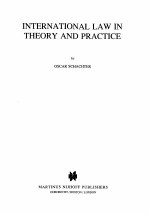
- 著
- 出版社: MARTINUS NIJHOFF PUBLISHERS
- ISBN:0792310241
- 出版时间:1991
- 标注页数:431页
- 文件大小:121MB
- 文件页数:455页
- 主题词:
PDF下载
下载说明
INTERNATIONAL LAW IN THEORY AND PRACTICEPDF格式电子书版下载
下载的文件为RAR压缩包。需要使用解压软件进行解压得到PDF格式图书。建议使用BT下载工具Free Download Manager进行下载,简称FDM(免费,没有广告,支持多平台)。本站资源全部打包为BT种子。所以需要使用专业的BT下载软件进行下载。如 BitComet qBittorrent uTorrent等BT下载工具。迅雷目前由于本站不是热门资源。不推荐使用!后期资源热门了。安装了迅雷也可以迅雷进行下载!
(文件页数 要大于 标注页数,上中下等多册电子书除外)
注意:本站所有压缩包均有解压码: 点击下载压缩包解压工具
图书目录
Chapter Ⅰ. The nature and reality of international law 1
The uses of law and the role of power 5
The dependency of international law on the will of States 9
Notes. Chapter Ⅰ 15
Bibliography. Chapter Ⅰ 16
Chapter Ⅱ. Policies, purposes and rules in a divided world 18
The policy-orientation of the practitioner 18
The proper and improper uses of policy and purpose in the application of international law 23
The shared purposes of States 27
Rules of necessity in a pluralist society 30
Notes. Chapter Ⅱ 32
Bibliography. Chapter Ⅱ 33
Chapter Ⅲ. The quest for objectivity: sources, scholars and judges 34
The doctrine of sources and the inductive science of law 35
The scholarly works of the publicists 38
Judicial decisions as mediating positivism 39
The politics and beliefs of judges 43
Notes. Chapter Ⅲ 46
Bibliography. Chapter Ⅲ 48
Chapter Ⅳ. General principles and equity 49
The broad expanse of general principles of law 50
The diverse manifestations of equity 55
Equitable principles applied to resources and boundaries 58
Notes. Chapter Ⅳ 62
Bibliography. Chapter Ⅳ 64
Chapter Ⅴ. The international lex scripta 66
Codification: scientific and political 66
Law making treaties and international regimes 74
The proliferation of treaties and their significance in changing international society 76
Notes. Chapter Ⅴ 81
Bibliography. Chapter Ⅴ 83
Chapter Ⅵ. Resolutions and political texts 84
Resolutions of the United Nations General Assembly as evidence of law 85
The effect of majority solutions for non-concurring States 90
The political texts: agreements and declarations of a non-legal character 94
Legal implications of the purely political “non-legal” instruments 99
Notes. Chapter Ⅵ 101
Bibliography. Chapter Ⅵ 104
Chapter Ⅶ. The prohibition of force 106
The United Nations context 107
The meaning of Article 2(4) 110
Consent to armed intervention 114
Territorial claims 116
The use of force for human rights 117
Self-determination and national liberation 119
Overthrow of repressive regimes 120
Protection of life 123
The use of force to safeguard legal rights 126
Has Article 2(4) lost its legal force? 129
Notes. Chapter Ⅶ 131
Bibliography. Chapter Ⅶ 133
Chapter Ⅷ. The use of force in self-defense 135
Can self-defense be subject to law? 135
International scrutiny 138
The lex specialis of defense 141
Law and accountability 146
Anticipatory defense and armed attack 150
Requirements of necessity and proportionality 152
Collective self-defense 155
Armed intervention in internal conflicts . 158
Use of force against terrorists in another country 162
Requirements of Necessity and Proportionality for Anti-Terrorist Activity 167
Necessity as excuse 169
Concluding comments on law of force 174
Notes. Chapter Ⅷ 175
Bibliography. Chapter Ⅷ 182
Chapter Ⅸ. Peaceful means of redress: self-help and counter-measures 184
Reprisals and retorsion as counter-measures 185
Notification and good faith requirements 186
Is recourse to peaceful settlements a condition of reprisals? 188
Non-performance of treaty obligations as reprisal 190
The requirement of proportionality 193
Limits on counter-measures against individuals 194
Violations of common concern: rights of third States to take counter-measures 196
Legal limits of retorsion 198
Notes. Chapter Ⅸ 200
Bibliography. Chapter Ⅸ 201
Chapter Ⅹ. International remedies 202
Objective responsibility and obligation of redress 203
The requirement of legal interest and injury 205
Violations of multilateral treaties and of obligations erga omnes 208
Requirements of prior negotiations and exhaustion of local remedies 213
Non-adjudicatory means of settlement 214
The limited use of adjudication 217
Justiciable and political issues 220
Notes. Chapter Ⅹ 223
Bibliography. Chapter Ⅹ 225
Chapter Ⅺ. Enforcement 227
Ambivalence toward enforcement 227
Enforcement by the International Court of Justice 229
Enforcement of judgments of the International Court by the United Nations 233
Action by the successful State to enforce judgment 235
Enforcement of non -judicial decisions by international organizations 237
Enforcement through private litigation 239
Notes. Chapter Ⅺ 246
Bibliography. Chapter Ⅺ 248
Chapter Ⅻ. The jurisdiction of States 250
The theoretical controversy over the Lotus case 250
Contemporary controversies 252
The bases of jurisdiction to prescribe 253
Adjudicatory and enforcement jurisdiction 255
The requirement of reasonableness 258
The “effects doctrine” 261
Orders for disclosure and foreign government compulsion 264
The expanding area of universal jurisdiction 267
Notes. Chapter Ⅻ 270
Bibliography. Chapter Ⅻ 272
Chapter ⅩⅢ. The new law of the sea 274
The erosion of freedom in the oceans 274
The complex structure of the new law of the sea in treaty and custom 281
The balance of rights between coastal and maritime States 285
The common heritage beyond national jurisdiction 291
Notes. Chapter ⅩⅢ 296
Bibliography. Chapter ⅩⅢ 298
Chapter ⅩⅣ. Sovereign rights and international business 300
Permanent sovereignty over natural resources 301
“Internationalized” contracts between States and foreign nationals 305
States responsibility for breach of contract 311
Stabilization clauses 314
Discrimination against foreign business enterprise 315
Compensation for expropriation 321
Liberalization and privatization 325
Notes. Chapter ⅩⅣ 325
Bibliography. Chapter ⅩⅣ 328
Chapter ⅩⅤ. International human rights 330
Some basic antinomies and dilemmas 331
Human rights as customary international law 335
Human rights as jus cogens and obligations erga omnes 342
Politics and human rights 345
Human rights and economic development 348
Economic and social rights and State accountability 352
Notes. Chapter ⅩⅤ 356
Bibliography. Chapter ⅩⅤ 360
Chapter ⅩⅥ. Protecting the environment 362
Concepts and principles 362
Defining environmental harm and risk 365
The qualified duty of prevention in the light of conflicting interests 368
The duty to inform, assess and consult 373
Liability and compensation 375
Enforcement and remedies 381
Notes. Chapter ⅩⅥ 384
Bibliography. Chapter ⅩⅥ 388
Chapter ⅩⅦ. Collective security redux 389
The use of force under Chapter Ⅶ 391
The special agreements under Article 43 392
Implications for national constitutional requirements 394
Authority and command 396
Legal limits on ends and means 399
Application of law of armed conflict to United Nations forces 400
Self-defense and United Nations authority 401
The use of armed force in United Nations peacekeeping 404
Limits on peacekeeping 407
Use of force in peacekeeping 408
Force authorized by regional organization 410
Concluding comments 413
Notes. Chapter ⅩⅦ 413
Bibliography. Chapter ⅩⅦ 416
Index 418
精品推荐
- Northanger Abbey(1818)
- Emma(1815)
- Sense And Sensibility(1811)
- Mansfield Park(1814)
- HUMANITIES THE EVOLUTION OF VALUES
- Pride And Drejudice(1812)
- English
- 企鹅经济学词典 经济学
- 大人的友情 河合隼雄谈友谊
- Computing Concepts
- Advanced Compilpr Design and lmplementation
- 中国商事法律要览
- Introduction to polymers
- CONFICT OF LAWS IN THE WESTERN SOCIALIST AND DEVELOPING COUNTRIES
- Measurement and Research Methods in International Marketing