
图书介绍
计算机控制系统理论与设计 英文版pdf电子书版本下载
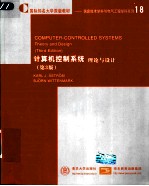
- karlJ.Astrom,BjornWittenmark著 著
- 出版社: 北京:清华大学出版社
- ISBN:7302050082
- 出版时间:2002
- 标注页数:557页
- 文件大小:19MB
- 文件页数:577页
- 主题词:
PDF下载
下载说明
计算机控制系统理论与设计 英文版PDF格式电子书版下载
下载的文件为RAR压缩包。需要使用解压软件进行解压得到PDF格式图书。建议使用BT下载工具Free Download Manager进行下载,简称FDM(免费,没有广告,支持多平台)。本站资源全部打包为BT种子。所以需要使用专业的BT下载软件进行下载。如 BitComet qBittorrent uTorrent等BT下载工具。迅雷目前由于本站不是热门资源。不推荐使用!后期资源热门了。安装了迅雷也可以迅雷进行下载!
(文件页数 要大于 标注页数,上中下等多册电子书除外)
注意:本站所有压缩包均有解压码: 点击下载压缩包解压工具
图书目录
1.Computer Control 1
1.1 Introduction 1
1.2 Computer Technology 2
1.3 Computer-Control Theory 11
1.4 Inherently Sampled Systems 22
1.5 How Theory Developed 25
1.6 Notes and References 28
2.Discrete-Time Systems 30
2.1 Introduction 30
2.2 Sampling Continuous-Time Signals 31
2.3 Sampling a Continuous-Time State-Space System 32
2.4 Discrete-Time Systems 42
2.5 Changing Coordinates in State-Space Models 44
2.6 Input-Output Models 46
2.7 The z-Transform 53
2.8 Poles and Zeros 61
2.9 Selection of Sampling Rate 66
2.10 Problems 68
2.11 Notes and References 75
3.Analysis of Discrete-Time Systems 77
3.1 Introduction 77
3.2 Stability 77
3.3 Sensitivity and Robustness 89
3.4 Controllability , Reachability , Observability ,and Detectability 93
3.5 Analysis of Simple Feedback Loops 103
3.6 Problems 114
3.7 Notes and References 118
4.Pole-Placement Design: A State-Space Approach 120
4.1 Introduction 120
4.2 Control-System Design 121
4.3 Regulation by State Feedback 124
4.4 Observers 135
4.5 Output Feedback 141
4.6 The Servo Problem 147
4.7 A Design Example 156
4.8 Conclusions 160
4.9 Problems 161
4.10 Notes and References 164
5.Pole-Placement Design: A Polynomial Approach 165
5.1 Introduction 165
5.2 A Simple Design Problem 166
5.3 The Diophantine Equation 170
5.4 More Realistic Assumptions 175
5.5 Sensitivity to Modeling Errors 183
5.6 A Design Procedure 186
5.7 Design of a Controller for the Double Integrator 195
5.8 Design of a Controller for the Harmonic Oscillator 203
5.9 Design of a Controller for a Flexible Robot Arm 208
5.10 Relations to Other Design Methods 213
5.11 Conclusions 220
5.12 Problems 220
5.13 Notes and References 223
6.1 Introduction 224
6.Design: An Overview 224
6.2 Operational Aspects 225
6.3 Principles of Structuring 229
6.4 A Top-Down Approach 230
6.5 A Bottom-Up Approach 233
6.6 Design of Simple Loops 237
6.7 Conclusions 240
6.8 Problems 241
6.9 Notes and References 241
7.Process-Oriented Models 242
7.1 Introduction 242
7.2 A Computer-Controlled System 243
7.3 Sampling and Reconstruction 244
7.4 Aliasing or Frequency Folding 249
7.5 Designing Controllers with Predictive First-Order Hold 256
7.6 The Modulation Model 262
7.7 Frequency Response 268
7.8 Pulse-Transfer-Function Formalism 278
7.9 Multirate Sampling 286
7.10 Problems 289
7.11 Notes and References 291
8.Approximating Continuous-Time Controllers 293
8.1 Introduction 293
8.2 Approximations Based on Transfer Functions 293
8.3 Approximations Based on State Models 301
8.4 Frequency-Response Design Methods 305
8.5 Digital PID-Controllers 306
8.6 Conclusions 320
8.7 Problems 320
8.8 Notes and References 323
9.Implementation of Digital Controllers 324
9.1 Introduction 324
9.2 An Overview 325
9.3 Prefiltering and Computational Delay 328
9.4 Nonlinear Actuators 331
9.5 Operational Aspects 336
9.6 Numerics 340
9.7 Realization of Digital Controllers 349
9.8 Programming 360
9.9 Conclusions 363
9.10 Problems 364
9.11 Notes and References 368
10.Disturbance Models 370
10.1 Introduction 370
10.2 Reduction of Effects of Disturbances 371
10.3 Piecewise Deterministic Disturbances 373
10.4 Stochastic Models of Disturbances 376
10.5 Continuous-Time Stochastic Processes 397
10.6 Sampling a Stochastic Differential Equation 402
10.7 Conclusions 403
10.8 Problems 404
10.9 Notes and References 407
11.1 Introduction 408
11.Optimal Design Methods: A State-Space Approach 408
11.2 Linear Quadratic Control 413
11.3 Prediction and Filtering Theory 429
11.4 Linear Quadratic Gaussian Control 436
11.5 Practical Aspects 440
11.6 Conclusions 441
11.7 Problems 441
11.8 Notes and References 446
12.Optimal Design Methods: A Polynomial Approach 447
12.1 Introduction 447
12.2 Problem Formulation 448
12.3 Optimal Prediction 453
12.4 Minimum-Variance Control 460
12.5 Linear Quadratic Gaussian(LQG)Control 470
12.6 Practical Aspects 487
12.7 Conclusions 495
12.8 Problems 496
12.9 Notes and References 504
13.Identification 505
13.1 Introduction 505
13.2 Mathematical Model Building 506
13.3 System Identification 506
13.4 The Principle of Least Squares 509
13.5 Recursive Computations 514
13.6 Examples 521
13.8 Problems 526
13.7 Summary 526
13.9 Notes and References 527
A.Examples 528
B.Matrices 533
B.1 Matrix Functions 533
B.2 Matrix-Inversion Lemma 536
B.3 Notes and References 536
Bibliography 537
Index 549