
图书介绍
城市化进程中城市方言变异特征研究 以天津方言为例 英文pdf电子书版本下载
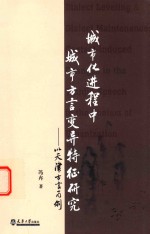
- 冯卉著 著
- 出版社: 天津:天津大学出版社
- ISBN:9787561853580
- 出版时间:2015
- 标注页数:176页
- 文件大小:23MB
- 文件页数:197页
- 主题词:北方方言-方言研究-天津市-英文
PDF下载
下载说明
城市化进程中城市方言变异特征研究 以天津方言为例 英文PDF格式电子书版下载
下载的文件为RAR压缩包。需要使用解压软件进行解压得到PDF格式图书。建议使用BT下载工具Free Download Manager进行下载,简称FDM(免费,没有广告,支持多平台)。本站资源全部打包为BT种子。所以需要使用专业的BT下载软件进行下载。如 BitComet qBittorrent uTorrent等BT下载工具。迅雷目前由于本站不是热门资源。不推荐使用!后期资源热门了。安装了迅雷也可以迅雷进行下载!
(文件页数 要大于 标注页数,上中下等多册电子书除外)
注意:本站所有压缩包均有解压码: 点击下载压缩包解压工具
图书目录
Chapter 1 Introduction 1
1.1 Dialect Contact Studies:An Emergent Field of Enquiry 1
1.2 Globalization and the Changing Tiānjīn Dialect 2
1.3 Layout of the Book 3
Chapter 2 Language Variation and Change:From Traditional Dialectology to Social Dialectology 5
2.1 The Western Tradition in the Study of Language Variation and Change 5
2.1.1 Historical Linguistic Studies:Achievements and Limitations 6
2.1.2 Sociolinguistic Perspectives 7
2.1.2.1 Variationist Approach 8
2.1.2.2 Social Network Theory 11
2.1.3 Dialect Contact 12
2.1.3.1 Language Contact versus Dialect Contact 12
2.1.3.2 Traditional Dialectology versus Social Dialectology 14
2.1.3.3 Theory and Principles for Dialect Contact 16
2.1.3.4 Processes/Mechanisms of Dialect Contact 18
2.2 The Study of Language Variation and Change in the Chinese Context 20
2.2.1 Philological Studies 20
2.2.2 Sociolinguistic Studies 21
2.2.3 Studies on Tiānjīn Dialect 23
2.2.3.1 Salient Features of Tiānjīn Dialect 24
2.2.3.2 Sociolinguistic Studies on Tiānjīn Dialect 29
2.2.4 Dialect Contact Research 30
2.2.4.1 Deficiencies of Traditional Chinese Dialectology 30
2.2.4.2 Dialect Contact—An Emergent Field of Inquiry in China 31
2.2.4.3 Limitations of Previous Sociolinguistic Researches on Tiānjīn Dialect 33
Chapter 3 The Proposed Framework 35
3.1 Pilot Study 35
3.2 The Framework 36
3.2.1 Language Ideology 40
3.2.2 Linguistic Market 41
3.3 Dialect Leveling 42
3.3.1 Standard Linguistic Market 43
3.3.2 Loose-knit Social Network 46
3.3.3 Process of Long-term Accommodation 48
3.4 Dialect Maintenance 48
3.4.1 Globalization and Local Culture 49
3.4.2 Close-knit Social Network 50
3.4.3 Vernacular Linguistic Market 50
3.5 Summary 52
Chapter 4 Variables and Data Collection 53
4.1 Social Variables 53
4.1.1 Demographic Variables 53
4.1.1.1 Sex 53
4.1.1.2 Age 54
4.1.1.3 Occupation 55
4.1.1.4 Level of Education 56
4.1.1.5 Workplace 57
4.1.1.6 Length of Service 58
4.1.2 Sociopsychological Variables 59
4.1.2.1 Attitude towards Tiānjīn Dialect 59
4.1.2.2 Frequency of Contact with Pǔtōnghuà 62
4.1.2.3 Frequency of Using Pǔtōnghuà at Work 64
4.2 Linguistic Variables 65
4.2.1 Lexical Items 65
4.2.2 Consonants 66
4.2.3 Application of FF Rule 67
4.3 Data Collection 67
4.3.1 Observer's Paradox 67
4.3.2 Selecting Informants 68
4.3.3 Collecting Data for Consonants and FF Rule 70
4.3.4 Collecting Data for Lexical Items 71
Chapter 5 Data Analysis,Findings and Discussion 74
5.1 Construction of the Lexical Items 75
5.2 Relations between AGE/SEX/OCC/EDU and Linguistic Variables 77
5.2.1 AGE with Linguistic Variables 78
5.2.2 EDU with Linguistic Variables 82
5.2.3 SEX with Linguistic Variables 84
5.2.4 OCC with Linguistic Variables 85
5.2.5 MODEL-1 with Four Demographic Variables 87
5.3 Relations between WP/LoS and Linguistic Variables 89
5.3.1 WP with Residuals of Linguistic Variables 89
5.3.2 LoS with Residuals of Linguistic Variables 91
5.3.3 MODEL-2 with Six Demographic Variables 92
5.4 Relations between ATT/SOCNET1/SOCNET2/FREQ and Linguistic Variables 94
5.4.1 Relations between ATT and Linguistic Variables 95
5.4.2 Relations between SOCNET1/SOCNET2 and Linguistic Variables 96
5.4.3 Construction of SOCNET 99
5.4.4 Relations between FREQ and Linguistic Variables 100
5.4.5 MODEL-3 with Sociopsychological Variables 101
5.5 Effect of WP on ATT,SOCNET1 and FREQ 103
5.6 MODEL-4 with All Significant Variables 104
5.7 Linguistic Variations in Different Styles 109
5.8 The Group of Informants with the Most Features of Tiānjīn Dialect 111
5.9 Change in Progress? 116
5.9.1 Lexical Change in Progress 116
5.9.2 Peculiar Consonant Change in Progress 118
5.9.3 FF Rule Change in Progress 123
5.10 Summary 127
Chapter 6 Conclusion 130
6.1 The Changing Tiānjīn Dialect in the Context of Globalization 130
6.2 New Issues and New Directions for Research on Dialects in Contact 133
Appendix 1:Questionnaire 135
Appendix 2:Lexical Items(161 Words) 137
Appendix 3:The Salient Lexical Items(100 Words) 142
Appendix 4:Passage Reading 146
Appendix 5:Models with and without the Retired Informants 147
References 151
Acknowledgements 174