
图书介绍
语言统计学pdf电子书版本下载
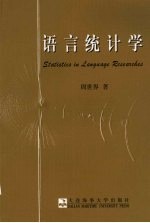
- 周世界著 著
- 出版社: 大连:大连海事大学出版社
- ISBN:7563217657
- 出版时间:2004
- 标注页数:208页
- 文件大小:4MB
- 文件页数:220页
- 主题词:统计语言学-研究-英文
PDF下载
下载说明
语言统计学PDF格式电子书版下载
下载的文件为RAR压缩包。需要使用解压软件进行解压得到PDF格式图书。建议使用BT下载工具Free Download Manager进行下载,简称FDM(免费,没有广告,支持多平台)。本站资源全部打包为BT种子。所以需要使用专业的BT下载软件进行下载。如 BitComet qBittorrent uTorrent等BT下载工具。迅雷目前由于本站不是热门资源。不推荐使用!后期资源热门了。安装了迅雷也可以迅雷进行下载!
(文件页数 要大于 标注页数,上中下等多册电子书除外)
注意:本站所有压缩包均有解压码: 点击下载压缩包解压工具
图书目录
Chapter 1 Some Fundamental Concepts in Statistics 1
1.1 Descriptive and inferential statistics 2
1.2 Population and sample 3
1.3 Frequency, relative frequency and probability 4
1.4 Classifications of variables and levels of measurement 5
1.4.1 Nominal level of measurement 6
1.4.2 Ordinal level of measurement 6
1.4.3 Interval level of measurement 7
1.4.4 Ratio level of measurement 7
1.4.5 Comparison among the four levels of measurement 8
1.5 Computer softwares for statistical analyses 8
Chapter 2 Descriptive Statistics: Central Tendency and Variability 10
2.1 Measures of central tendency 10
2.1.1 The mean 11
2.1.2 The median 12
2.1.3 The mode 12
2.1.4 Comparison of the three measures of central tendency 13
2.2 Measures of variability 14
2.2.1 The range 15
2.2.2 The interquartile range 15
2.2.3 The mean deviation 16
2.2.4 The variance and the standard deviation 16
2.3 Calculating descriptive statistics using SPSS 18
Chapter 3 Graphical Presentation of Data and Normal Distribution 22
3.1 Frequency table 22
3.2 Frequency distribution 24
3.2.1 Histogram 25
3.2.2 Polygon 26
3.3 Skew and Kurtosis 27
3.4 The normal distribution 28
3.5 Differences in members of the family of normal curves 29
3.6 The standard score 31
3.7 The area under normal curves 32
Chapter 4 Estimation 34
4.1 Estimation 36
4.1.1 Estimation from large samples: the normal distribution 36
4.1.2 Estimation from small samples: the t distribution 39
4.2 Calculation of estimation for both large samples and small samples using SPSS 43
Chapter 5 Project Design and Hypothesis Testing: Basic Principles 47
5.1 Experimental and observational design of investigations 47
5.2 Correlated and independent design 48
5.3 Hypothesis testing 49
5.4 Significance level 52
5.5 Directional (one-tailed) and non-directional(two-tailed) tests 53
5.6 Types of errors 55
5.7 How to choose a test 56
5.7.1 Parametric tests 56
5.7.2 Non-parametric tests 57
Chapter 6 Parametric Tests 59
6.1 Hypothesis testing about one population mean 60
6.1.1 z test for large samples 60
6.1.2 t test for small samples 66
6.1.3 Calculation of statistic t-value using SPSS 67
6.2 Hypothesis testing about the difference between two population means 69
6.2.1 z test for large samples 69
6.2.2 t test for small samples 71
6.2.3 Calculation of the statistic t-value using SPSS 73
6.3 t test for correlated samples 78
Chapter 7 Non-parametric Tests 84
7.1 The Mann-Whitney U test 86
7.2 The Wilcoxon signed-rank test 92
7.3 The sign test 96
Chapter 8 Chi-square Test 100
8.1 Goodness-of-fit test 102
8.2 Hypothesis testing of Chi-square test for the contingency table 107
8.3 Yates’s correction 114
8.4 Hypothesis testing of Chi-square test about more than two categories 116
Chapter 9 F Distribution 119
9.1 The F distribution 119
9.2 Homogeneity of variance 120
9.3 Analysis of variance 123
9.4 Kruskal-Wallis test 130
Chapter 10 Hypothesis Testing About Proportions 135
10.1 Estimation of one population poportion 135
10.2 Estimation of a difference between two population proportions 136
10.3 Hypothesis testing about a single population proportion 137
10.4 Hypothesis testing about two independent population proportions 139
10.5 Hypothesis testing about two dependent population proportions 141
Chapter 11 Regression and Correlation 145
11.1 Regression 146
11.2 Correlation 151
11.2.1 The Pearson product-moment correlation coefficient 152
11.2.2 Spearman’s rank correlation coefficient 155
11.2.3 The Phi correlation coefficient 158
Chapter 12 Factor Analysis 162
12.1 Applications of factor analysis 162
12.2 Basic ideas of factor analysis as a data reduction method 164
12.3 Factor analysis to discover the structure of validity and reliability 173
12.4 Factor analysis used for exploration 176
Appendix Ⅰ The Normal Distribution 179
Appendix Ⅱ The t distribution 181
Appendix Ⅲ The Mann-Whitney U test 183
Appendix Ⅳ The Wilcoxon Signed-ranks Test 185
Appendix Ⅴ The Sign Test 186
Appendix Ⅵ The Chi-square Distribution 187
Appendix Ⅶ The F Distribution 188
Appendix Ⅷ The Person Product-moment Correlation Coefficient 190
Appendix Ⅸ The Spearman Rank Correlation Coefficient 191
Appendix Ⅹ 常用统计学术语表 192
Bibliography 206